

























Get quotes for home business insurance
Save money by comparing free quotes from top-rated providers.

Personal insurance policies won't cover work-related claims, which is why commercial insurance is essential. Business insurance covers costs if a delivery person slips on an icy step, or if a data breach exposes customer information. You may need coverage to comply with laws and sign contracts.
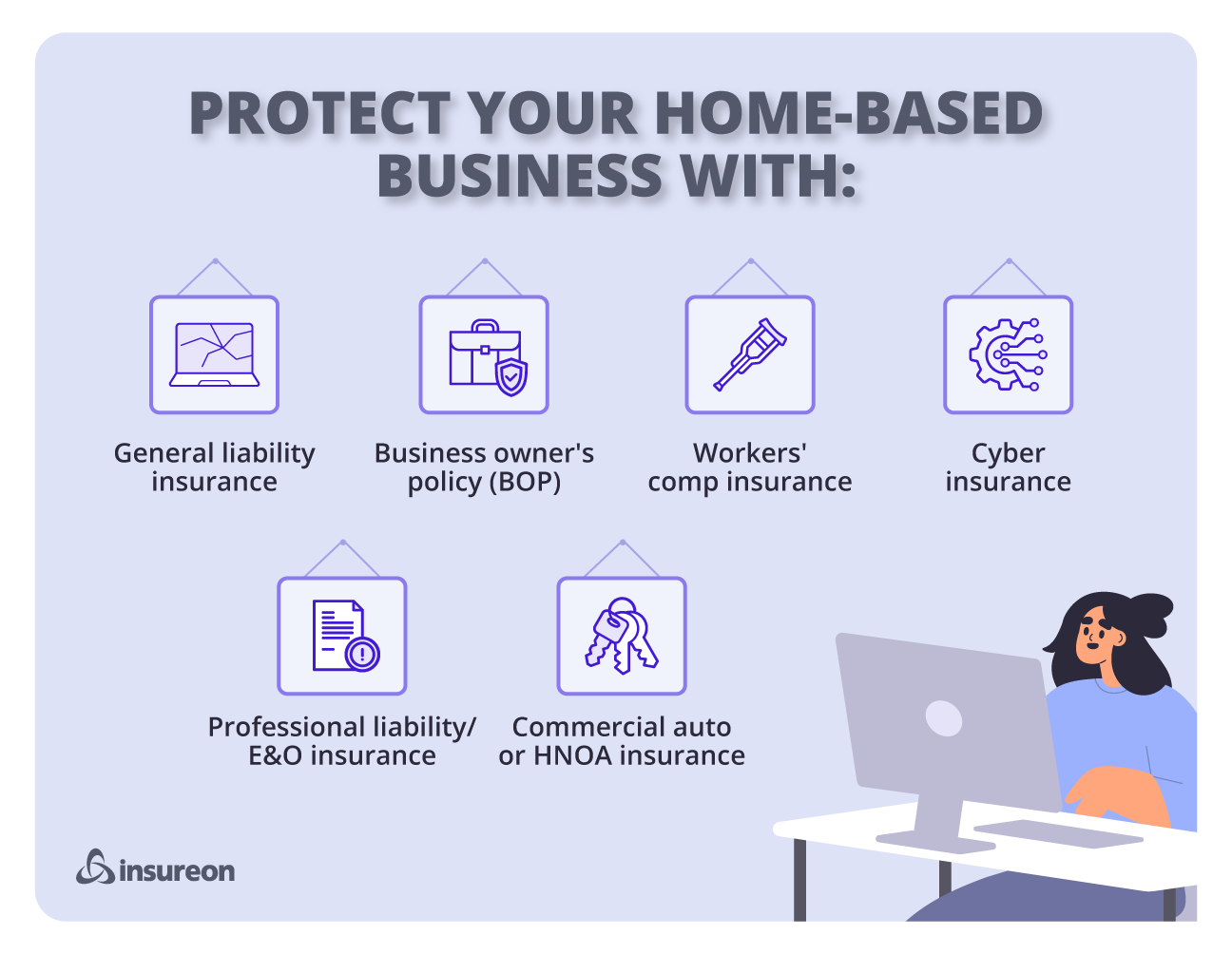
These policies cover common risks faced by home-based businesses.

A general liability policy covers third-party accidents, such as a client who trips and suffers an injury at your home office. Some professionals are required to have this coverage.

This policy covers lawsuits related to the quality of your work, such as a mistake that causes a client to lose money. It's also called errors and omissions (E&O) or malpractice insurance.

Workers’ comp shields home businesses from work-related medical bills that health insurance might deny. Most states require this coverage as soon as a small business hires its first employee.

A business owner's policy, or BOP, is a cost-effective way for individuals who work from home to buy general liability coverage and commercial property insurance together.

Cyber liability insurance helps home businesses recover from cyberattacks and data breaches. It's important for businesses that handle credit cards and other sensitive data.

A commercial auto policy covers costs when a home business's vehicle is involved in an accident. Each state has its own requirements for auto liability insurance.

An IT consultant or painter who works from home won't have to pay a lot for commercial insurance.
Average costs for home-based businesses include:
General liability insurance: $42 per month
Professional liability: $49 per month
Workers' compensation: $48 per month
Factors that affect your premiums include your profession, number of employees, and the policy limits and deductibles you choose.
Some of the top factors that affect home-based business insurance costs during the underwriting process include:
It’s easy to find insurance for home-based businesses with Insureon. Whether you work as a pet sitter, a virtual assistant, or a crafter, you’ll need to have some basic information about your business available.
Our application will ask you for your annual revenue and payroll, among other details. You can buy a policy online and get a certificate of insurance with Insureon in three easy steps:
Insureon's licensed insurance agents work with top-rated U.S. providers to find the right coverage for your home business, whether you run a lawn care business with several employees or an independent photography business.
Hear from customers like you who purchased small business insurance.
The best insurance for home-based businesses helps you withstand unexpected costs from fires and other incidents, while opening the door to new clients and ensuring compliance with laws and regulations.
Here's why insurance is crucial for LLCs, sole proprietors, independent contractors, and other business owners who work from home:
Even when insurance isn't required, it provides essential protection against catastrophic losses. Small businesses pay an average of $54,000 for liability suits, and often lack the resources that larger companies draw upon to survive a legal battle.
There are several important differences between homeowner's insurance and business insurance. As a home-based business owner, you likely need both.
Homeowner's insurance covers your house and your personal belongings, and it also pays for legal costs and medical expenses if someone is injured at your home. In some instances, a homeowner's policy will include minimal protection for business property, or you can add a home business endorsement to expand your coverage.
However, homeowner's insurance (and renter's insurance) won't cover business-related liabilities, such as a client who trips in your home office, or a delivery person who slips on an icy step while dropping off business supplies.
Business insurance protects your business property and covers business liabilities. You'll need both liability insurance and property insurance for complete protection:
The best home-based business insurance in terms of coverage and cost is a business owner's policy, which bundles general liability and commercial property insurance at an affordable rate. Chat with an insurance agent to make sure your coverage matches your business needs.
Every business should carry general liability insurance, as it covers the most common types of lawsuits. Whether you need a business owner's policy depends on the type of property you need to protect.
Business owner's policies often include business interruption coverage, which is a major benefit. Also known as business income coverage, this policy covers daily operating expenses and lost income if your business is forced to close temporarily due to a fire or extreme weather.
As with homeowner's insurance, your personal auto policy isn't designed for business use. If you get into an accident while driving your own car for work purposes, your insurer might deny the claim.
That means you'll need additional coverage for vehicles used for work. If your business owns the vehicle, it must be covered by commercial auto insurance. For rented, leased, and personal vehicles, you can buy hired and non-owned auto insurance (HNOA) to make sure you're covered in an accident.
When you buy any type of auto coverage, make sure it fulfills your state's requirements for auto liability insurance.
Workers' comp claims are not covered by personal health insurance.
Personal health insurance policies often contain language that excludes coverage for work-related injuries and illnesses. Health insurance also won’t cover your lost wages if you’re injured on the job and unable to work for a while.
Workers’ compensation insurance covers workplace accidents, occupational diseases, and other injuries related to your job. A workers' comp policy makes sure you, and any workers you may have, are covered for both medical bills and disability benefits during recovery.
If you're an independent contractor, freelancer, or home-based business owner with no employees, you're generally not legally required to carry workers' comp for yourself. Most states require businesses with one or more employees to provide workers' comp.
The policies your business needs depend on your specific risks, such as whether you drive for work or have a client who requires a certain type of insurance.
Other popular options for home-based businesses are:
Our expert agents can help you find any specialty insurance policies you may need and answer your questions about coverage.