

Get lawn care business insurance quotes
Save money by comparing insurance quotes from multiple carriers.

If a lawn mower kicks up a rock that injures someone or breaks a window, the resulting expenses could sink your business. The right property and liability coverage helps your business withstand legal fees and other financial losses. State laws, licensing boards, and contracts may require coverage.
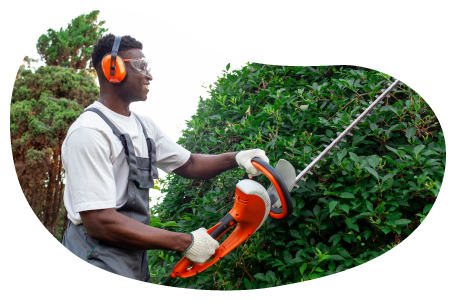

Lawn care business owners can save money by comparing quotes from top-rated insurance companies.
Fill out Insureon's easy online application to get free quotes and advice from a licensed insurance agent.
These insurance products cover common risks faced by lawn care contractors.

A general liability policy covers common third-party claims, such as accidental damage to a client's garden. Bundle it with commercial property insurance for savings in a business owner's policy.

Most states require workers' comp for lawn care businesses that have employees. It also protects sole proprietors from work-related medical bills that health insurance might deny.

This insurance policy covers a lawn care contractor’s lawn mowers, weed whackers, and other tools if they are lost, stolen, or damaged while in transit, stored off-site, or at a client's property.

This insurance policy helps pay for legal fees and damages after an accident involving a lawn care company's vehicle. Most states require it for business-owned vehicles.

A business owner's policy, or BOP, is a cost-effective way for landscaping companies to buy general liability coverage and commercial property insurance together.

Lawn care professionals often need a bond to get licensed in their state or to do certain kinds of work. A bond provides a financial guarantee that your business will comply with regulations.

A lawn care company with only a few employees will pay less for insurance than a bigger business.
Average lawn care business insurance costs include:
Insurance companies will look at your business's size, revenue, location, and other risk factors to determine your premiums.
Some of the top factors that affect the cost of lawn care business insurance include:
It’s easy to get lawn care business insurance if you have your company information on hand. Our insurance application will ask for basic facts about your business, such as revenue and number of employees.
You can buy a policy online and get a certificate of insurance (COI) with Insureon in three easy steps:
Insureon's licensed agents work with top-rated U.S. providers to find the right coverage for your lawn care company, whether you operate as an independent contractor, limited liability company (LLC), or other business structure.
Hear from customers like you who purchased small business insurance.
Review answers to frequently asked questions about landscaping business insurance coverage.
Your state's laws and the type of work you do will determine whether you need a business license, a landscape contractor's license, a doing business as (DBA) license, or other qualifications to run your business. For example, a state might require a license to do irrigation work or take on landscaping projects that exceed a certain monetary threshold.
In general, states also mandate workers' compensation coverage for businesses with employees and commercial auto insurance for businesses that own a vehicle.
Permits for specific projects are usually regulated at the municipal level. For instance, you might need an environmental permit for pesticide application, a grading permit to move a large quantity of soil, or a construction permit to install curbing.
In some cases, you'll need insurance or a bond to apply for a permit or license. Additionally, large commercial clients and government entities will sometimes require you to carry insurance or a surety bond before they will allow your workers on their property.
Being able to say your lawn care business is licensed, bonded, and insured is a big draw for customers. It shows you're reliable and can guarantee reimbursement should any issues arise, which can help you win contracts when you're just starting out.
With Insureon, you can get a certificate of insurance (COI) quickly so you can bid on projects, sign contracts, and get started working on projects right away.
Though some landscaping businesses offer snow and ice removal during the winter, others only operate during the warmer months of the year. In the latter case, it's possible to buy short-term liability insurance or seasonal insurance to cover costly accidents and qualify for contracts during the time when you're operational.
However, there are several reasons to opt for year-round coverage instead:
In addition to liability and equipment coverage, you'll need workers' compensation to comply with state laws and protect your employees from work-related medical bills. A good option for seasonal businesses is pay-as-you-go workers' compensation, which has flexible premiums based on the number of workers in each payroll cycle.
Even when you work alone, it's important to protect your finances with workers' comp and other types of insurance. Otherwise, a single accident or lawsuit could financially devastate your business and your personal assets.
Yes, in order to protect your trailers and other equipment, you would need insurance. A couple of policies that help protect your equipment include:
Commercial property insurance covers your building, computers, furnishings, and other property kept at your business location in the event of a fire, storm, or burglary. You'll need additional coverage for trailers, lawn mowers, and other business equipment that travels with you.
Contractor's tools and equipment insurance, also called inland marine insurance, covers business property while it's in transit, at a jobsite, or stored off-site. It provides financial reimbursement if an item is damaged in an accident or stolen from a client's property.
Items covered by tools and equipment insurance include:
Trailers and other items worth more than $2,500 may need to be scheduled separately on the policy, and will likely cost more to insure.
Lawn care contractors may need additional types of business insurance depending on their unique risks or requirements.
Here are some business insurance options to consider:
It's easy to find affordable business insurance with Insureon. Our easy online application lets you compare quotes from trusted insurance companies to find policies that fit your budget and your unique risks.
Other ways for lawn care companies to save money on insurance include:
Our insurance agents can help you find the right insurance solutions for your business needs at a price you can afford.
As with any business contract, carefully read your landscaping insurance policy before you sign it.
You can ask your agent for clarification about any insurance terms you don’t understand. If your client requires a certain type of coverage in order to secure a job, your agent can also help make sure you have everything you need to meet those requirements.
Knowing exactly what your lawn care insurance does and doesn't cover will help you manage risks and better plan for emergencies down the road.