



Tools and equipment insurance cost
The cost of tools and equipment insurance depends on several relevant business factors. Your premium is directly impacted by the type of equipment you wish to insure, your policy limits, industry risks, and location.
What is the average cost of tools and equipment insurance?
Small businesses pay an average of $48 per month for tools and equipment insurance. Annual premiums range from around $150 to over $4,500 per year.
A tools and equipment policy covers items that are in transit, stored off-site, or used at jobsites, such as hand tools, power tools, laptops, lawn mowers, or inventory. Generally, the cost of the policy depends on the value of the items that you wish to insure, including rented equipment.
This policy is common in the construction industry, where it's called contractor's tools and equipment insurance for electricians, plumbers, and other tradespeople. You might also see it called inland marine insurance.
Our figures are calculated using the median cost of policies sold by leading insurance companies to Insureon's small business customers. The median offers a better estimate of what your business is likely to pay because it excludes outlier high and low premiums.
Factors that affect tools and equipment insurance costs
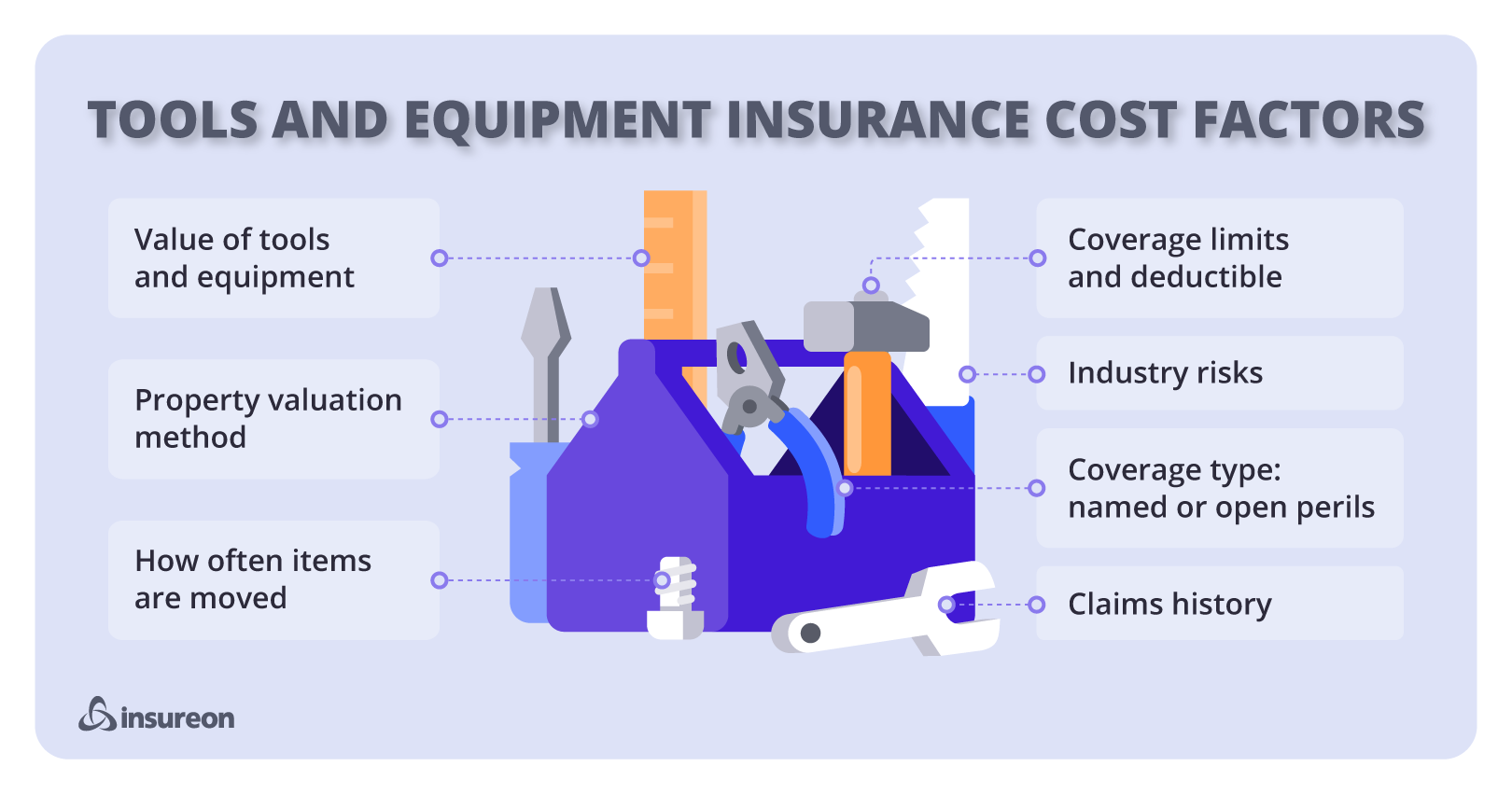
Here are several factors that your insurance provider will consider when determining your premium for an equipment and tools insurance policy:

Coverage limits and deductible
Your coverage limit should match the value of the items you are insuring to guarantee you don’t end up paying for property damage out of pocket. Any piece of equipment valued at more than $2,500, such as a bulldozer, excavator, backhoe, or other heavy equipment, may need to be listed separately on the policy with its own scheduled limit.
Insurance policies with a higher deductible are less expensive, as you must pay the deductible before your insurance will activate to cover a claim.
Industry risks
Underwriters will look at your industry and profession when determining the cost of any type of property coverage. Small businesses in professions with higher risks or more frequent property claims can expect to pay more for tools and equipment coverage.
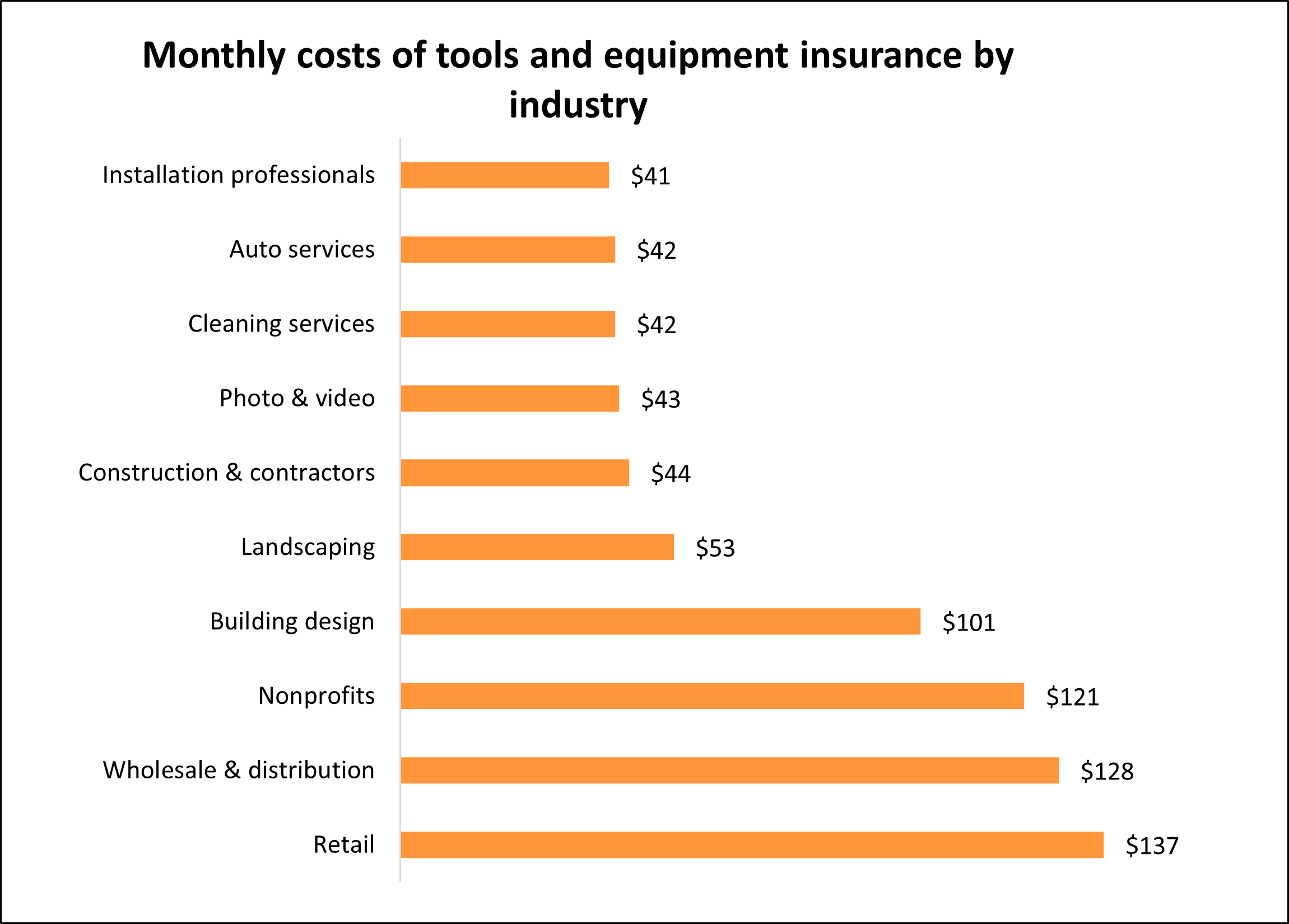
For example, photographers and videographers pay an average of only $43 per month to insure their cameras, tripods, and filming equipment they bring to event venues and shooting locations.
Wholesalers and distributors usually need coverage for valuable inventory stored off-site and shipped to different places, which is why they pay a higher premium of $128 per month, on average.
This chart illustrates how your type of business can affect the cost of tools and equipment insurance coverage:
Top industries we insure










Type of property and valuation method
When buying tools and equipment insurance, you can choose to cover your property in two different ways:
- Replacement value. Replacement cost coverage is more expensive because it pays for the purchase of a brand-new replacement item.
- Actual cash value. Actual cash value coverage factors in depreciation and compensates you for the value of the used item.
In either case, you'll want to choose limits that can provide sufficient compensation for any financial losses. It generally costs more to insure high-value items, items that travel frequently, and items that are vulnerable to property damage or theft.
Types of hazards covered
A business insurance policy that covers open perils will cost more than a policy that covers named perils. This is because open perils coverage protects against all losses, except those specifically excluded in the policy, while named perils coverage only protects against losses listed in the policy.
Typically, tools and equipment insurance covers fires, vandalism, theft, and hail damage. Exclusions may include normal wear and tear, earthquakes, floods, equipment breakdown, spoilage, and vehicle damage.
You can buy commercial auto insurance that covers physical damage to business-owned vehicles, or specific coverage endorsements for other risks.
Business location
Location-specific factors that can affect property insurance premiums include:
- Local crime rates
- Risks of hurricanes and other natural disasters
- Population density
- Cost of materials and labor
- Proximity to emergency services
Insurance providers will assess how safe your items are when determining your premium. For example, tools secured in a client's locked office will cost less to insure than tools left at an unfenced construction project.
Claims history
A history of insurance claims can impact your insurance rates. A company with a lengthy list of previous claims will likely pay more for tools and equipment insurance than a company that has never filed a claim.
To avoid claims and keep your rates low, it helps to store business property securely and invest in security measures like burglar alarms and surveillance cameras.
How can you save money on a tools and equipment insurance policy?
It’s easy to save money on your tools and equipment policy without compromising on coverage.
Here are some strategies to keep costs down and avoid more expensive rates:
Bundle policies
Small businesses with low risks are usually eligible for a business owner's policy (BOP), which includes both commercial property insurance and general liability insurance at a lower rate than buying these policies separately. Another option for small and midsize businesses with higher risks is a commercial package policy (CPP), which also includes general liability coverage and property insurance.
When you buy a BOP or CPP, you can often add other types of coverage, such as tools and equipment insurance. Another common add-on is business interruption insurance, which covers temporary downtime caused by a fire or other property claim.
When you buy insurance for your tools and business equipment, you can choose to pay the premium in monthly or annual installments. Insurers usually offer a discount when you pay the full annual premium.
Manage your risks
A strong risk management strategy can help you avoid claims and keep your premium low.
That might include:
- Padlocks
- Fences and barriers
- Burglar alarms
- Smoke detectors
- Sprinkler systems
- Surveillance cameras
In addition, make sure your employees know how to properly store and maintain your company's tools, equipment, and other valuable property.
Choose cheaper insurance options
Opting for lower limits or a higher deductible is an easy way to save money on your premium. However, make sure your limits are sufficient to cover any stolen or damaged equipment and that your deductible is affordable. If you can’t pay your deductible, you can’t collect on a claim.
Why do small businesses choose Insureon?
Insureon is the #1 independent agency for online delivery of small business insurance. We help business owners compare quotes from trusted providers, buy policies, and manage their coverage online.
By completing Insureon’s easy online application today, you can get free quotes for property insurance and other insurance products from top-rated U.S. insurance companies.
Our licensed insurance agents can answer any questions and help you find the right coverage options for your business needs. Once you find the right policy, you can begin coverage in less than 24 hours and get a certificate of insurance.
Verified business insurance reviews
Hear from customers like you who purchased small business insurance.
Learn more about business insurance costs













The average costs on this page were derived from our data on 100,000 small business owners who purchased policies through Insureon. Most of our customers have less than five employees, annual revenue ranging from less than $50,000 to more than $200,000, and five years or less in business.