


Top real estate professionals we insure








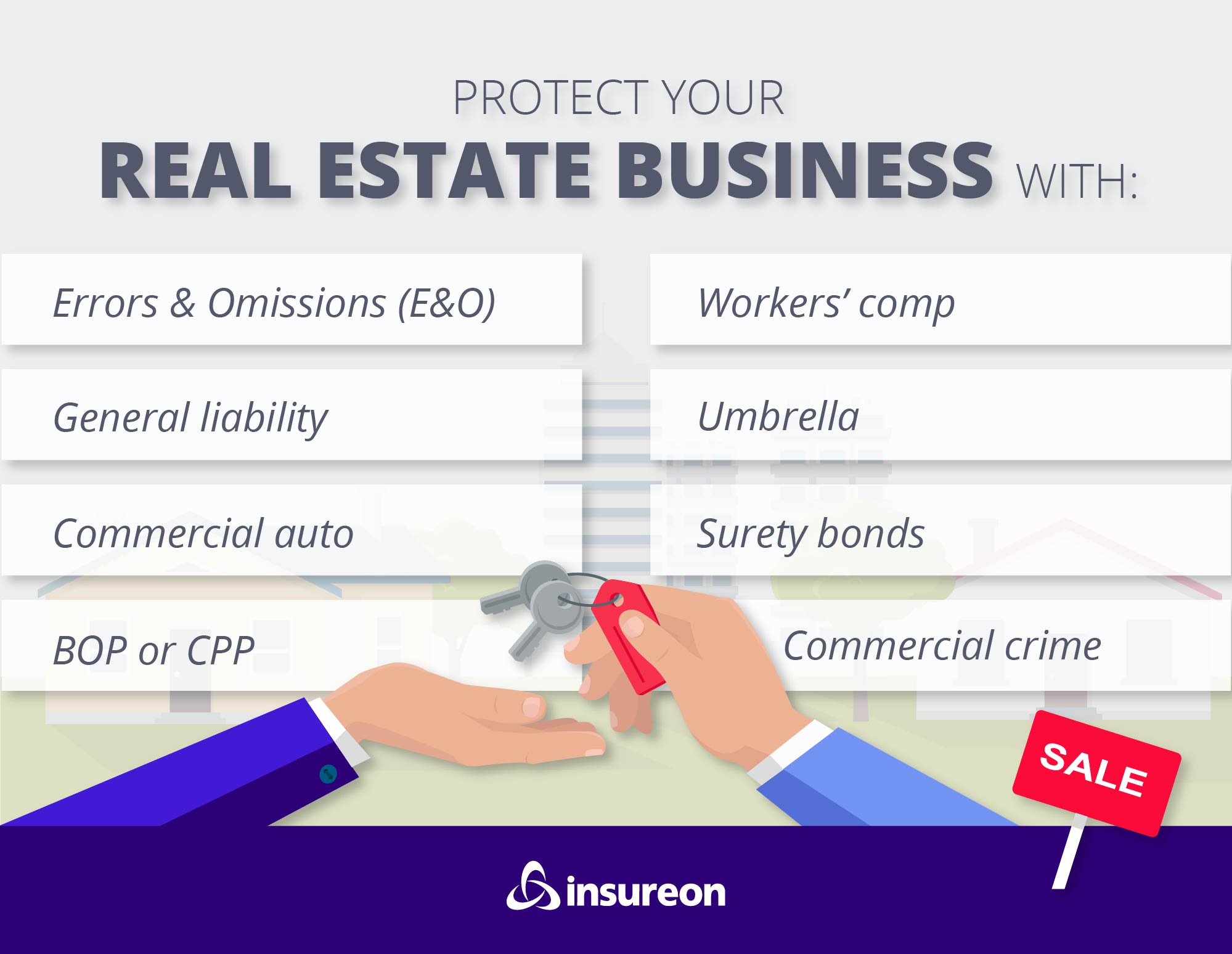
Recommended business insurance policies for real estate professionals
A simple mistake could have a big impact on your small real estate company. Business insurance can help you recover from a discrepancy in a listing, a lawsuit over tenant complaints, or a fire at your office.

Errors and omissions insurance
E&O, also called professional liability insurance, can cover legal fees for lawsuits related to your business decisions, including errors and oversights.
- Property listing disputes
- Negligent disclosure
- Document discrepancies

General liability insurance
This policy covers basic real estate business risks, such as customer property damage and injuries. Bundle it with property insurance for savings in a business owner’s policy (BOP).
- Slip-and-fall accidents
- Damaged customer property
- Libel and slander lawsuits

Commercial auto insurance
Commercial auto insurance covers costs when a real estate business's car is involved in an accident. Most states require this coverage for vehicles owned by a business.
- Auto accident injuries
- Damage to other people's property
- Vehicle theft and vandalism

Business owner’s policy
A BOP bundles property insurance and general liability insurance under one plan. It's often one of the most cost-effective commercial insurance policies for real estate professionals.
- Customer injuries
- Damaged customer property
- Damaged business property

Workers' compensation insurance
Most states require workers' comp for real estate businesses that have employees. It also protects sole proprietors from work injury costs that health insurance might deny.
- Employee medical expenses
- Disability benefits
- Lawsuits from employee injuries

Cyber insurance
This policy helps real estate professionals recover financially from data breaches and cyberattacks. It's recommended for any business that stores customer information.
- Customer notification costs
- Fraud monitoring services
- Data breach investigations
How much does insurance cost for real estate professionals?

A real estate agency with only a few employees can expect the cost of business insurance to be lower than that of a larger agency.
- Type of business, such as residential or commercial real estate
- Personal property coverage options (actual cash value vs. replacement cost)
- Business revenue
- Location
- Number of employees
- Coverage limits and deductible
How do I get real estate business insurance?
It’s easy to find real estate insurance with Insureon. Whether you’re an independent real estate agent, a property manager, or a mortgage broker, you’ll need to have some basic information about your business available.
Our application will ask you for your annual revenue and payroll, among other details. You can buy a policy online and get a certificate of insurance with Insureon in three easy steps:
- Complete our free online application.
- Compare free quotes and choose a policy.
- Pay for your policy and download a certificate for proof of insurance.
Insureon's licensed insurance agents work with top-rated U.S. providers to find the right insurance solutions for your real estate business, whether you work alone or run an agency with multiple employees.
Verified business insurance reviews
Hear from customers like you who purchased small business insurance.
Common questions about real estate business insurance
Are real estate professionals required to carry E&O insurance?
Whether you're required to carry errors and omissions insurance depends on your profession and the laws in your state. In particular, real estate agents and brokers sometimes need to carry a certain amount of this coverage to get licensed in their state. They might also need a surety bond.
Every real estate professional can benefit from this coverage, especially when an error or oversight could prove financially damaging to a client. The combination of E&O insurance and general liability insurance together will protect you against the most common lawsuits from clients, as part of a recommended risk management plan.
Do real estate property owners need additional coverage?
When you rent out a building, you take on risks that may require specialized coverage. Insureon's licensed agents recommend these policies for commercial landlords and other real estate owners:
- Lessor's risk only (LRO) protects landlords against lawsuits from tenants related to injuries and property damage.
- Building insurance helps cover costs when a storm, fire, or other covered peril damages or destroys your building. It can typically be added to your LRO coverage.
- Landlords with multiple properties may also consider blanket insurance, which covers several buildings under one shared limit and can typically be added to your commercial property coverage.
What other insurance coverages do real estate businesses need?
All real estate businesses can benefit from the following policies, in addition to those mentioned above. They can help you in the event of catastrophic losses from a lawsuit, or a devastating property claim that forces your business to close.
- Business income insurance, also called business interruption insurance, covers costs when a fire or other covered property claim forces you to close your business temporarily. It's often included with commercial property insurance or your business owner's policy.
- Commercial umbrella insurance increases the protection of your other liability coverages, such as general liability, commercial auto, and employer's liability insurance. It activates when the underlying policy reaches its limit on a claim.
- Per-location aggregate endorsement gives each of your properties its own separate aggregate limit, rather than sharing one limit across all of them. This general liability policy add-on can help prevent a major claim at one property from reducing the coverage available at the others.
An Insureon agent can help you find coverage options for other exposures, such as flood insurance for water damage, to make sure you’re fully protected.
What is a hold harmless agreement?
You may see the term hold harmless agreement during your search for real estate insurance. Also called an indemnity agreement, it protects your business by requiring others to agree not to sue you in certain circumstances.
As an example, a commercial landlord might ask their renters to sign a hold harmless agreement in order to avoid liability if someone gets injured or their property is damaged while visiting them. It's a good way for businesses that would otherwise face high risks to avoid costly lawsuits.
Find real estate business insurance quotes
Read our blog posts


Thank you for being the economic backbone of our communities. Behind every small business is a story of independence and resilience, from late nights and big ideas to the courage to bet on...


Opening a real estate investment company can be a rewarding endeavor, providing passive income, professional freedom, and a path to scalable wealth building. Here’s a step-by-step guide to getting...

Want free expert advice right in your inbox?
By entering your email address and subscribing, you agree to our Terms of Use and Privacy Policy