


Get the right insurance for your Connecticut business



Which policies are recommended for Connecticut businesses?
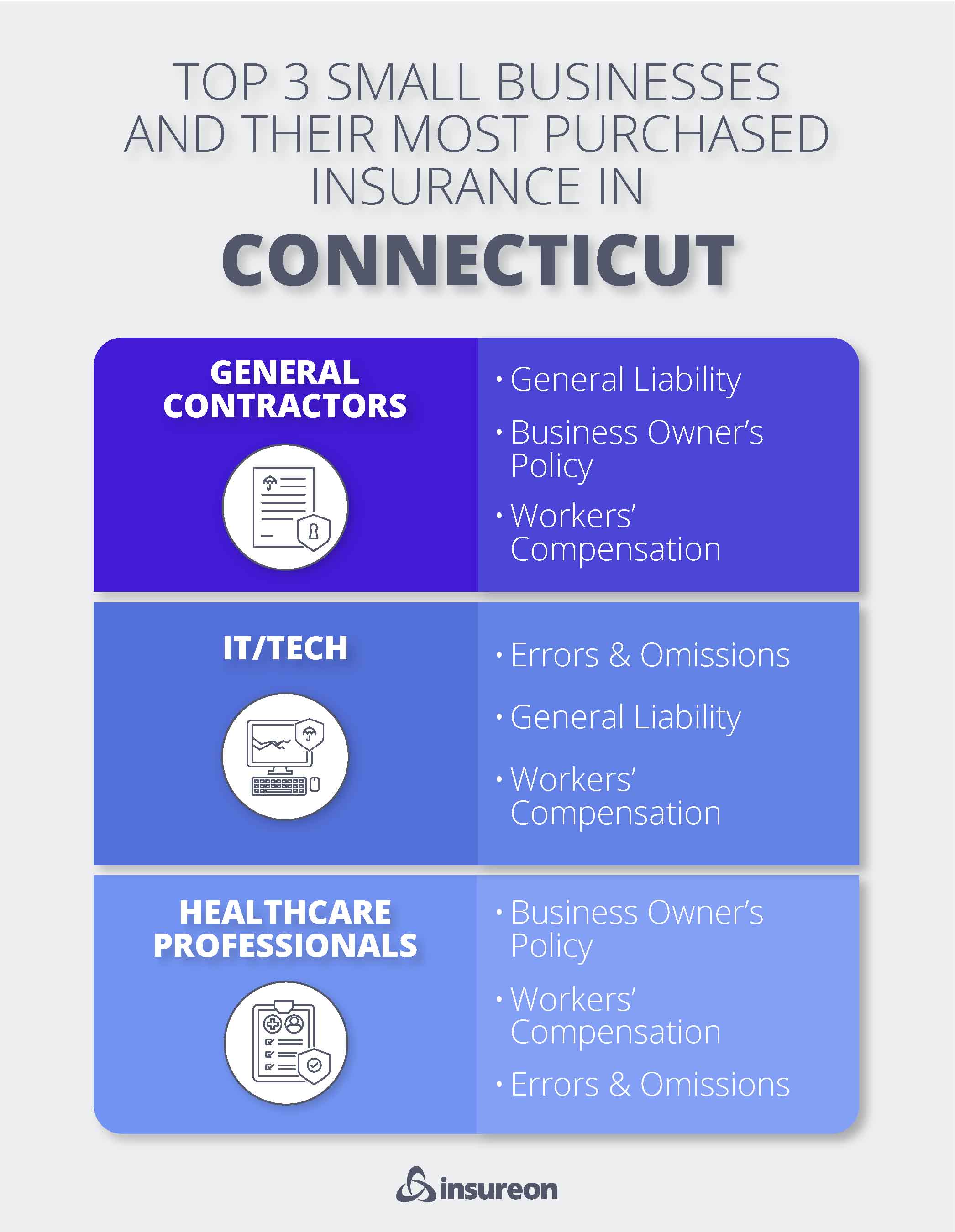
Small businesses in Connecticut most often buy these types of insurance.

General liability insurance
A commercial general liability policy is important for all Connecticut businesses. It covers common risks, including slip-and-fall injuries. Most commercial leases require this coverage.
- Customer injuries at your business
- Damaged customer property
- Libel and other advertising injuries

Workers’ compensation insurance
Workers’ compensation is required for CT businesses that have employees. It also protects sole proprietors from work injury costs that health insurance might deny.
- Employee medical expenses
- Disability benefits
- Lawsuits from employee injuries

Commercial auto insurance
This policy is required for business-owned vehicles in Connecticut. It covers injuries and property damage in an accident, along with vehicle theft, vandalism, and weather damage.
- Accidents involving commercial vehicles
- Theft of a business-owned vehicle
- Damage to a company vehicle

Business owner’s policy
A BOP bundles commercial property insurance and general liability coverage in one plan. It's often the most cost-effective business insurance policy.
- Customer injuries
- Damaged customer property
- Damaged business property

Professional liability insurance
This policy, also called errors and omissions insurance (E&O), protects consulting firms and other professional services. It covers lawsuits over erroneous, late, or undelivered work.
- Work mistakes and oversights
- Professional negligence lawsuits
- Late or incomplete work

Errors and omissions insurance
E&O, sometimes called professional liability insurance, is common with professional services in Connecticut. It can cover the cost of lawsuits related to your work performance.
- Missed deadlines
- Accusations of negligence
- Errors and oversights

Cyber insurance
This type of insurance helps Connecticut businesses survive data breaches and cyberattacks by paying for client notification costs, legal fees, and other related expenses.
- Data breach lawsuits
- Client notification expenses
- Fraud monitoring costs

Commercial umbrella insurance
Umbrella insurance boosts coverage on your general liability insurance, commercial auto insurance, and employer's liability insurance when the underlying policy reaches its limit.
- Customer lawsuits
- Auto accident lawsuits
- Employee injury lawsuits

Commercial property insurance
This policy covers the value of a business's physical structure and its contents, such as inventory, equipment, and furniture. Bundle it with general liability coverage in a BOP for savings.
- Fire
- Theft and vandalism
- Weather damage
Verified business insurance reviews
Hear from customers like you who purchased small business insurance.
Which business insurance policies are required in Connecticut?
Regional laws can determine the types of small business insurance coverage you need. These policies are required everywhere in Connecticut, from Norwich to New Haven.

Workers' compensation insurance
All businesses with employees in the state of Connecticut are required to carry workers’ compensation insurance. This policy covers medical bills for work-related injuries and illnesses, and also provides part of the wages lost while the employee is recovering.
Household employees who work fewer than 26 hours per week, such as housekeepers and caregivers, are an exception. All other employees, whether they’re part-time, full-time, or seasonal, must be covered under an employer’s workers’ compensation insurance according to Connecticut law.
Commercial auto insurance
All business-owned vehicles in Connecticut must be covered by commercial auto insurance. It protects against financial loss in the event of an auto accident.
Connecticut's auto insurance requirements are:
- $25,000 bodily injury liability per person
- $50,000 bodily injury liability per accident
- $25,000 property damage liability per accident
- $25,000 uninsured/underinsured motorist coverage per person
- $50,000 uninsured/underinsured motorist coverage per accident
Trucking companies may need additional coverage to comply with regulations.
Though it's not required, personal vehicles driven for work purposes should be covered by hired and non-owned auto insurance (HNOA), as personal auto policies usually exclude business use. It can be added to general liability insurance or a business owner's policy.
How much does small business insurance cost in CT?

Commercial insurance can be affordable for small business owners. Based on policy data from Insureon customers in Connecticut, the average costs are:
General liability: $48 per month
Workers' comp: $78 per month
Professional liability/E&O: $94 per month
Factors that influence business insurance costs include:
- Your industry and risks
- Business operations
- Number of employees
- Location, such as New Milford or Stafford
- Policy limits and deductibles
Top professions we insure





























FAQs about Connecticut business insurance
Review answers to frequently asked questions about Connecticut insurance.
How do I get a certificate of insurance for my business?
From Bridgeport to New Haven, Insureon's licensed agents can help you find policies that fulfill Connecticut's requirements and protect against financial loss.
Once you've purchased insurance with us, you can download a certificate of insurance (COI) by logging into your account.
Can my company be held liable for a data security breach?
Yes – that's why cyber insurance is so crucial. Small businesses are a common target of cyberattacks since they often have fewer security measures in place.
Connecticut's data breach laws require businesses to report security breaches to affected residents, and the costs can escalate quickly. Cyber liability insurance lessens the financial impact by paying for notification costs, legal fees, and fines.
Does my industry affect state insurance requirements?
Yes, your state may have special requirements for business liability insurance and bonds for your industry. You may also need a license depending on the work you do.
Contractors often need to carry general liability insurance or surety bonds to perform certain types of work. Having the right insurance and bonds helps you comply with state licensing requirements.
Real estate agents and brokers and other professionals who offer advice or services sometimes need errors and omissions insurance (E&O) to get licensed in their state.
State law requires that practicing physicians carry professional liability insurance coverage.
Cannabis businesses in Connecticut may need to carry a surety bond or proof of assets to operate legally.
Note that cities and counties may have their own laws, in addition to state laws.
How can I save money on Connecticut small business insurance?
As with any purchase, shopping around is one of the best ways to find an affordable option. With Insureon, you can compare quotes from top-rated insurance carriers by filling out a free online application.
Other ways to save include bundling policies for a discount, and choosing less expensive policy options, such as lower limits or a higher deductible. Learn more about how to find cheap business insurance.