

Find handyman insurance quotes
Save money by comparing insurance quotes from top-rated carriers.

Handyman work comes with risks unique to each job. The right handyman insurance policies protect your business if you fall from a ladder, your tools are stolen, or an unhappy customer files a lawsuit. State laws and client contracts will likely require coverage.
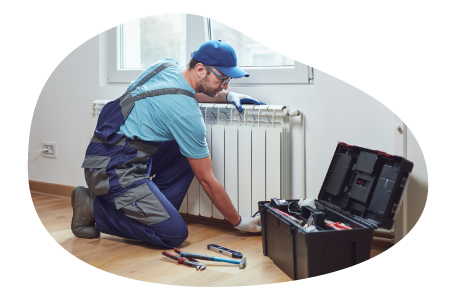

Insureon helps you find insurance policies that match the unique risks of repair work.
Fill out our easy online application to get free quotes from top-rated providers. A licensed insurance agent will help you every step of the way.
These business insurance policies cover common risks of handyman repairs and maintenance.

A general liability policy covers basic risks, such as accidental damage to a client's sink. Bundle it with commercial property insurance for savings in a business owner’s policy (BOP).

This policy covers a handyperson's hammers, saws, drills, wrenches, and other tools if they are lost, stolen, or damaged at a jobsite or in transit. It's also called inland marine insurance.

Most states require workers’ comp for handyman businesses that have employees. It also protects sole proprietors from work-related medical bills that health insurance might deny.

A commercial auto policy covers third-party bodily injuries and property damage in accidents involving work vehicles. It can also cover vehicle theft and vandalism.

A BOP bundles general liability coverage and commercial property insurance at a discount. It's often the most cost-effective type of insurance for handyman businesses.

Professional liability insurance covers legal fees when a handyman is sued for a mistake or oversight. It's also called errors and omissions insurance (E&O).

A handyman contractor who works alone will pay less for insurance than a larger business.
Average handyman insurance costs include:
General liability: $81 per month
Tools and equipment: $42 per month
Workers' compensation: $108 per month
Insurance providers will consider the type of work you do, the size of your business, and other factors when calculating your costs.
Here are some of the factors that affect your premiums during the underwriting process:
Our insurance agents can help you find ways to reduce your costs while still getting the coverage you need.

It’s easy to get handyman insurance coverage if you have your business information on hand. Our insurance application will ask for basic facts about your small business, such as revenue and number of employees.
You can buy a policy online and get a certificate of insurance (COI) with Insureon in three easy steps:
Insureon's licensed agents work with top-rated U.S. providers to find the best handyman insurance for your business, whether you work independently or hire employees.
Hear from customers like you who purchased small business insurance.
Review answers to frequently asked questions about handyman insurance.
There isn't a specific "handyman license" that you need when you first start your business, though you may need a general business license. Some states or cities may require you to get a contractor's license, but you won't need it for basic home repair tasks.
License requirements for handyman services vary by location and the regulations set in place by your state contractor licensing board. Some states require a general contractor’s license for performing work above a certain dollar amount. The type of work also determines whether you need a license, such as an electrician license, plumber license, or HVAC contractor license.
If you only do smaller projects and side gigs like gutter cleaning, light painting jobs, and minor drywall repairs, you likely won't need a license. But you will need a license to take on anything requiring a construction permit, like major remodeling, structural work, or projects involving electrical or plumbing systems.
Being licensed, bonded, and insured shows your business is reliable and can help you win contracts. Project owners, such as homeowners and general contractors, might only hire contractors who are licensed or show proof of insurance.
With Insureon, you can typically download a certificate of insurance to show to clients, landlords, and project owners the same day you apply for quotes.
While handymen and general contractors both focus on repairs, maintenance, and construction work, there are several differences between them. This includes their licensing and insurance requirements, and the size and type of projects they are able to take on.
A general contractor often works on larger projects and can build new homes, perform major renovations, and complete structural work. They may also hire subcontractors to work on specialty projects, such as an electrician, plumber, flooring installer, or roofer.
A handyman is usually a jack-of-all-trades who handles a variety of small-scale projects and home maintenance tasks, such as pressure washing, basic carpentry, and fixing leaking faucets.
Any contractor who does work on client properties could end up facing hefty medical bills or legal costs, which makes insurance essential. Most often, you'll want to secure your own coverage. In some cases, you can get added to the project owner's policy as an additional insured.
Keep in mind, personal insurance won't cover work-related claims, so you can't depend on personal auto insurance, homeowner's insurance, or health insurance for coverage.
Here are the top policies you should consider if you work independently:
If you hire 1099 contractors or subcontractors, they won't be covered under your policies, but you could be blamed for any damage they cause. You'll want to make sure they have their own coverage or add them to your policies as an additional insured.
Even for a single job or short-term project, liability insurance is essential due to the high cost of an accident or lawsuit. Your clients may also require you to have coverage.
While you could buy short-term liability insurance or seasonal insurance, there are several reasons to opt for year-round coverage instead:
Commercial property insurance won't cover business property outside of your primary location, which is why contractors need tools and equipment coverage. Also called inland marine insurance, this policy protects your gear wherever it goes, including at worksites that are vulnerable to theft.
Tools and equipment insurance covers:
Items valued at over $2,500 may need to be scheduled separately on the policy. Another type of inland marine insurance, installation floater insurance, covers appliances and materials awaiting installation at a jobsite.
Lawsuits can happen long after a job is completed. For example, a repaired pipe might break and flood a client's home, or a newly installed cabinet could fall off a wall and injure someone.
Fortunately, most general liability insurance policies include product liability insurance that covers these types of situations. You might also see this coverage called products-completed operations insurance, as it covers harm caused by both products and completed services.
For instance, it would also help pay for harm caused by a defective product, such as paint that peels due to a manufacturing error. If a customer files a lawsuit, it will help pay for attorney's fees, court costs, and a settlement or judgment.
Handyman contractors and other small business owners should consider the following types of coverage for a comprehensive risk management plan:
Handyman contractors and businesses can save money on general liability insurance by comparing quotes from different providers. With Insureon, you can get free quotes from top-rated insurance companies by filling out our easy online application.
Other ways to save money include:
Our agents can help you find the right contractor insurance for your budget and your business needs, whether your focus is furniture assembly, basic repairs, clogged drains, or other odd jobs.