




General liability insurance costs
The cost of general liability insurance varies for small businesses depending on several factors. As part of the underwriting process, insurers will consider your industry, where you are located, your business operations, and your history of claims.
What is the average cost of commercial general liability insurance?
Small businesses pay an average premium of $45 per month for general liability insurance. Annual policy costs range from around $250 to over $3,000 per year, depending on certain factors about your business.
A general liability policy covers accidents that harm customers, which is why businesses with heavy foot traffic pay more for this coverage. Other factors that can affect your premium include your business location, revenue, and the policy limits and deductible you choose.
Our figures are calculated using the median cost of policies sold by leading insurance companies to Insureon's small business customers. The median offers a better estimate of what your business is likely to pay because it excludes outlier high and low premiums.
Typical general liability insurance costs for Insureon customers
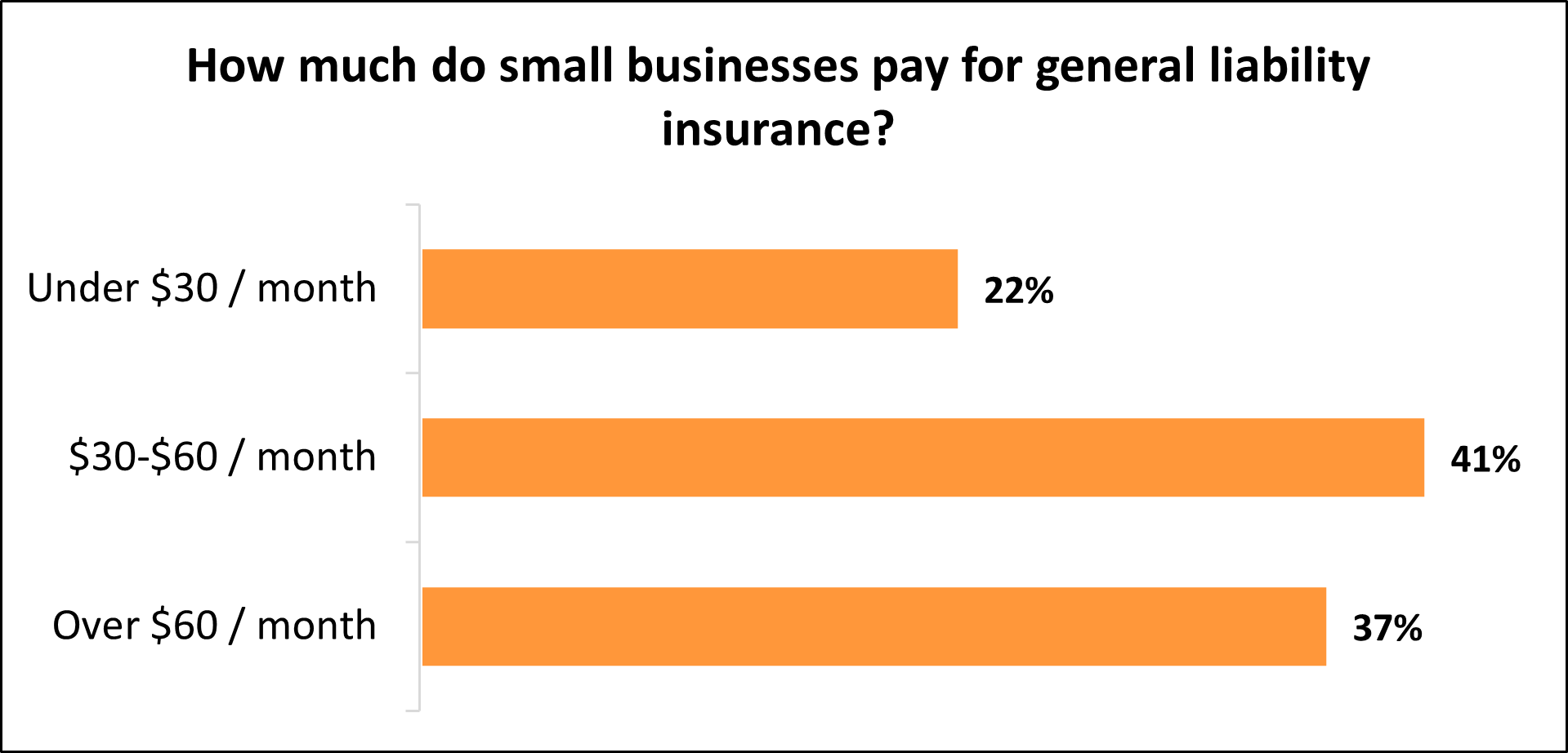
While Insureon's small business customers pay an average of $45 monthly for general liability insurance, 22% pay less than $30 each month, and 41% pay between $30 and $60 per month for coverage. Annual premiums range from a low of $265 to a high of $3,030.
The cost varies for small businesses depending on some factors outside your control, such as your business size, along with the amount of coverage you choose to buy.

Understanding general liability insurance cost factors
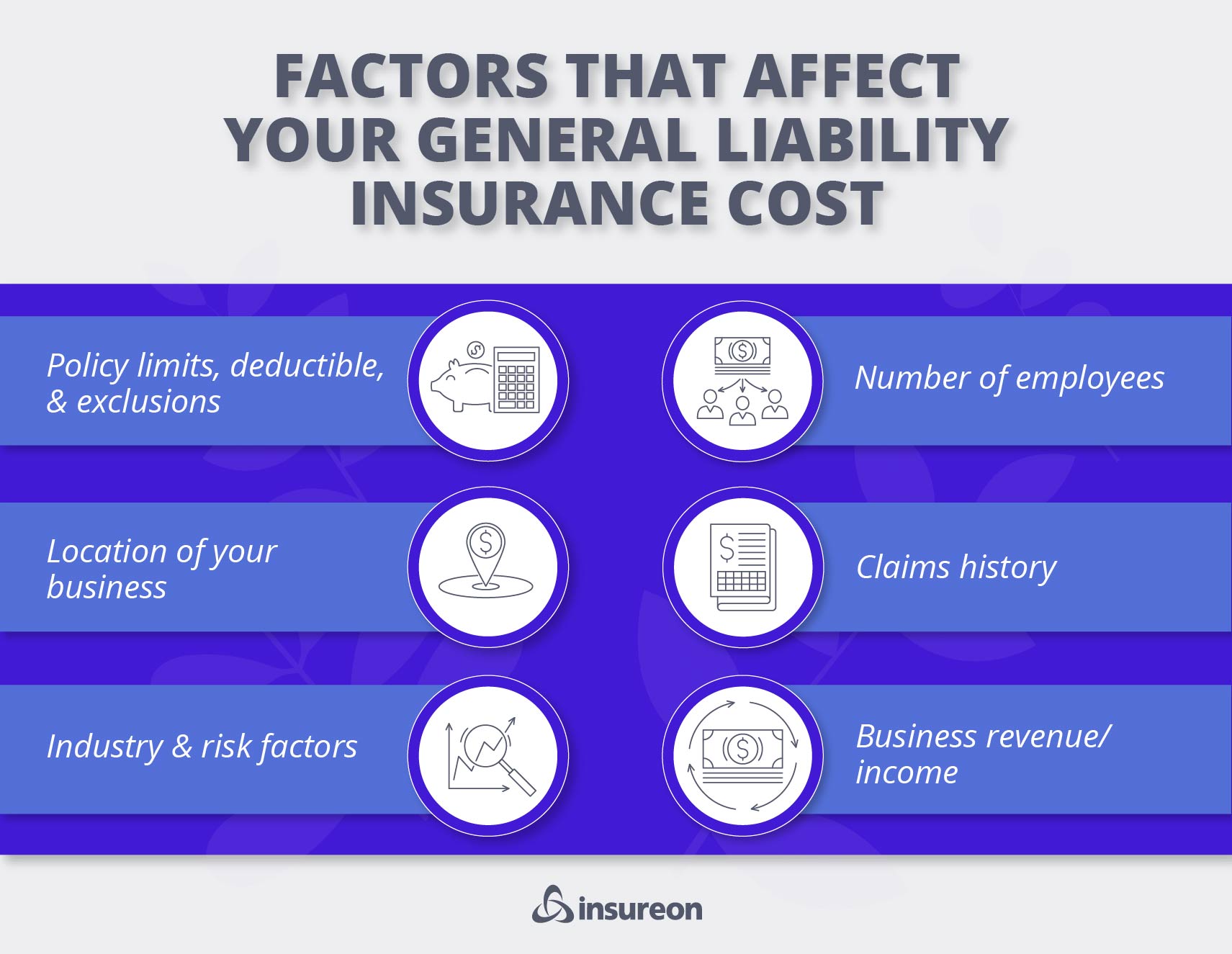
Your insurance provider calculates your general liability premium based on a number of factors, including:
- Industry risks and type of work
- Your policy limits and deductible
- Location of your business
- Number of employees
- Annual revenue
- Size and condition of business premises
- Your class code and payroll
- Experience in your profession
- Insurance claims history
An annual general liability insurance audit can help you determine if you have the right coverage or if you need to make adjustments. For instance, you may need higher coverage limits as your business grows and expands.
Industry risks
Your industry has the biggest impact on your general liability insurance premium. Generally, insurance companies charge high-risk industries higher premiums, while lower-risk businesses often pay only a small monthly premium for this coverage.
For example, businesses that are open to the public and are exposed to more risk, such as a coffee shop, will pay an average of $47 per month. Meanwhile, IT consultants working from a home office will only pay $32 per month for coverage due to lower risks. The graph below illustrates how the type of business affects what you'll pay for general liability insurance coverage.
Depending on the industry that you work in, such as construction or cannabis, you may be required by your state to carry comprehensive general liability insurance.
For other businesses that provide professional services, such as those in real estate, insurance, or healthcare, you may need professional liability insurance (also called errors and omissions insurance) before you can get a license.
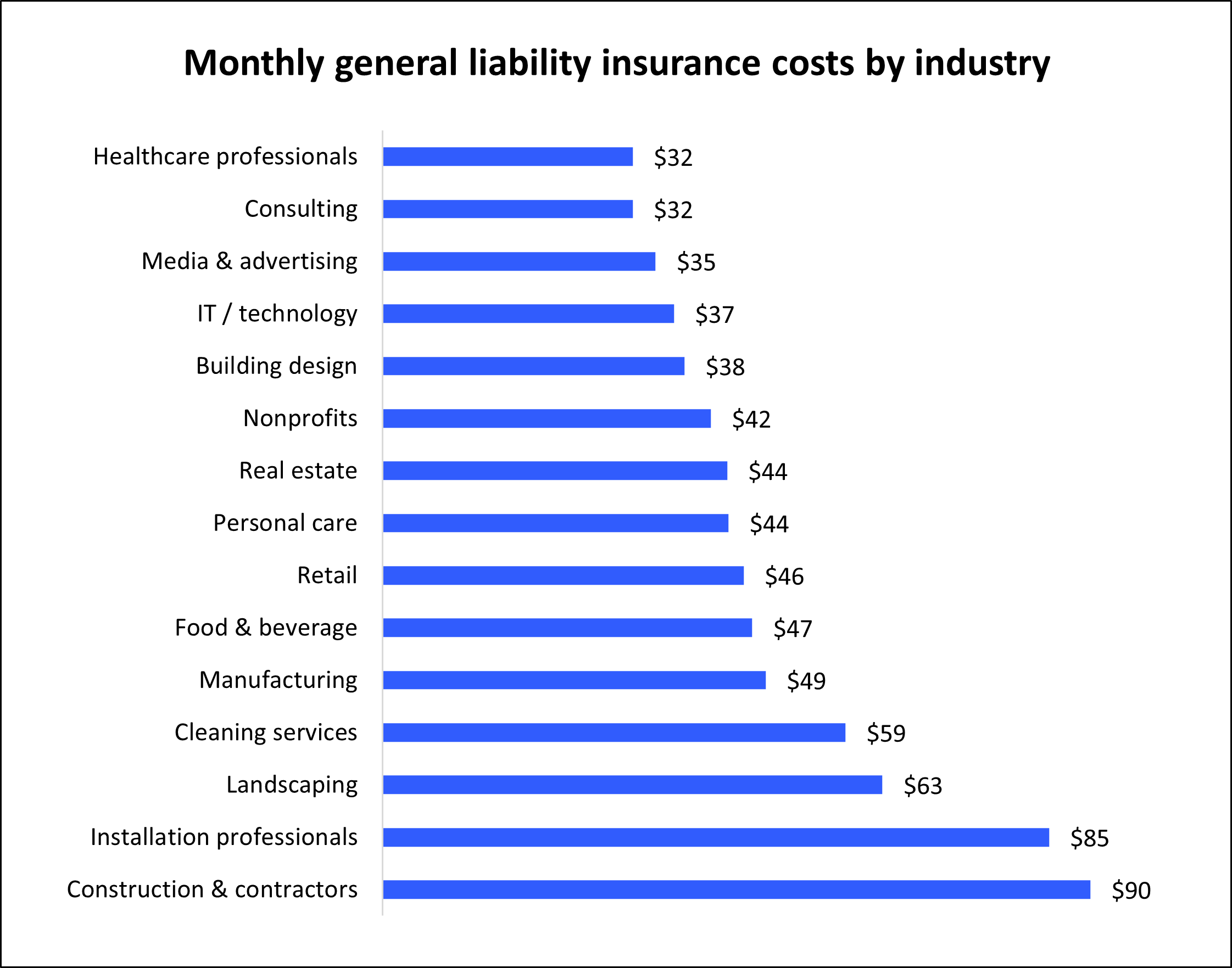
Policyholders who work in construction, installation, and landscaping have the highest general liability insurance premiums because they often do work that involves other people's property.
For example, an appliance contractor could pay anywhere between $85 to $90 per month for coverage, depending on whether they specialize in installing or repairing appliances.
General liability policies can pay for damage you or your employees cause to someone’s property.
Top industries we insure




















Policy limits and deductible
If you want car insurance that pays for a wide range of damage, you have to pay more for it. The same rule applies to business liability insurance. If you want a policy that covers more expensive accidents and lawsuits, expect to pay more than you would for basic coverage.
Most small business owners (85%) choose general liability policy limits of $1 million / $2 million. This includes:
- $1 million per-occurrence limit. While the policy is active, the insurer will pay up to $1 million to cover claims from a single incident.
- $2 million aggregate limit. During the policy period (usually one year), the insurer will pay up to $2 million to cover all claims.
Eight percent of our customers choose a policy with $2 million / $4 million limits, the next most popular choice.
When buying a policy, it's a good idea to make sure the deductible is something you can easily afford. If you can’t pay for it in a crisis, your insurance won’t activate to cover your liability claim. On average, Insureon customers choose a general liability insurance deductible between $500 and $1,000.
The right amount of insurance coverage depends on your business needs. You want coverage that'll cover a potential lawsuit, without buying more than you need. Chat with a licensed insurance agent if you're unsure how much coverage is appropriate.
Business location
Your business location can play a large role in the premium that you pay. For example, businesses that are situated in areas with higher crime rates or increased foot traffic may have to pay higher premiums than those located in less risky areas.
Premiums can also vary slightly depending on your state. Here are some examples of the average cost of general liability insurance across different states:
| State | General liability insurance cost |
|---|---|
$42 per month | |
$55 per month | |
$44 per month | |
$43 per month | |
$47 per month | |
$42 per month | |
$54 per month | |
$42 per month | |
$47 per month | |
$42 per month |
While general liability is recommended for many small businesses, most states will require by law that small business owners carry workers' compensation insurance if they have employees, and commercial auto insurance if they have business-owned vehicles.
Find business insurance requirements in your state
Number of employees
A larger workforce brings more opportunities for accidents, such as damage to someone else's property.
For example, if an employee spills a drink on a client's laptop, the client could sue your company to recoup the cost of repairing or replacing it.
Or if a customer slips and gets injured because an employee failed to mop up a spill, they could sue to recover their medical expenses. General liability insurance covers a wide range of accidents, including those caused by employees.
In contrast, business owners who are self-employed, such as sole proprietors and independent contractors, often pay only a small monthly premium for this type of coverage because there is less employee-related risk.
That's why your premium is tied to the number of employees you have. During the application process, you'll likely have to provide a breakdown of all full- and part-time employees, as well as the number of subcontractors or consultants you employ, so your insurance provider can accurately assess your risks.
Annual revenue
The amount of revenue your business generates can affect your insurance costs. Generally speaking, increased revenue leads to higher insurance premiums.
However, the impact depends on your industry. Construction businesses, for example, are sensitive to revenue increases. The cost of general liability can jump a decent amount as revenue increases, since insurance companies assume they are taking on more risk when they earn more.
On the other hand, office-based businesses, such as IT companies, typically see a marginal increase in general liability prices when their revenue increases. Due to the nature of the work, higher revenue doesn't involve higher risks, so they aren't as impacted.
Business premises size and condition
The size and physical condition of your office building or business location can significantly influence the price of general liability coverage.
Businesses with larger premises are considered higher risk because they have more areas where bodily injuries or property damage can occur to customers or clients. The age of the building will also be evaluated by your insurer, as well as whether the premises are up to code.
In general, if your business property is still comprised of older construction with a lack of accessibility options, this could in turn raise your general liability rates because it is then considered higher risk. In contrast, any newer construction that includes wheelchair ramps and other accessibility-friendly features would help keep your premium lower.
Class codes and payroll
General liability (GL) class codes are numbers that categorize businesses by the type of work they do and the level of risk involved. Insurance carriers will use these codes to estimate any potential claims and based on this information, they will your calculate general liability insurance premiums.
In general, businesses that are coded as higher-risk operations will see higher rates.
Years of experience
If you've only been in business for a year or two, your general liability premium may be higher. Many insurance carriers work under the assumption that the less experience you have, the more risk you present.
On the other end, if your business has been established for several years and you have a longer history of financial stability, your general liability cost would likely be lower.
Claims history
While a previous claim doesn't necessarily mean your general liability premium will be higher, there is a good chance it will influence your quote in some capacity.
Generally, many insurance carriers will evaluate claim histories on a per-case basis, and if your business has a long record of losses, it can increase your liability insurance costs. A cleaner claims record can help keep your premium prices low.
Does my business need general liability insurance?
A general liability insurance policy (sometimes called public liability insurance) is a must-have for small businesses, especially those with a storefront or other public space.
When someone sues your business—even if it's a frivolous lawsuit—you'll have to pay legal defense costs, such as the cost of hiring an attorney. If you lose the suit, you could end up paying a fortune in a court-ordered judgment or a settlement, in addition to any medical bills and witness fees.
Without this type of coverage, you'd have to pay these expenses out of pocket.
Specifically, businesses often need general liability coverage for the following:
Lease or contract requirements
Small businesses are often required to provide proof of general liability insurance to sign a lease, get a business loan, or sign a client contract.
For example, many contractors will be required to carry a per-project aggregate endorsement on their general liability policy before they sign a contract. This endorsement applies a separate aggregate limit to each specific job, rather than spreading one shared aggregate limit across every job in a policy period.
By ensuring a catastrophic claim from one jobsite won’t deplete the coverage from the others, this endorsement gives clients peace of mind.
Third-party injury or property damage
At any business, a visitor could suffer a slip-and-fall injury. If the visitor sues, legal fees can escalate to the point where they could sink your business.
General liability coverage will help protect against the financial risks of any a bodily injury or property damage to a client, customer, or other third party.
Most policies include product liability and food contamination coverage in that the event that a product that you manufacture or sell causes an injury, illness, or property damage to a third party.
Personal or advertising injury
Even if no one outside your company visits your office, someone could still hold your business liable for damages.
For example, businesses that run advertising campaigns or post on social media could face a lawsuit if they post content that doesn't belong to them, or make a false claim about a competitor.
Small businesses with general liability coverage will stay protected against claims of copyright infringement or other advertising injury.
How can you save money on general liability insurance?
There are several steps you can take to find cheap general liability insurance and avoid paying expensive rates:
Bundle your insurance policies. Business owners can often save money when they purchase multiple insurance policies from the same provider. For example, if your business is considered low risk, you may qualify for a business owner’s policy. A BOP bundles general liability insurance and commercial property insurance (which covers stolen or damaged business property) together at a reduced rate.
Pay your entire premium upfront. Your general liability policy premium can typically be paid in monthly or annual installments. It might be tempting to go with a smaller monthly payment, or only get short-term coverage, but consider paying the full premium. Many insurers offer discounts for premiums paid annually.
Manage your risks. If your small business has a clean claims history, you can expect lower insurance rates. An effective way to do this is to create a comprehensive risk management plan. For example, you might:
- Train employees to promptly clean up spills
- Invest in a security system
- Compile rules for posting to social media
- Create procedure checklists and reviews
- Minimize hazards on your premises
Skip unnecessary add-ons. While you might need to add a client to your policy as an additional insured, keep in mind that endorsements will raise your premium. Avoid any unnecessary riders, such as a blanket endorsement or extra expense coverage on a BOP, unless you need it.
Why do small businesses choose Insureon?
Insureon is the #1 independent agency for online delivery of small business insurance. We help business owners compare quotes from leading providers, buy policies, and manage their insurance coverage online.
By completing Insureon’s easy online application today, you can get free quotes for general liability insurance and other policies from top-rated U.S. insurance companies.
You can reach out to one of our licensed insurance agents if you have questions about general liability or other types of insurance, such as workers' comp or commercial auto insurance.
Once you find the right policy for your small business, you can begin coverage in less than 24 hours and get a certificate of insurance for proof of coverage.
Verified general liability coverage reviews
Learn more about business insurance costs















The average costs on this page were derived from our data on 100,000 small business owners who purchased policies through Insureon. Most of our customers have less than five employees, annual revenue ranging from around $50,000 to more than $200,000, and five years or less in business.