





























Find inland marine insurance quotes
Save money by comparing insurance quotes from multiple carriers.

The cost of inland marine insurance coverage varies based on several factors. Your premium is directly impacted by the value of your business property, your policy limits, industry risks, and more.
Small businesses pay an average of $48 per month for inland marine insurance. Annual premiums range from around $150 to over $4,500 per year.
Inland marine insurance covers portable business property wherever it goes. The cost depends mostly on the value of the insured property, along with other factors such as your industry, location, and claims history. Items valued at over $2,500 may need to be scheduled separately on the policy at a higher cost.
Our figures are calculated using the median cost of policies sold by leading insurance companies to Insureon's small business customers. The median offers a better estimate of what your business is likely to pay because it excludes outlier high and low premiums.
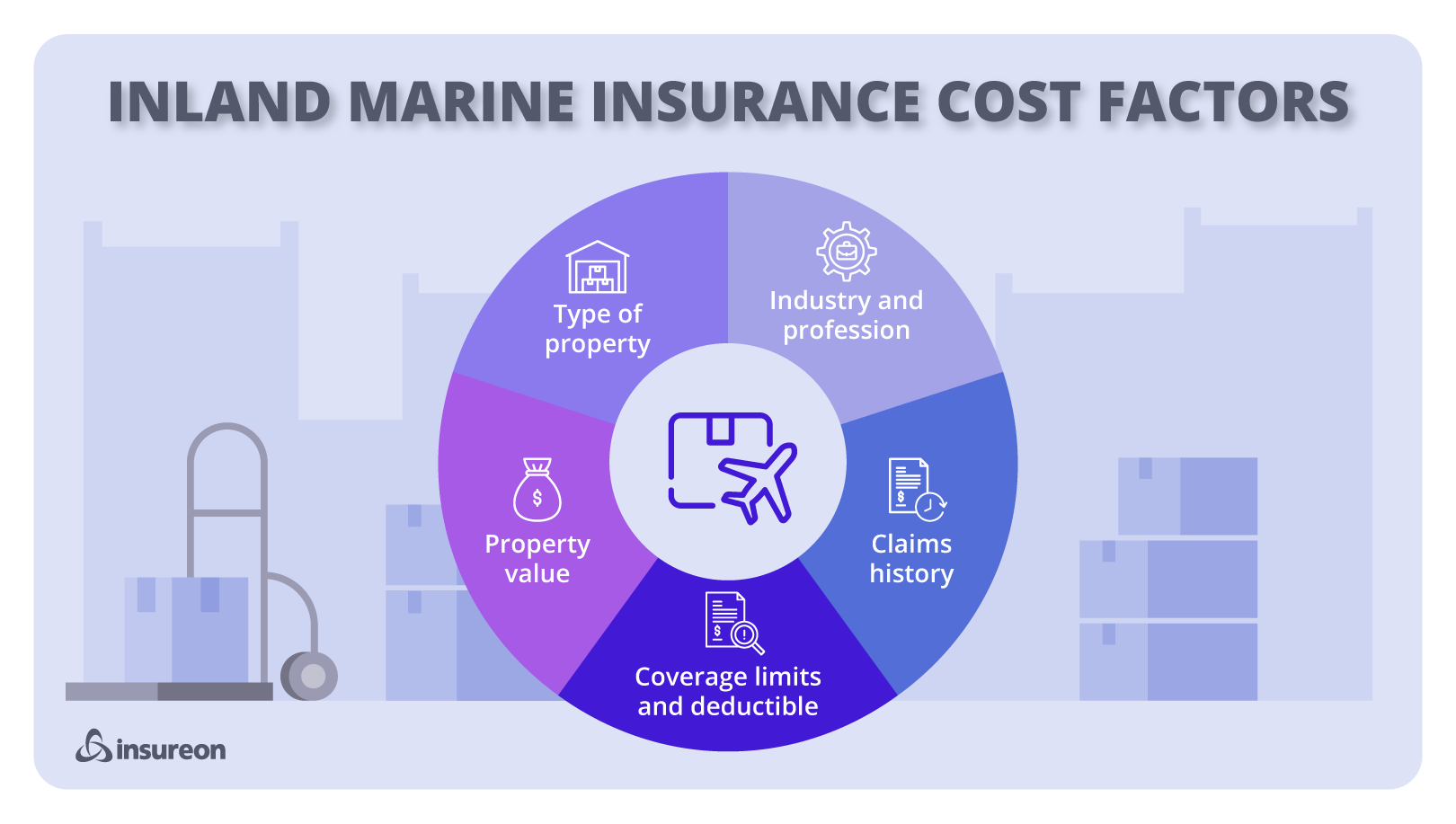
The cost of inland marine insurance for your small business depends on a number of factors, including:

Inland marine insurance is sometimes called tools and equipment insurance or equipment floater insurance, as it's often used to insure the items contractors bring to jobsites to do their work.
Different types of inland marine insurance provide coverage for different types of property. Policies designed to cover less expensive items will cost less than policies intended for valuable or high-risk items.
Here are the most common types of inland marine insurance:
Your policy's coverage limits should be enough to cover a potential claim, whether that's a fire in a food truck or a camera dropped by a photographer at a wedding. Higher coverage limits cost more but cover bigger losses.
Note that your deductible also affects the cost of insurance. A higher deductible will result in a lower premium, but you'll have to pay that amount before your insurer will cover a claim.
Similar to commercial property insurance, the cost of inland marine insurance depends primarily on the value of the items you want to insure. For example, it'll cost more to insure high-value items, such as fine art, truck cargo, bulldozers, and forklifts.
This is because the cost of claims for property damage and other incidents is higher for more expensive items. For example, a candle maker who brings homemade goods to trade shows and fairs has less to lose than a computer repair business that frequently transports costly PCs, laptops, and other high-end electronics.
You can also choose to be reimbursed for an item's replacement cost (the value of a brand-new replacement) or actual cash value (its current worth). Actual cash value policies are less expensive as they pay out less on a claim.
Your location can impact the cost of inland marine coverage and other types of business insurance. Some areas are more risky than others in terms of severe weather, crime, and other factors relevant to property claims.
For example, a consulting business in New York City can expect higher rates than a consulting business in Boise because of the increased risks of property damage and theft in a more densely populated urban area. Property values are also higher in New York City, which drives up insurance costs.
Additionally, businesses in states with frequent and devastating natural disasters, such as Florida, will likely pay higher rates than those in areas with fewer storms, such as Michigan.
The number of insurance claims your business has made can affect how much you pay for insurance.
Insurance companies view previous claims as an indicator of future risk, and will increase your rates accordingly.
For example, after a moving company files a claim to recover the cost of stolen goods, the company would likely see an increase in their inland marine insurance premium.
Some industries are more likely than others to own valuable property or expose it to risky situations, which brings up the cost of inland marine insurance.
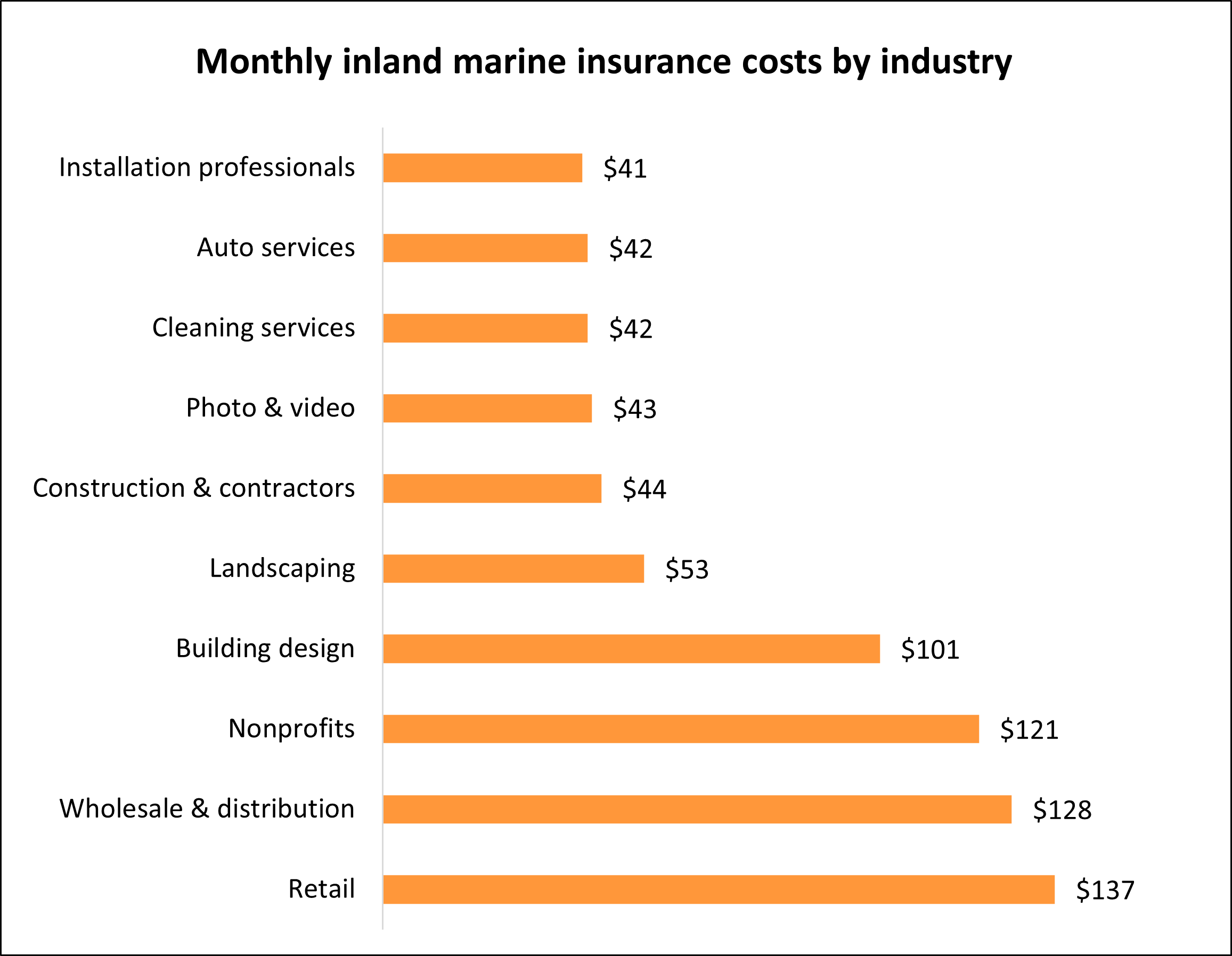
For example, retailers pay an average of $137 per month for inland marine insurance, which is expensive for this type of coverage. A retail store stands to lose thousands of dollars if a shipment is damaged in transit, or if there's a fire at the warehouse where their inventory is stored.
On the other hand, cleaners pay an average of only $42 per month for this coverage. A cleaning business might place a claim if their cleaning equipment is stolen, or if a customer's TV is damaged by a worker's harsh chemicals, but the cost of a claim would be much lower in comparison.
Because your profession helps determine the type of property you own and its risks, you can estimate how much you'll pay for inland marine insurance based on your type of business.
Here are the average costs for our top industries:
An inland marine insurance policy is a must-have for any business that has property away from its main location. That includes:
Even if you have a commercial property insurance policy, it only covers items at a business's fixed location, such as an office or storefront. Standard insurance policies often have exclusions for extremely valuable items or items that belong to customers, which is another reason a business might need inland marine insurance.
Professionals who bring their own equipment to jobsites rely on this coverage to get back to work quickly after a theft or other incident. If a lawn care company's tools are stolen from their truck, or a business's vending machines are vandalized, commercial property insurance won't cover the damages.
Inland marine insurance covers your business property wherever it goes and while it's in transit. Because the premium depends on the value of the insured property, small businesses and contractors often don't have to pay a lot for this coverage.
Here are a few ways to save money on your inland marine policy and avoid more expensive rates:
Bundle your insurance policies. Small, low-risk businesses can often buy property coverage and general liability insurance together in a business owner's policy (BOP). This typically costs less than buying the policies separately.
Pay the annual premium. Insurance providers usually offer a discount when the policyholder pays the annual premium instead of making monthly payments.
Lower your risks. Insurance claims will increase your premium, so it's best to avoid claims through risk management. For inland marine insurance, you might:
Get your property appraised. An accurate estimate of your business personal property (BPP) shows you how much insurance you need. Not enough coverage could leave you paying for damages, while too much coverage could mean you're overpaying for insurance.
Insureon is the #1 independent agency for online delivery of small business insurance. We help business owners compare quotes from trusted providers, buy policies, and manage coverage online.
By completing Insureon’s easy online application today, you can compare free quotes for commercial inland marine insurance and other policies from top-rated U.S. insurance companies.
Our insurance agents can help you every step of the way if you have questions about coverage options or your business insurance needs.
Once you find the right policy, you can begin coverage in less than 24 hours and get a certificate of insurance to show clients, lenders, and landlords that you're insured.
Hear from customers like you who purchased small business insurance.
The average costs on this page were derived from our data on 100,000 small business owners who purchased policies through Insureon. Most of our customers have less than five employees, annual revenue ranging from less than $50,000 to more than $200,000, and five years or less in business.