


Find the right commercial insurance for your business


What is commercial insurance?
Commercial insurance, or business insurance, protects small and midsize businesses (SMBs) from costly risks. Most business owners start with general liability insurance, which covers third-party lawsuits from slip-and-fall accidents and similar incidents. Other policies address risks like fires, theft, employee injuries, and data breaches.
State laws, clients, landlords, and lenders may require you to carry insurance. Most importantly, by choosing the right coverage you can protect yourself against common liabilities and avoid losses that could lead to bankruptcy.
How to get commercial insurance coverage for your business
Insureon is the #1 digital business insurance agency. Our streamlined process helps you find coverage from top U.S. carriers for your specific risks at an affordable rate.
If you already know what kind of insurance you need, you can fill out Insureon's easy online application to get free quotes from top-rated insurers. Most business owners can buy coverage online and get a certificate of insurance within 24 hours.
Small businesses
- Businesses with 1 to 20 employees, including sole proprietors, independent contractors, freelancers, startups, single-member LLCs, and microbusinesses
- Expect direct quotes within minutes of applying
- Buy online and quickly download proof of coverage
Midsize businesses
- Businesses with 21 to 100 employees, including LLCs, partnerships, franchises, S corps, and C corps
- Depending on your profession, get fast online quotes or a referral to a broker who can match your risks
- Talk to a licensed agent to secure the right coverage
What are the most common types of commercial insurance?

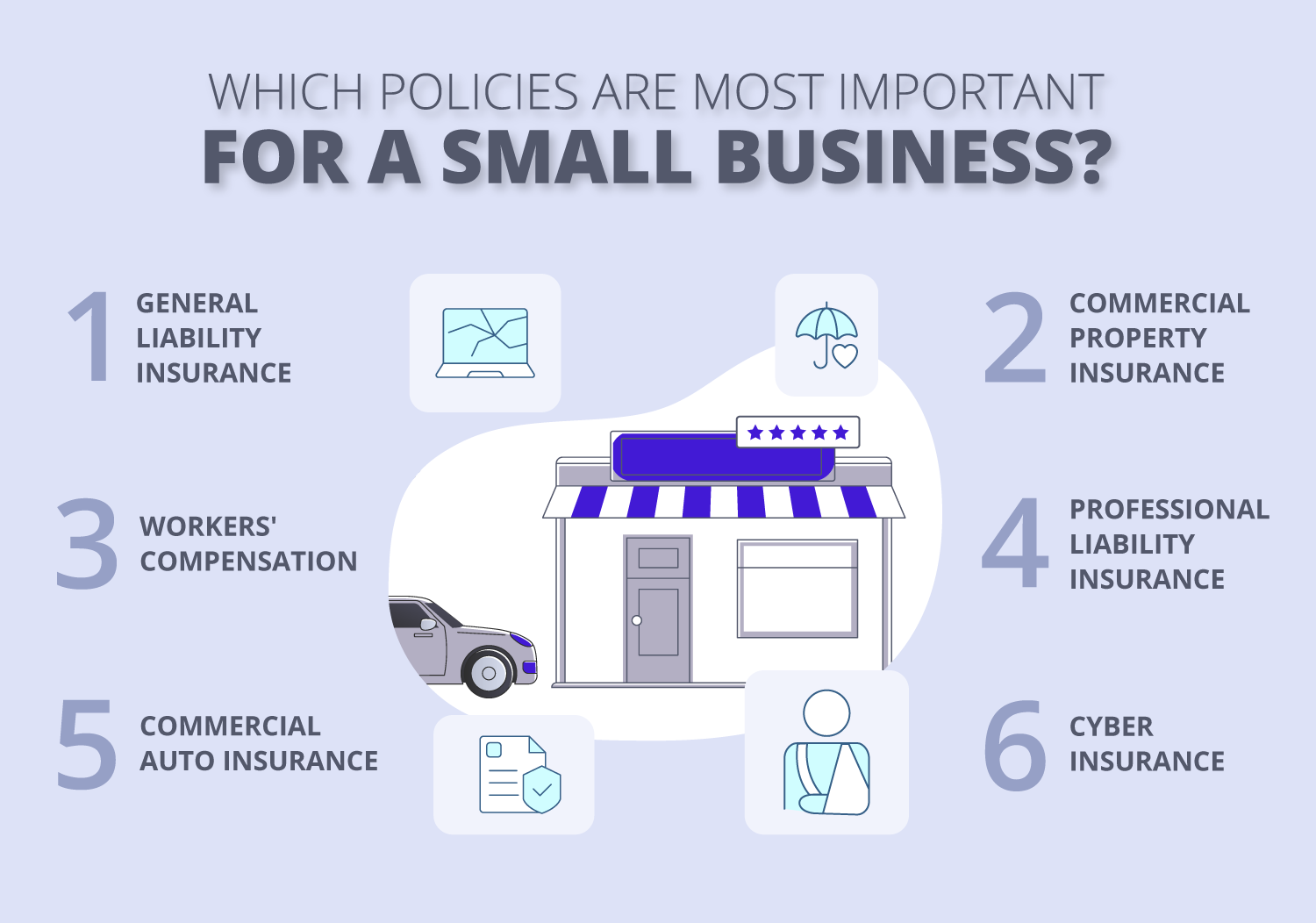
General liability insurance
Commercial general liability insurance covers common third-party risks and helps you comply with laws and contracts. Midsize businesses may need higher limits than small businesses.
- Client accidents and injuries
- Damage to customer property
- Libel and other advertising injuries

Business owner’s policy
A business owner's policy (BOP) for small businesses, or a commercial package policy (CPP) for midsize businesses, bundles general liability and commercial property coverage at a lower price.
- Customer bodily injuries
- Damaged business property
- Business interruption incidents

Workers’ compensation insurance
Workers' comp covers employees who are injured on the job. Businesses that operate in multiple states need to follow each state's regulations, but it's typically required for every employee.
- Medical bills from work-related injuries
- Disability benefits to offset lost wages
- Legal fees from workplace injuries

Commercial auto insurance
Commercial auto insurance provides liability protection for company-owned vehicles. Small business owners can buy hired and non-owned auto insurance if they drive their own vehicle for work.
- Medical costs if someone is injured
- Property damaged by a company vehicle
- Vehicle theft and vandalism

Professional liability insurance
Small and midsize businesses that offer professional services or advice rely on this policy for protection against negligence lawsuits. It's also called errors and omissions insurance (E&O).
- Mistakes and oversights
- Undelivered work or services
- Advice that causes financial loss

Commercial property insurance
A commercial property policy covers a business's building and the physical assets inside it, such as inventory, equipment, and furniture. You can often add business interruption insurance.
- Fires
- Storms
- Vandalism and theft

Errors and omissions insurance (E&O)
This policy provides crucial protection against negligence lawsuits for small and midsize businesses that offer consulting or professional services. It's also called professional liability insurance.
- Work errors and oversights
- Accusations of negligence
- Missed deadlines

Cyber insurance
Cyber liability insurance protects against the financial impact of data breaches and cyberattacks. Premiums will increase for bigger businesses and those with more cyber risks.
- Cyber incident investigations
- Data breach notification costs
- Fraud monitoring services

Commercial umbrella insurance
Umbrella insurance boosts the coverage limits of general liability and other policies. Midsize businesses often need umbrella coverage to fulfill client requirements for higher limits.
- Accidents that injure customers
- Multi-vehicle auto accidents
- Negligence in workplace safety
How much does commercial insurance cost?

Commercial insurance is often affordable, especially for low-risk industries.
Here are the average costs for our top insurance policies:
General liability insurance: $45 per month
Workers' comp: $54 per month
Professional liability / E&O: $88 per month
Average costs for BOP and CPP bundles are $83 per month and $117 per month, respectively. Your premiums depend on the limits and deductibles you choose, among other factors.
What factors affect business insurance costs for small and midsized companies?
Overall, small businesses pay lower rates for commercial insurance than midsize businesses. As your revenue, workforce size, and related risks increase, you can expect your premiums to go up.
Here are some of the top factors that underwriters use to calculate insurance premiums:
- Industry risks: High-risk businesses that do physical labor, like construction, or provide a service that clients rely on financially, such as SaaS companies, can expect higher insurance rates.
- Annual revenue: In general, businesses that earn more revenue are associated with costlier claims, which means they pay more for insurance.
- Number of employees: A bigger workforce means an increased risk of accidents and injuries, which raises the cost of general liability, workers' comp, and similar policies.
- Property value: A midsize manufacturer that needs to insure an assembly line and machinery will pay more for insurance than a crafter who has simpler tools.
- Location: Localized factors, such as crime rates, healthcare costs, foot traffic, risk of natural disasters, and property values, can impact premiums for both small and midsize companies.
- Risk management: Insurance companies may offer lower rates to businesses that have well-trained staff, routine maintenance, and strong safety measures.
- Policy limits and deductibles: You can save money on insurance by opting for lower limits or higher deductibles on your policies, but make sure it's enough to cover a potential claim.
- Claims history: A business that has filed a claim in the past will cost more to insure than one with a clean claims history.
Verified business insurance reviews
Hear from customers like you who purchased small business insurance.
What is the difference between small business insurance and midsize business insurance?
As your business grows, so will your insurance needs. A medium-sized business may need higher limits or additional policies to accommodate an increased risk of lawsuits, an office, a board of directors, or a larger inventory.
For instance, you might begin with a $1 million general liability policy, then win a contract with a client who requires higher limits. Commercial umbrella insurance, or excess liability insurance, can help you meet demands for business liability insurance beyond the standard limits.
Similarly, you may run into additional requirements in terms of workers' compensation and commercial vehicle insurance if your business expands to other states. Each state has its own regulations for these policies, though you'll typically need workers' comp for every employee you hire and commercial auto for any vehicles your business owns.
Insurance companies offer specialized products for businesses, depending on their size. A commercial package policy is a popular choice for midsize businesses that have outgrown a business owner's policy. You can also buy fleet insurance if your business owns several vehicles.
What other types of coverage do medium-sized businesses need?
As your business grows and you delegate more work to others, you might need one or more types of management liability insurance, such as:
- Employment practices liability insurance (EPLI) to protect against accusations that your business violated an employee's rights
- Directors and officers insurance (D&O) to financially protect the personal assets of your directors and officers
- Crime coverage to provide reimbursement for theft or forgery committed by a dishonest employee
- Fiduciary liability insurance to protect the individual or entity that manages your 401k or other group benefits
As with smaller businesses, you can often bundle different coverages at a lower cost than buying them separately.


Product liability insurance

Medical malpractice insurance

Tools and equipment insurance
This policy helps pay for repair or replacement of a business's tools and equipment if they are stolen, damaged, or destroyed.

Builder's risk insurance

Liquor liability insurance

Business interruption insurance

Management liability insurance

Specialty insurance protects small businesses with unique needs that most standard insurance policies won’t cover. It helps fill coverage gaps, manage complex risks, and shield small businesses from substantial financial losses.

What kinds of businesses need commercial insurance?
The high cost of medical expenses and legal fees makes insurance essential for every business, regardless of its type or size. Almost any business owner could face an expensive customer injury or property damage claim, an accusation of professional negligence, or a costly ransomware attack.
In addition, business insurance is often required by laws and contracts. Here are several situations where you might need coverage:
- You rent an office
- You hire employees
- Your business uses vehicles
- Your clients mandate coverage
- You need to get a license
- Your business sells alcohol
- You need a business loan
In addition to carrying coverage for your own protection, clients and others may ask to be listed on your policy as an additional insured. Business insurance protects your finances, proves your business is reliable, and helps your business comply with laws and regulations.
Businesses we insure




















FAQs about commercial insurance
Review answers to frequently asked questions about commercial insurance.
How do I decide which commercial insurance coverage I need?
Our licensed agents can help you find the right types of insurance for your small business needs, or connect you with a broker who works with midsize businesses in your industry.
Every SMB needs general liability insurance to protect against basic risks, but you'll need other coverages depending on your profession, your business property, and the specific risks you face.
Our agents can create small business insurance packages that include everything you need, including coverage for unique risks like property in transit. We'll help make sure your coverage meets any requirements set by state laws, your clients, or industry regulations, giving you peace of mind to focus on your work.
What is the difference between commercial and personal insurance?
The difference between personal insurance and commercial insurance can get confusing, especially when they both cover risks like bodily injuries and property damage. So, what's the difference?
Commercial insurance covers incidents that occur while working, using company property, and on the jobsite. Personal insurance covers everything else.
If an accident, injury, loss, theft, or damage happens at your place of business or in connection with your business operations, commercial insurance will cover it. That's true for a wide range of risks related to running a business, from auto accidents to burglaries and data breaches.
Personal insurance covers non-work related incidents, such as a broken arm from a fall at home or a fire that damages your house. Though you might have personal auto insurance, life insurance, or homeowner's insurance, you can't rely on these policies for financial protection related to your work.
What happens if I need to file a claim?
To file a claim, contact your insurance provider. They will investigate the claim, assess the damage, and inform you of the next steps. If your claim is approved, it will be subject to the out-of-pocket deductible and coverage limits included in your policy.
If someone sues you for financial damages covered by your insurance, your insurance provider will likely connect you with an attorney to represent you in court or settle a property or liability claim.
What types of commercial insurance are required in my state?
Each state has its own regulations for the types of insurance required for small and medium businesses. To comply with state laws, you might need general liability, professional liability, workers' comp, auto insurance, a surety bond—or some combination of these coverages.
Certain industries, such as real estate and construction, may have additional insurance requirements based on where they operate. For example, real estate agents in Idaho need to have E&O insurance, while licensed contractors in Florida must show proof of general liability coverage.
Find business insurance requirements in your state

When buying small business insurance, it’s important to choose reputable insurance companies. The following are some of the best providers for the most necessary and affordable types of business insurance coverage.
The average costs on this page were derived from our data on 100,000 small business owners who purchased policies through Insureon. Most of our customers have fewer than five employees, annual revenue ranging from less than $50,000 to more than $200,000, and have been in business for five years or less.