


Why do photo studios need insurance?
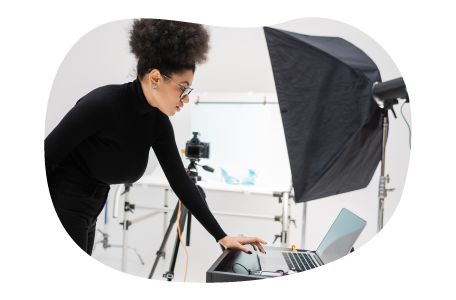
The mix of technical gear and close work with clients results in high risk. If a client trips over camera equipment and breaks a wrist, photography business insurance can help cover repair costs and medical bills. Some policies, like workers' compensation, may be required by law.

Find the right coverage
Insureon helps photo studios find insurance policies that match their unique risks.
Get free expert advice and peace of mind knowing you have the right liability and equipment insurance coverage for your small business.
Which business insurance policies do photography studios need?
These insurance policies cover the most common risks of photo studios.

General liability insurance
A general liability policy helps cover financial losses from third-party accidents, such as a client who trips and suffers an injury during a photo shoot.
- Slip-and-fall accidents
- Damaged customer property
- Advertising injury lawsuits

Business owner’s policy
A BOP is a cost-effective way for photography studios to purchase commercial property insurance and general liability coverage together.
- Customer bodily injuries
- Customer property damage
- Damaged or stolen business property

Professional liability insurance
This type of insurance covers legal fees if a client sues a professional photographer over the quality of their work. It’s also called errors and omissions insurance (E&O).
- Lost photos
- Accusations of negligence
- Claims you delivered low-quality photos

Workers’ compensation insurance
Most states require workers' comp for photography businesses that have employees. It also protects sole proprietors from work injury costs that health insurance might deny.
- Employee medical expenses
- Missed wages
- Legal costs

Commercial auto insurance
This policy covers the cost of accidents involving a vehicle owned by a photography studio. Most states require this coverage for business-owned vehicles.
- Property damage caused by your vehicle
- Bodily injuries from an auto accident
- Vehicle theft and vandalism

Equipment insurance
Equipment coverage protects materials and tools owned by your photography studio that travels outside of your office. It covers property losses due to theft, fires, storms, and vandalism.
- Cameras brought to a photo shoot
- Photography equipment in transit
- Business property at a storage unit
How much does insurance cost for photo studios?

A small studio can expect to pay less for photographer insurance than a large company.
Factors that affect the cost of photo studio insurance include:
- Photography services offered
- Value of photography equipment
- Business income
- Types of coverage purchased
- Coverage limits and deductibles
- Policy add-ons, such as additional insureds
State insurance requirements
See your state's requirements for photo/video businesses

How do I get photography studio business insurance?
It's easy to get photography insurance if you have your company information on hand. Our application will ask for basic facts about your company, such as revenue and number of employees. You can buy a policy online and get a certificate of insurance with Insureon in three easy steps:
- Complete a free online application.
- Compare insurance quotes and choose policies.
- Pay for your policy and download a certificate.
Insureon's licensed insurance agents work with top-rated U.S. insurance companies to find coverage that fits your photography studio, whether you work independently or hire employees.
Verified business insurance reviews
Hear from customers like you who purchased small business insurance.
FAQs about business insurance for photography studios
Read answers to frequently asked questions (FAQs) about photo studio insurance and more.
Do photography studios need a license or certification?
In most states, photography studios aren’t required to carry a specific professional license or have certification for their photographers to operate. However, you will likely need at least a general business license issued by your city or county.
Requirements can vary depending on your location and how your studio operates. For example, you may need:
- A general business license
- A sales tax permit if you sell prints, albums, or other products
- A home occupation permit if you run your studio from home
- Zoning approval for a commercial studio space
If you plan to operate under a business name other than your legal name, you may also need to register a doing business as or DBA name.
Because licensing rules vary by state and municipality, it’s important to check with your local government offices to confirm the specific requirements for your photography studio.
What factors affect the cost of photo studio insurance?
The cost of photo studio insurance depends on several factors related to your business’s size, risk level, and coverage needs.
Key factors that can affect your premium include:
- The value of your equipment: High-end cameras, lighting, lenses, memory cards, backdrops, and editing equipment can be expensive to repair or replace. The more valuable your gear, the more coverage you may need.
- Your location: Insurance costs can vary based on your state, local regulations, crime rates, and the risk of natural disasters such as hurricanes, floods, or wildfires.
- Coverage limits and deductibles: Higher coverage limits generally mean higher premiums, while choosing a higher deductible may help lower your monthly cost.
- Number of employees: If you have assistants, second shooters, or administrative staff, you may need workers’ compensation insurance and higher liability limits, which can increase overall costs.
- Types of coverage selected: Adding policies such as general liability, professional liability (also called errors and omissions), or inland marine coverage for equipment will also impact the total price.
Because every studio operates differently, the best way to determine your cost is to get a customized quote based on your specific business details.
What other types of insurance do photography studios need?
In addition to general liability and professional liability coverage, photography studios often need several other types of insurance to fully protect their business.
Common policies include:
- Commercial property insurance covers your studio space and business personal property—such as lighting, backdrops, computers, furniture, and inventory—if they’re damaged by fire, theft, or certain weather events.
- Business income coverage, also called business interruption insurance, helps replace lost income and cover ongoing expenses (like rent and payroll) if your studio must temporarily close due to a covered claim.
- Equipment breakdown coverage helps pay for repairs or replacement if essential equipment, such as lighting systems or editing computers, breaks down due to mechanical or electrical failure.
- Hired and non-owned auto (HNOA) insurance provides liability protection if you or your employees use rented, leased, or personal vehicles for business purposes, such as traveling to photo shoots or transporting equipment.
The right mix of coverage depends on how and where you operate. A studio with a physical storefront and employees may need broader protection than a solo photographer working primarily on location.