




























Get free professional liability insurance quotes
Save money by comparing insurance quotes from multiple top insurance companies.


Professional liability insurance, also called errors and omissions insurance or E&O insurance, protects small businesses against the costs of client lawsuits over unsatisfactory work.
Professional liability insurance protects your company when a client claims your work, advice, or services caused them a financial loss. It’s often called errors and omissions (E&O) insurance or professional indemnity insurance, and is designed specifically for businesses that rely on their expertise to serve clients.
Unlike general liability insurance, which focuses on bodily injury or property damage, professional liability insurance is all about financial harm caused by your services or expertise.
This type of insurance helps pay for the cost of defending your business if a client accuses you of making a mistake, missing a deadline, providing inaccurate advice, or failing to deliver the promised results. Even if you did nothing wrong, legal defense alone can be expensive, and this policy helps cover those costs.
For small business owners—whether you’re a consultant, IT professional, photographer, or contractor—professional liability insurance, a type of contingent liability insurance, acts as a financial safety net. Because when your business is built on your knowledge and skills, even a small mistake can lead to a costly claim.
Even the most experienced and thorough professional service provider makes mistakes. Unfortunately, clients may not be so understanding if your error costs them considerable time or revenue.

For example, if a web designer launches a site with broken functionality that impacts sales, or a bookkeeper makes an error in financial records that results in penalties, they could be financially liable.
If you’re served with this type of lawsuit, your professional liability insurance policy will cover legal defense costs up to your policy limit.
When a dissatisfied client sues over a mistake made by your business, professional liability insurance can help pay for your legal defense, including the cost of hiring an attorney.
Specifically, this type of business insurance provides coverage for claims related to the following:

Sometimes a simple mistake can cause one of your clients to lose money. When a client sues over an error made by your business, professional liability insurance can help pay for your attorney's fees, along with a settlement or court-ordered judgment.
If your business promises to provide a service and fails to deliver, the client could choose to sue you. This may be even more likely if the client believes that your work negatively impacted their bottom line.
When a client hires you based on your specialized skills, they are entitled to a reasonable standard of care. If your work fails to meet industry standards or causes financial damage to a customer, your business can be accused of professional negligence and could face a professional liability lawsuit.
A client can accuse you of a breach of contract if they feel that you or your employees did not adequately meet the conditions of an agreement, which can potentially result in a lawsuit. E&O insurance will protect you if a client sues your business for a contract breach.
If you or an employee at your small business misses a deadline, it could have tremendous repercussions for your client. Professional liability provides protection for your small business if a client sues over late work.

The average cost of professional liability insurance is $88 per month. Nearly half of Insureon's customers pay less than $75 per month for this coverage, though annual premiums typically range from around $400 to over $7,000 per year.
The majority of Insureon's customers (63%) choose professional liability policies with limits of:
Your premium depends on the limits and deductible you choose, among other factors.
Several elements influence how much you’ll pay for professional liability insurance. Insurers evaluate your level of risk based on your work, clients, and coverage choices.
Other common factors include:
On average, 32% of Insureon customers pay less than $50 per month for professional liability insurance, while another 39% pay between $50 and $100 per month. This range shows how your specific business details and coverage choices can significantly impact your final premium.
Professional liability insurance benefits a wide range of industries that provide services to clients or customers. It's designed for businesses with employees, sole proprietors, and independent contractors that make a living off of their expertise.
Some types of businesses are required to carry this coverage. Several professions that need professional liability coverage more often than others include:

Tech professional liability coverage for IT and technology professionals is commonly referred to as tech errors and omissions insurance, or tech E&O.
This policy covers lawsuits related to work mistakes, oversights, and negligence. If an error by your business causes a client’s server to crash, this coverage would help with your legal defense costs.
Tech E&O bundles errors and omissions coverage with third-party cyber insurance, which covers legal costs if a client sues your business for failing to prevent a data breach. For example, an IT consultant might face a lawsuit for recommending insecure software that leads to a breach at their client's company.

Professional liability coverage provides support for a variety of professional services that offer their expertise and knowledge as a service.
If a notary makes a documentation error or a travel agent fails to book a promised hotel, this policy will help pay for their legal costs. It can protect against claims of negligence, such as poor advice, misrepresentation, and mistakes.

Professional liability insurance for consultants offers financial compensation for lawsuits alleging detrimental advice or inaccurate projections.
For example, a management consultant promises a company that it will improve its profits by 20% by a certain date. When the date arrives, profits have failed to increase. Professional liability insurance would help cover the consultant’s legal defense costs if the client sues the consultant over its financial troubles.
Some clients may ask for proof of professional liability insurance before they agree to work with a consultant.

Professional liability insurance for healthcare providers offers the protection your healthcare business needs to continue providing its services while handling a lawsuit. In this industry, it's called medical malpractice insurance.
For instance, if a patient claims that neglect from a nurse caused bed sores, they could file a lawsuit against them. Professional liability insurance would cover legal expenses for the nurse, such as the cost of hiring an attorney.
Some states require malpractice insurance for doctors and other medical staff. More often, the facility where you work will require you to carry a certain amount of this coverage.

Professional liability insurance for accountants covers the costs of lawsuits based on data entry errors, miscalculations, lost documentation, and missed filing deadlines.
For example, if an accountant incorrectly enters a client's financial transactions into a spreadsheet and the budget falls short, the client may trace the mistake back and file a lawsuit. Professional liability insurance would cover the accountant's cost of hiring a lawyer and other related expenses.
Because this policy offers indirect financial protection for the client, some clients will require proof of insurance before they agree to work with your firm.

Professional liability insurance for architects and engineers offers financial protection against a wide range of lawsuits, such as disputes over building designs, cost overruns, mistakes, and missed deadlines.
A client could sue you for a project delay, even if it’s not your fault. If the materials you need to complete a project aren’t delivered on time, you might face a lawsuit.
Architects and engineers sometimes need this coverage to obtain a license from state regulators and to qualify for contracts.
Start by completing Insureon’s easy online application to compare free quotes from top-rated insurance providers. If your business qualifies, you can choose a policy and get covered—often in just a few minutes.
Most small businesses that rely on their professional expertise can get professional liability insurance as long as:
Once you meet an insurer’s basic underwriting requirements, you can get affordable professional liability coverage and typically receive your professional liability insurance certificate the same day.
This certificate serves as proof of professional liability insurance and can be shared with clients who require coverage before signing a contract or starting a project.

While professional liability insurance covers many costs related to legal action from a client, it does have a number of exclusions. For example, it only covers the cost of defending against lawsuits—it won't pay for lawsuits you initiate.
Unless your policy has prior acts coverage, it will only cover claims filed during the policy period and for incidents that occurred after you bought the policy. In this case, endorsements can fill gaps in your professional liability coverage.
Other exclusions from professional liability insurance coverage include:

Professional liability insurance does not cover accidental bodily injury to a customer or property damage. The only exception is medical malpractice insurance, since the work directly involves a patient's well-being.
Most small business owners invest in general liability insurance to protect against accidents that harm customers. This policy can help pay for medical expenses and the cost of repairing or replacing damaged property. It can also cover your legal expenses if the customer sues.
Workers' compensation insurance will cover medical expenses and disability benefits for employees who are injured at work or who develop an occupational disease. In most states, this coverage is required when you hire your first employee.
Employment practices liability insurance (EPLI) covers lawsuits related to claims of harassment, discrimination, and wrongful termination.
Professional liability coverage does not cover illegal activities or incidents of purposeful or intentional wrongdoing.
Product liability insurance can pay for injuries and property damage caused by a product sold, made, or distributed by your small business.
If a software product caused physical harm, it would also be covered by product liability. If your software caused financial damage, it would be covered by tech professional liability coverage, also known as tech E&O.



The success of your small business rides on your expertise. But what if a client feels like you didn't deliver everything that they were promised?
This is where a policy like professional liability insurance could help. So, what is professional liability insurance? Professional liability, also called errors and omissions insurance, helps protect your business from lawsuits filed by unsatisfied clients.
This coverage applies to work mistakes and oversights, undelivered services, missed deadlines, and accusations of negligence.
The cost of professional liability insurance is based on a variety of factors, including risk, business size, and claims history.
Get free professional liability insurance quotes with Insureon today. Click the link to get started!
Get answers to frequently asked questions about professional liability insurance.
There are several scenarios when a business may be required to have professional liability insurance coverage:
Having a certificate of insurance makes it easier to establish trust in your business. As a policyholder, you can then show licensing boards, clients, and others that if you make a mistake in your professional work, you’re able to pay for any negative outcomes.
Professional liability insurance helps provide indemnity if a client claims your work, advice, or services caused them financial harm. If you’re sued, your policy can help pay for attorney fees, settlements, or court judgments—up to your policy limits.
To file a claim, you’ll need to contact your insurance provider and provide basic details about the incident, such as what happened, when it occurred, and your policy information. Your insurer will then guide you through the claims process and defense.
Professional liability insurance is typically written as a claims-made policy. This means that in order to collect your insurance benefits, your professional liability policy must be active at two key times:
Because of this, maintaining continuous coverage is important. If your policy lapses, you may not be covered for claims related to past work.
Many policies also include or offer prior acts coverage (also called retroactive coverage). This allows your policy to cover claims for work you completed before your current policy’s start date, as long as the work was done after the retroactive date listed on your policy.
Even if you’re self-employed, professional liability insurance can be an important safeguard for your business. While it’s typically not required by law, many clients may require proof of coverage before signing a contract or hiring you for a project.
Beyond client requirements, this coverage helps protect your income if something goes wrong. When you’re working independently, a single claim can have a significant financial impact.
For example, if you’re a research consultant, software developer, or other service provider offering expert advice, a client could claim your work led to lost revenue or other financial harm. Even if the claim isn’t valid, you could still face costly legal fees.
Professional liability insurance helps cover those expenses so you’re not paying out of pocket, giving you peace of mind as you grow your business.
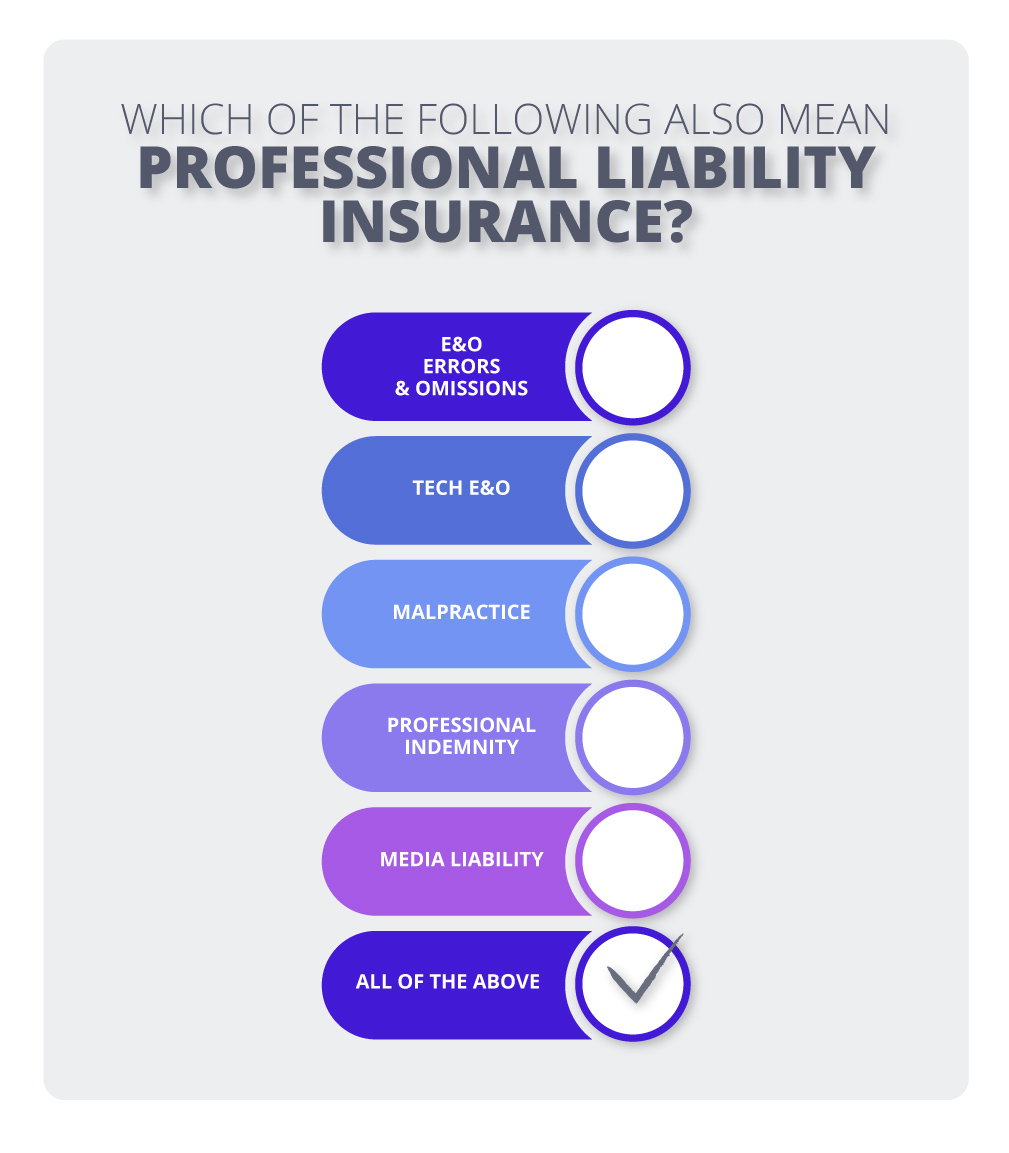
The short answer is no. Different industries use different terms for the same type of coverage. You will sometimes see professional liability insurance called errors and omissions insurance (E&O), even though the policies are identical except for the name.
Here's a quick summary of industry terms for this coverage:
All of the above insurance policies cover accusations of negligence in your professional work. For doctors, that means it'll cover errors that worsen a patient's health.
Advertising agencies, on the other hand, are protected against accidental copyright infringement. This coverage is typically included in general liability insurance for other business types.
General liability and professional liability insurance both protect against common small business liability claims, but they cover different types of lawsuits.
General liability insurance covers customer bodily injuries, customer property damage, and advertising and personal injuries. In contrast, professional liability insurance covers any legal defense costs when a client or customer suffers a financial loss due to your professional services or advice.
If you want to learn more about this policy, you can find additional information in our frequently asked questions about professional liability insurance.
If there are any other questions you have about coverage or building a risk management plan, you can also contact an Insureon agent.