



























Compare commercial auto insurance quotes
Save money by comparing insurance quotes from multiple carriers.

Commercial auto insurance covers medical bills, legal fees, and property damage if a business-owned vehicle gets in an accident. Find out if your small business needs this important auto coverage.
Whether you’re taking equipment to a project site, showing homes to clients, or driving for another work-related need, having commercial auto insurance is crucial for your financial, legal, and professional protection.
If you or an employee gets into an accident in a business-owned vehicle, commercial auto insurance can help pay for expenses stemming from the incident, including:
Almost every state—except for New Hampshire—legally mandates commercial auto insurance for business-owned vehicles. However, New Hampshire businesses must prove they can compensate someone in the event of an accident.
Laws vary by state, so it’s important to understand what the business auto insurance requirements are where you operate your business. For example, Michigan mandates that commercial auto insurance policies have both bodily injury coverage and personal injury protection (PIP), which covers a broader range of recovery expenses, such as physical therapy or lost wages during recuperation.

Even when commercial auto insurance isn’t required, it’s still highly recommended if you or your employees use commercial vehicles to:
Without business auto insurance coverage, your small business could face significant medical bills, vehicle repair costs, hefty legal fees, and other accident-related expenses—and your personal auto insurance policy likely won’t cover you in work accidents.
Simply put, if your small business owns vehicles, you should have commercial auto insurance. Here are some examples of businesses that typically own trucks, cars, or other vehicles and how they benefit from this coverage:
Construction businesses and installation contractors rely on commercial auto coverage to protect trucks, vans, and other vehicles used for excavation, installing drywall, hauling equipment, or driving to and from jobsites.
For example, if a flooring contractor hit another car while driving your company’s truck, commercial auto insurance would help pay for repairs to the other car and medical treatment for the other driver’s injuries.
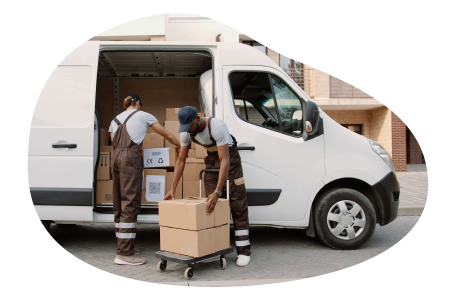
Local couriers, medical couriers, and other delivery services need commercial auto insurance to comply with state and federal laws. Depending on the type of vehicles your business owns and the items that you transport, the Federal Motor Carrier Safety Administration (FMCSA) and the Department of Transportation (DOT) have auto insurance requirements for couriers and motor carriers.
For example, if a florist shop employee is making deliveries in the company van and backs into a customer’s garage door, the policy would pay to fix their property.
Some clients may also require you to be insured before they sign a delivery contract with your service.
You may only need minimal coverage to comply with the law or the terms of a contract, but it’s important to carry enough commercial vehicle insurance coverage to avoid paying a substantial amount out of pocket if there’s an accident.
DOT requires all trucking companies, including moving companies, car haulers, and owner operators, to have commercial auto insurance to cover accident costs, including:
Minimum coverage requirements depend on your truck’s weight and what type of freight you’re hauling. For example, a box truck used to transport goods will probably have lower auto liability requirements than a semi-truck hauling hazardous materials across state lines.
Your food service business typically needs commercial auto insurance coverage if you:
Depending on the type of business you run, you can customize a policy to include comprehensive insurance, collision coverage, and other liability coverage options. For example, a caterer who needs multiple company vehicles to transport food to events every weekend may need higher liability limits than a food truck that parks on the same street every day.
Rideshares, livery businesses, and other for-hire transportation businesses typically need to have commercial auto coverage. The policy must meet your state's auto insurance requirements, which could include:
It’s crucial to understand the laws in the state where you operate. For example, the New York City Taxi & Limousine Commission (TLC) enforces different coverage limits for luxury limos, black cars, and other for-hire vehicles, depending on the type of vehicle and how many passengers it can transport.
Commercial auto is required in every state for rideshare drivers, both by the rideshare companies and by state laws. You also must follow any special requirements for transportation network companies (TNCs), such as those outlined by California law.
Landscaping businesses and lawn care companies that rely on company-owned trucks or vans for business use generally need commercial auto insurance. This coverage is especially important if you:
Depending on the types of vehicles your business owns and how often they’re used, an auto policy can be tailored to meet those needs. For example, a tree service bucket truck that’s only used a few times a year may need less coverage than a pickup truck that transports lawn care equipment every day.

Commercial auto insurance costs an average of $245 per month. Among small business customers, 40% pay less than $200 per month.
Your cost is based on several factors, including:
While commercial auto insurance offers valuable coverage, it might not provide all the protection your business needs. Here are some examples of situations where you’d need to purchase additional coverage:
Rented, leased, or personal vehicles used for business purposes aren’t covered by commercial auto insurance—but your business can still be held accountable if an employee gets into an accident in one of those vehicles.
If you or your employees are conducting business in a leased, rented, or personal vehicle, you need hired and non-owned auto (HNOA) insurance.
For example, if an Uber driver uses their own car to transport customers or a wedding videographer takes their equipment to events in a rented van, they need HNOA to protect them in case of an accident.
You can also add lease gap insurance to your commercial auto policy. This endorsement covers the total loss of a leased or financed vehicle.
Another endorsement to consider is drive other car (DOC) insurance, which is a type of coverage for employees or executives who rent or borrow company-owned vehicles for personal use.
If you purchase a business vehicle and start using it before your commercial policy begins, you’re at risk of paying for any damages out of pocket.
In this case, you should purchase any auto liability insurance, which provides a temporary extension of your commercial auto coverage. It can also cover any hired and non-owned vehicles that you use for business needs.
Customer vehicles that your business stores or services aren’t covered by your commercial auto insurance policy. If a customer’s car is damaged by vandals or accidentally by an employee, you’d be responsible for repairs and other related expenses.
Having a garage keepers liability policy insures your customers' vehicles when they’re in your business’s care, custody, and control.
Commercial auto insurance doesn’t protect against third-party risks in a garage that belongs to an auto service business.
Garage liability insurance is a type of general liability insurance that covers these risks, including customer injuries, accidental damage to customer property, and any resulting lawsuits.
For example, a customer might slip on a puddle of oil, causing them to break their wrist and their smartphone. This coverage would handle medical costs and device replacement expenses.
Get free insurance quotes and find affordable commercial auto insurance from industry-leading insurance carriers by filling out our easy online application.
You can speak with a licensed insurance agent to ask questions and find the right coverage. Once you pay for your policy, you can download a certificate of insurance (COI) to show clients and others that your business is protected.



By entering your email address and subscribing, you agree to our Terms of Use and Privacy Policy