

Top retail stores we insure










































Recommended business insurance policies for retail stores
From smoke shops to electronics stores, retail shops are susceptible to theft, fires, injuries, and lawsuits. Insureon helps retail business owners secure the policies they need for their unique risks.

Business owner’s policy
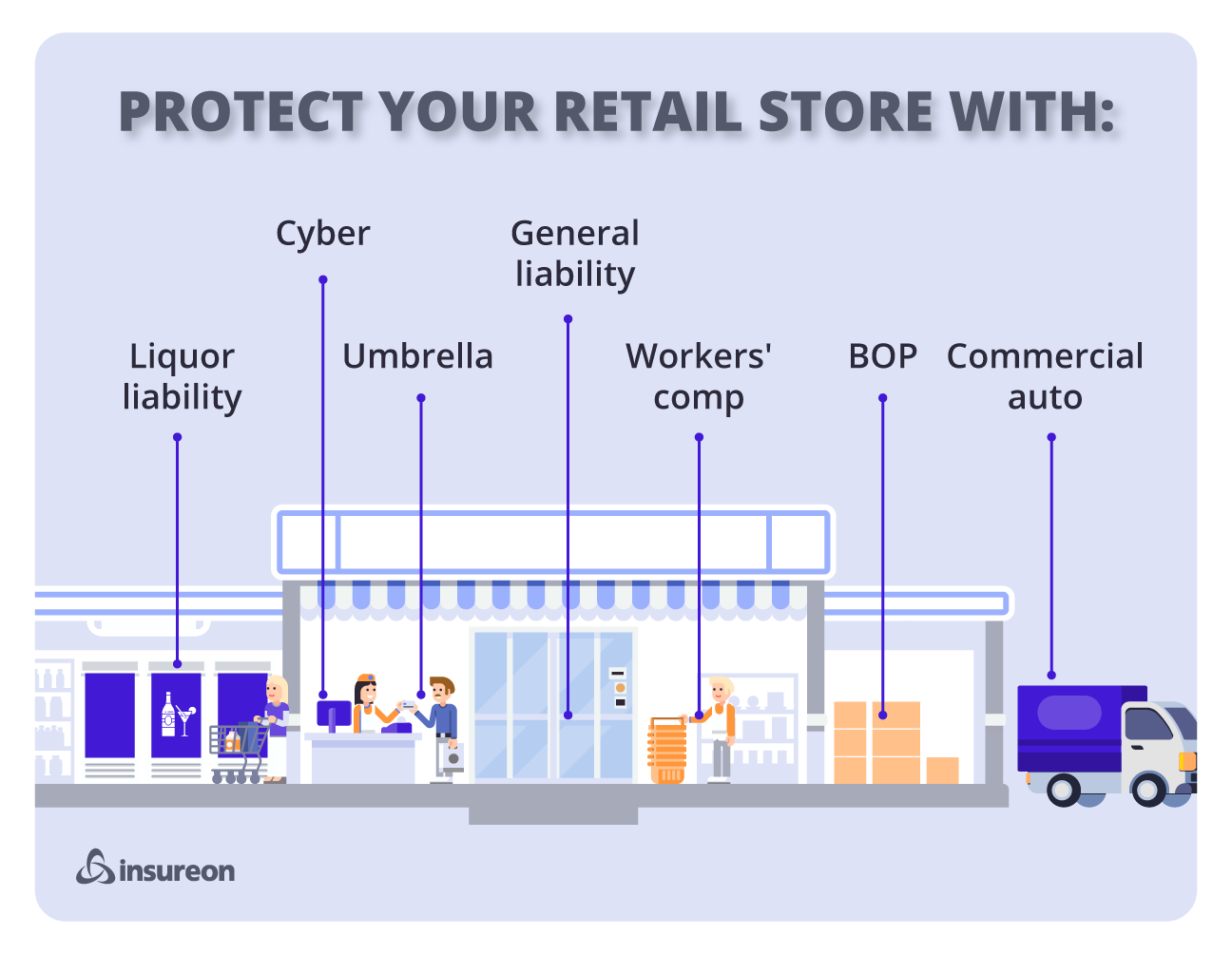
A BOP bundles commercial property insurance and general liability insurance in one plan. It's often the most cost-effective type of business insurance for retailers.
- Customer injuries
- Damaged business property
- Business interruption incidents

General liability insurance
This policy covers common retail shop risks, such as a customer slipping in a spill at a grocery store. Bundle with commercial property insurance for savings in a BOP.
- Advertising injuries
- Damage to a customer's personal property
- Product liability insurance

Workers’ compensation insurance
Most states require workers' comp for retail businesses that have employees. It also protects sole proprietors from work bodily injury costs that private health insurance might deny.
- Employee medical expenses
- Disability benefits
- Lawsuits over employee injuries

Cyber insurance
Also known as cyber liability insurance, this policy helps retail stores survive data breaches and cyberattacks. It's recommended for any shop that handles credit card numbers or other sensitive information.
- Customer notification expenses
- Fraud monitoring services
- Cyber extortion demands

Commercial umbrella insurance
Umbrella insurance boosts coverage on a retailer's general liability insurance, employer’s liability, or commercial auto insurance once the policy reaches its limit.
- Customer injury lawsuits
- Customer property damage lawsuits
- Employee injury lawsuits

Commercial auto insurance
Most states require commercial auto insurance for business-owned vehicles. This policy covers accidents involving a retailer's delivery van or other vehicle.
- Damage to another vehicle
- Injuries caused to another person
- Repairs due to vandalism or weather
How much does insurance cost for retail stores?
Several factors contribute to the cost of retail insurance coverage including:
- The types of retail products and services offered, including grocers and thrift stores
- Business equipment and property
- Your annual business revenue
- Where your business operates
- Number of full-time, part-time, and seasonal employees
How do I get retail store insurance?
It’s easy to find insurance for retail store businesses. Whether you’re a small bridal shop, florist, or pet store operator, you’ll need to have some basic information about your business available.
Our application will ask you for your annual revenue and payroll, among other details. You can buy a policy online and get a certificate of insurance with Insureon in three easy steps:
- Complete a free online application.
- Compare free quotes and choose a policy.
- Pay for your policy and download a certificate for proof of insurance.
Insureon's licensed insurance agents work with top-rated U.S. providers to find the right insurance plan for your retail store business, from franchise locations to e-commerce retailers.
Verified business insurance reviews
Hear from customers like you who purchased small business insurance.
Common questions about retail business insurance
Do retailers need product liability insurance?
Faulty goods can impact retailers. If your store sells a product that turns out to be harmful or defective, you can be liable for any damage it causes.
When a product is deemed dangerous, anyone involved in the journey from manufacturer to consumer can be held liable, including the design company, materials vendors, distributor, and all retailers that sold the product.
However, understanding what causes product liability lawsuits and taking the proper steps to manage those risks can ensure public safety, as well as potentially save your small business a fortune.
One of the most important steps is carrying the proper insurance to shield your business from potential lawsuit costs. Consider investing in these retail insurance policies:
- Product liability insurance: If your general liability insurance policy excludes damages caused by products, ask to add a product liability insurance rider to your coverage. In exchange for a higher premium, a product liability rider offers your small business the extra protection that a general liability policy wouldn't normally cover.
- Product recall insurance: Covers the costs of notifying customers and disposing of faulty items. This is usually an endorsement you can add to your general liability policy.
Are stores insured against shoplifting?
When it comes to shoplifting, it's not if but when it will happen. And while there's no way to 100% safeguard your business, you can take steps to protect your assets and minimize the damage.
In the event of an incident, the following types of small business insurance policies can help your business recover from the financial losses of stolen items and reputational damage:
- Commercial property insurance: Compensates your business for supplies, equipment, inventory, and furnishings stolen from your premises. This policy, sometimes called business hazard insurance, protects your assets and business space, regardless of whether it’s leased or owned. Plus, it can typically be bundled with general liability in a BOP for extra savings.
- Fidelity bonds: Employee dishonesty coverage, a type of commercial crime insurance, protects business owners or their clients against employee theft.
If I have to temporarily close my store, am I covered by insurance?
If damage to your building, equipment, or inventory could force your business to close, business interruption insurance should be an essential part of your risk management plan.
Business interruption insurance, also known as business income insurance, compensates small business owners for their normal operating expenses, as well as other associated costs if a fire or other commercial property insurance claim forces you to temporarily close your doors.
Specifically, it can help pay for:
- Loss of income
- Rent or lease payments
- Relocation costs
- Employee wages
- Taxes
- Loan payments
This policy typically offers up to 12 months of lost income coverage, which means you can keep your employees even if it takes your business a year to rebuild. However, it is important to read your policy carefully to know exactly how long your benefits last.
What other insurance policies should commercial retailers carry?
To fully protect your retail store business from all risks and liabilities, you may need additional types of coverage. For certain locations and landlords, your retail store might be required to carry liability insurance before you can even sign a lease.
- Electronic data processing (EDP) insurance: Covers your electronic data processing equipment, such as computers and POS systems, against data loss during a power surge, fire, natural disaster, or similar incident.
- Equipment breakdown coverage: Protects your company’s computers, electrical systems, production machinery, and other equipment from sudden and accidental malfunctions. It’s designed to cover losses such as short circuits, loss of air pressure or vacuum, or power surges that commercial property insurance typically excludes.
- Hired and non-owned auto (HNOA) insurance: Provides liability coverage for accidents involving personal, leased, or rented vehicles used by your business.
- Professional liability insurance: Also called errors and omissions (E&O) insurance, protects small businesses against the legal fees of client lawsuits over unsatisfactory work.
- Per-location aggregate endorsement: This general liability add-on gives each of your store locations its own separate aggregate limit, rather than sharing one limit across all of them. It can help prevent a pricey claim at one store from reducing the coverage available at the others.
Some of the above types of insurance can be added to a BOP for additional coverage, as well as savings. Learn about other ways you can save money on small business insurance.
Find insurance quotes for retail businesses
Read our blog posts

Vendors like artisans, bakers, and concessionaires face unique risks, and often need insurance to appear at a venue. Learn how vendor liability insurance can protect your business and provide you...



Want free expert advice right in your inbox?
By entering your email address and subscribing, you agree to our Terms of Use and Privacy Policy