























Get small business insurance quotes
Save money by comparing insurance quotes from multiple carriers.

There are several factors that impact the cost of commercial property insurance, such as the size and location of your business. Knowing how an insurance company calculates your premium can help you keep costs down while getting the coverage you need.
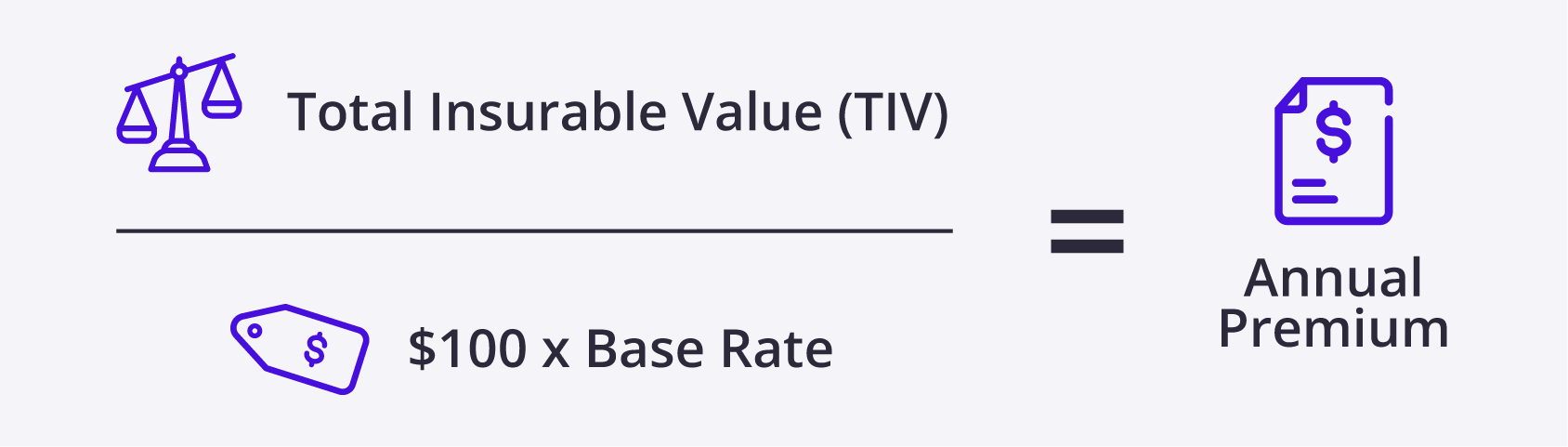
To calculate commercial property insurance rates, most insurers follow a general formula:
(TIV ÷ $100) x base rate = annual premium
Here’s a breakdown of this formula:
For example, if your TIV is $1,000,000 and the base rate is $0.60 per $100, your annual premium would be $6,000.
Commercial property insurance protects small business owners in the event of theft, fires, storms, and other incidents that damage or destroy business property, including:
To calculate premiums for commercial property coverage, underwriters consider several factors about a business. Understanding what those are can help you lower costs while protecting your business and your bottom line.
Your business’s location can affect your commercial property insurance costs in a few ways, such as:
Your commercial property insurance costs are impacted by the type of hazards your policy covers. This is typically broken into two kinds of policies:
Underwriters often review your claims history to determine your risk level for future claims. Filing multiple claims signals to insurers that your business poses a higher risk, which often results in higher premiums or difficulty obtaining coverage altogether.
On the other hand, if your business has a clean record, you’re likely to be seen as a lower risk, which can result in lower commercial property insurance rates.

The value of your business property, which can include real estate assets, equipment, and income, is directly linked to the cost of your commercial property insurance coverage since the higher the value, the more coverage that’s needed.
When calculating commercial property insurance premiums, there are two ways to determine how much coverage you want:
Older and poorly maintained buildings typically carry higher commercial property premiums than newer structures, which tend to be in better condition and built to modern code.
Insurers will evaluate several aspects of your commercial building, including:
If you own a building with outdated infrastructure, materials, or systems, ordinance or law coverage can help pay for the added costs of bringing the entire structure up to current standards that a standard commercial property policy wouldn’t cover.
Your type of business and industry have a significant impact on commercial property insurance costs. For example:
The equipment your business owns plays a big role in calculating your property insurance costs, taking into consideration factors like:
Keep in mind, the equipment carried between jobsites or other locations needs its own type of property insurance called tools and equipment insurance. This policy goes where your tools and equipment go, helping to pay for replacements or repairs if anything is lost, stolen, or damaged.
The square footage of your property is a direct factor in determining your premium—the larger the space, the more it costs to insure. A bigger workspace means:
Whether you rent or own your space can impact your premium. Tenants generally pay lower premiums than owners, since coverage only needs to extend to equipment, inventory, and any improvements made to the space.
On the other hand, building owners are responsible for insuring the entire structure, including liability and loss of income, making property insurance coverage more expensive.
Proactive steps to reduce the likelihood and severity of property claims signal lower risk to insurers, which can result in a lower premium. These measures include:
For example, restaurants that follow current fire safety standards will likely save money on their property insurance premiums.
While some factors that affect your premium are out of your control, there are a few steps you can take to lower your commercial property insurance costs:
Opting for lower coverage limits or a higher deductible can reduce your premium. Keep in mind, this means paying more out of pocket when filing a claim, so make sure your business has the financial cushion to cover those costs.
Avoid paying for coverage you don’t need. For example, purchasing a policy with a high wind deductible in an area that isn’t prone to tropical storms is an unnecessary expense. Review your policy carefully to ensure you’re only paying for coverage that’s relevant to your small business.
Bundling multiple insurance policies into one package typically costs less than buying the policies individually. The most popular option is a business owner’s policy (BOP), which bundles a commercial property insurance policy with general liability insurance.
Other coverages, called endorsements, can be added to a BOP to meet your business’s specific needs. For example:
A commercial package policy (CPP), much like a BOP, bundles property and liability coverage. However, CPPs offer more customizable coverage options and higher policy limits, making them a good choice for higher-risk businesses that may not be eligible for a BOP.
Complete Insureon’s easy online application today to compare insurance quotes for commercial property coverage and other types of small business insurance from top-rated U.S. carriers. A licensed insurance agent can help you find the best policy for your business. Once you buy a policy, you can begin coverage and get peace of mind in less than 24 hours.
Hear from customers like you who purchased small business insurance.



By entering your email address and subscribing, you agree to our Terms of Use and Privacy Policy