









































Find commercial property insurance quotes
Fill out our online application and get expert advice to find the right policy.

The cost of commercial property insurance depends primarily on the value of the insured property. Other factors include the size and condition of your building, your business operations, and the policy options you choose.
Small businesses pay an average of $108 per month for commercial property insurance, also called business hazard insurance. Annual premiums range from under $350 to over $15,000 per year.
Our figures are calculated using the median cost of policies sold by leading insurance companies to Insureon's small business customers. The median offers a better estimate of what your business is likely to pay because it excludes outlier high and low premiums.
The wide range of costs reflects the different types of properties that are insured, from a small rented storefront to a multistory office complex. Insurers will consider other factors as well, including your location's risk for natural disasters.
If you don't own or rent a building, you can add business personal property (BPP) insurance to your general liability policy instead of buying commercial property insurance. This endorsement covers inventory, equipment, and other business items, and it's ideal for home-based businesses.
The average cost of commercial property insurance is $108 per month for Insureon's small business customers.
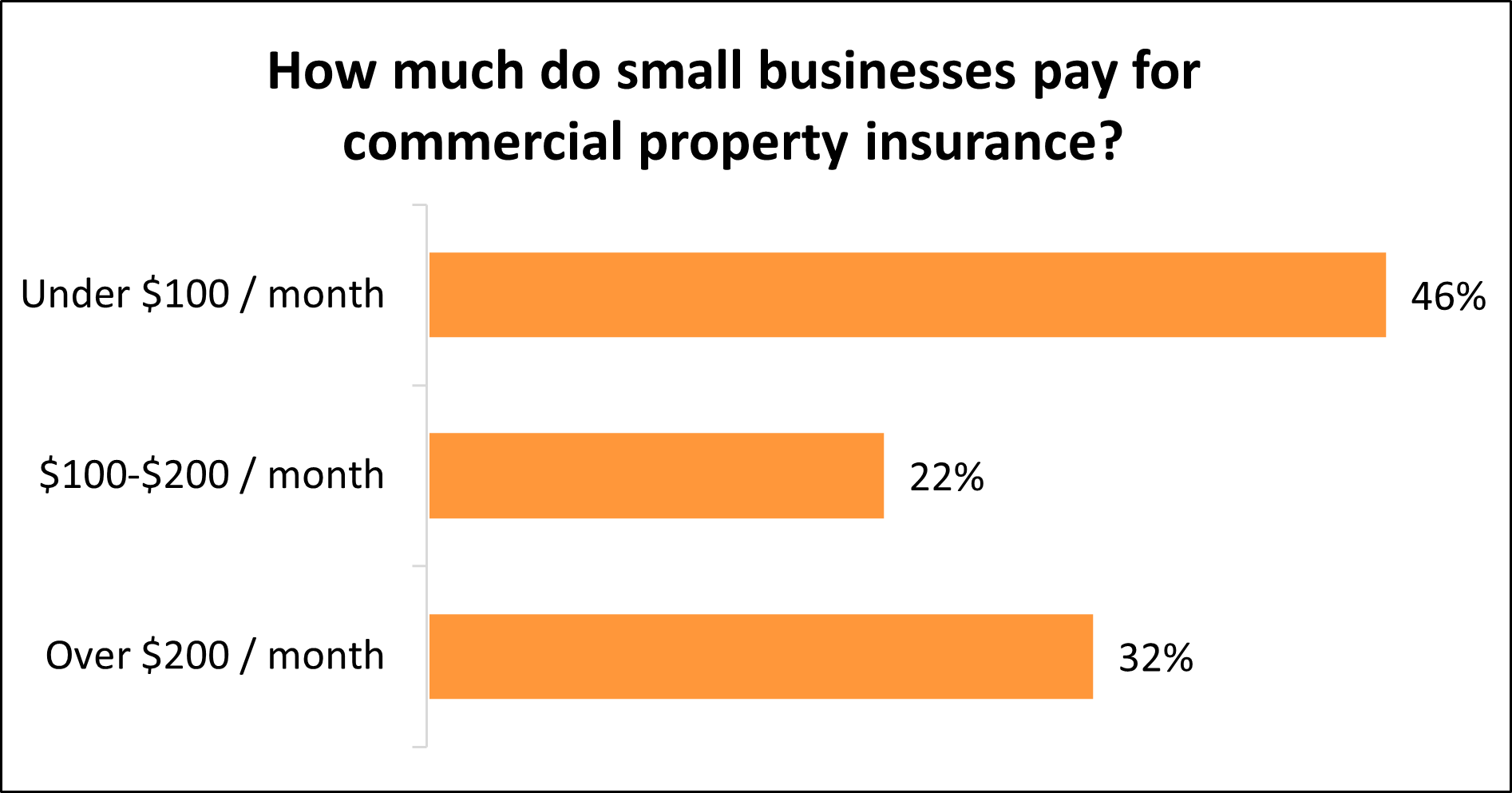
Annual premiums range from under $350 to over $15,000 per year. Among our customers, 46% pay less than $100 per month for commercial property insurance, and another 22% pay between $100 and $200 per month.
The cost varies depending on the value of your property, the risks you face, and the types of coverage you choose. For example, you may want to add business interruption insurance, also called business income insurance. This policy provides financial protection in the event of a temporary closure caused by a fire or other covered property claim.

When you buy a commercial property insurance policy, you'll want sufficient coverage to pay for any damaged, destroyed, or stolen property. Building appraisals, square footage calculations, and inventory valuations can help you arrive at a reasonable figure.
Overall, a large number of factors can influence your premium, including:
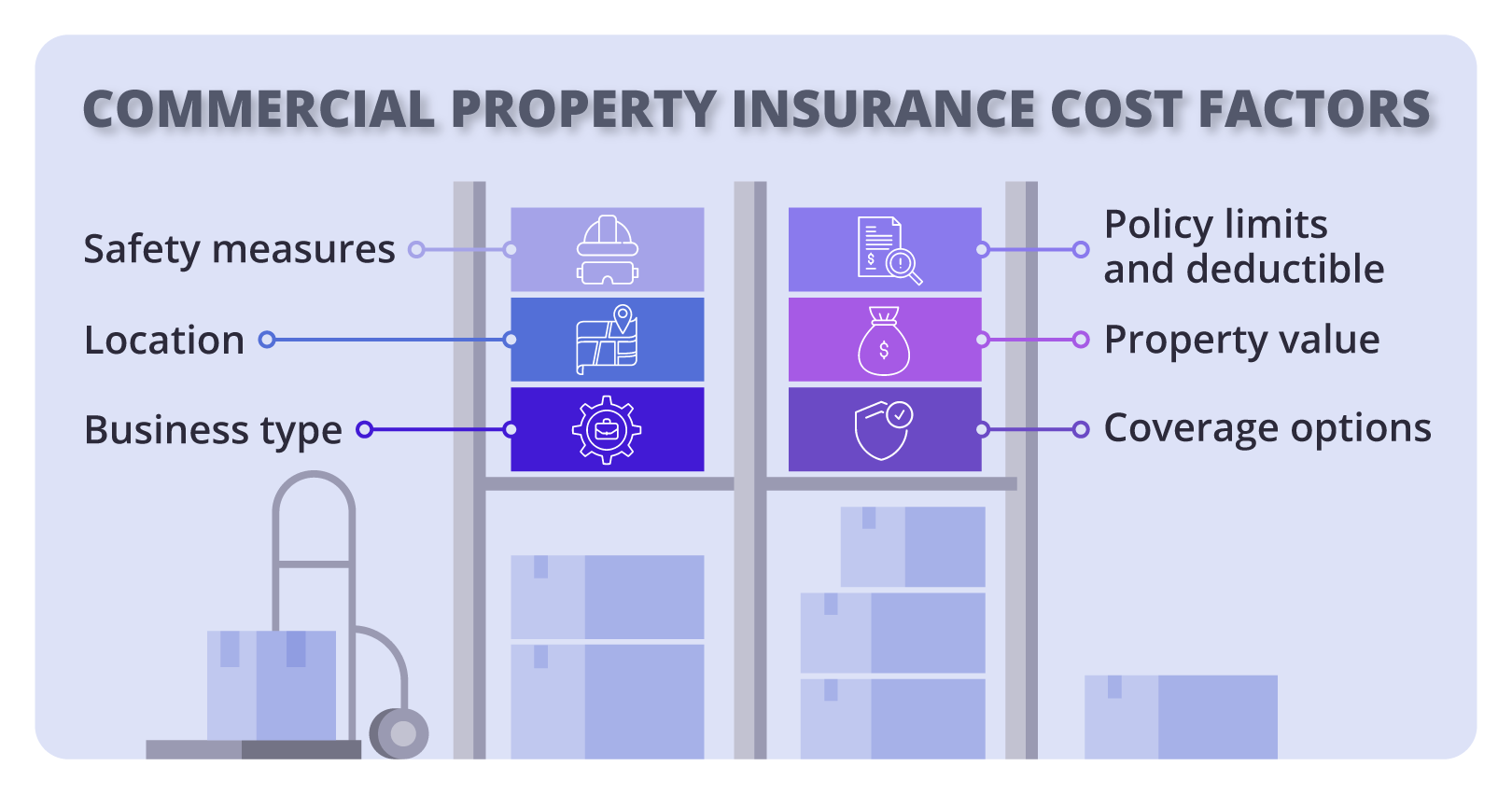
The policy limits and deductible you choose will impact the cost of your commercial property policy. Generally, the higher your limits, the more expensive your premium will be.
Small, low-risk businesses often purchase commercial property coverage together with general liability insurance in a business owner's policy (BOP). A BOP is often less expensive than purchasing the policies separately.
Most of Insureon's customers (87%) choose a business owner's policy with coverage limits of $1 million / $2 million. This includes:
Ten percent of our customers choose a BOP with $2 million / $4 million limits, the next most popular choice.
The deductible you select is another factor that will affect your premium. Policies with a higher deductible cost less, but you'll need to pay that amount before you can collect on a claim.
The average deductible that our customers choose for commercial property insurance coverage is $1,000.
Most commercial property policies have a list of named perils they cover, such as:
Named perils coverage only protects against the losses listed in your policy. You can pay more to buy open perils coverage, which protects against all losses except those specifically excluded in the policy.
Common exclusions are hurricanes, floods, earthquakes, and employee theft. It's often possible to buy endorsements for these risks and others that aren't covered by your policy.
For small business owners, your industry has a big impact on your commercial property premium. Industries with unique hazards and frequent claims are considered high risk and pay higher premiums.
For instance, the risk of kitchen fires makes restaurants costly to insure, while gas stations face the risk of explosions and fuel leaks. A relatively safe business, such as an IT consulting firm, can expect lower property insurance rates.
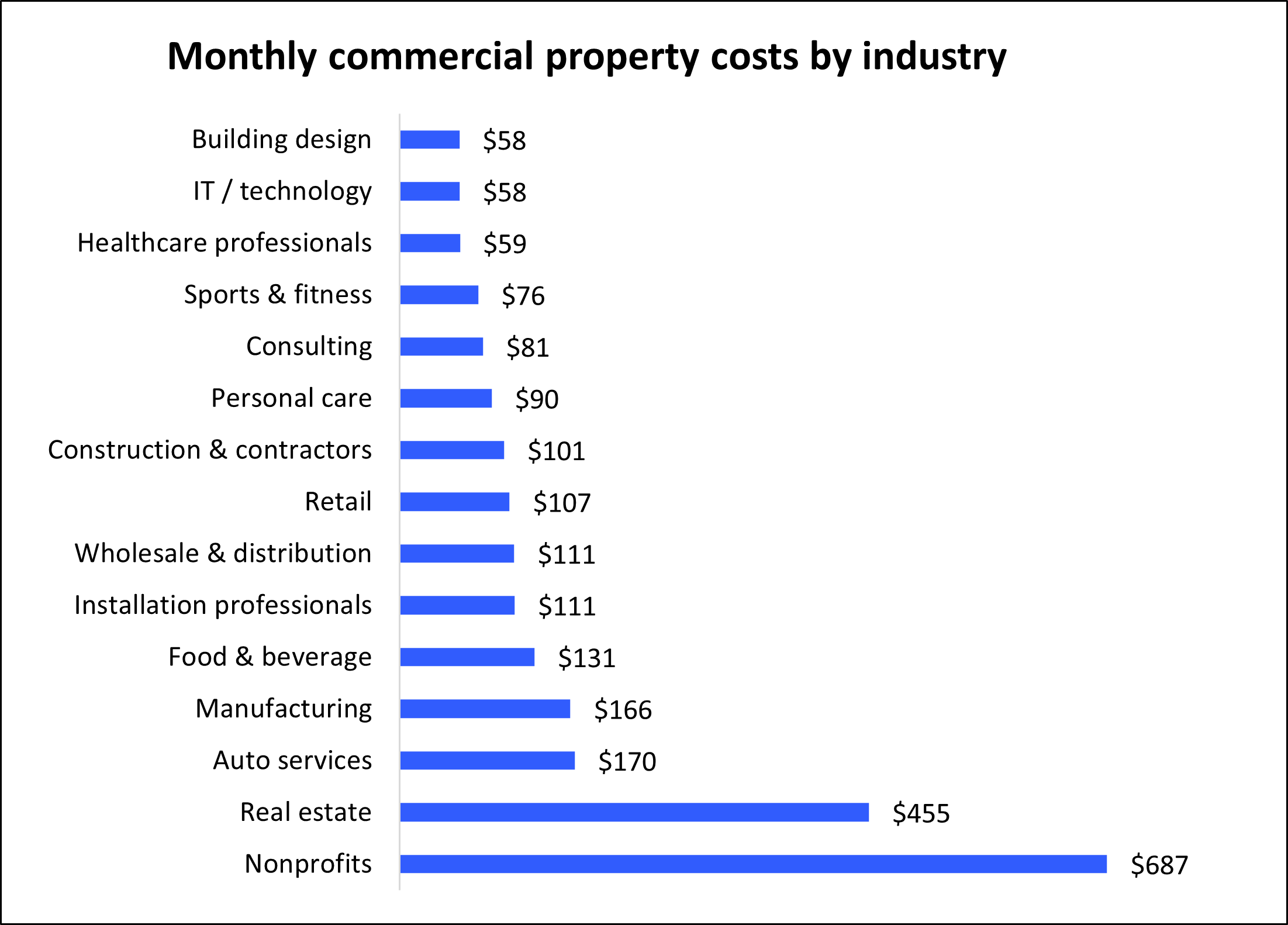
That's why the average cost of property insurance is $131 per month for food and beverage businesses, but $81 per month for consultants.
Depending on the industry that you work in, such as sports and fitness, the property owner may require you to carry commercial property coverage in order to rent a space. For other businesses, such as those in insurance or healthcare, you may need professional liability insurance (also called errors and omissions insurance) before you can get a license.
The chart below illustrates how the type of business affects what you'll pay for property insurance.
When you file a claim on your commercial property insurance, it's viewed as an indication of higher risk during the underwriting process. Your premium will usually increase as a result.
A small business with a clean claims history can expect lower rates than a business that has submitted a claim for lost or damaged property.
Your provider will look at your geographic location to determine which environmental risks your company may face. It'll cost more to insure a building that's at risk for a natural disaster, such as a hurricane, flood, wildfire, earthquake, or tornado.
Other regional factors that affect property insurance premiums include:
In general, property insurance premiums are higher in areas with frequent break-ins and severe weather. Some insurers have stopped writing policies in areas prone to wildfires or other disasters, due to their increased frequency and severity.
Here are some examples of the average cost of commercial building insurance across different states:
| State | Property insurance cost |
|---|---|
$121 per month | |
$102 per month | |
$133 per month | |
$112 per month | |
$55 per month | |
$109 per month | |
$208 per month | |
$84 per month | |
$163 per month | |
$38 per month |
When you buy property insurance, you can choose from two methods of calculating the property value:
It's cheaper to buy a used item than a new one, which is why ACV coverage costs less than replacement cost coverage.
Old buildings are more susceptible to certain types of property damage, so they may cost more to insure. For example, a fire caused by outdated electrical wiring could translate into costly repairs.
Similarly, a new roof can better withstand the elements, so it could help bring down the cost of property insurance.
Heavy industrial machinery will cost more to insure than less expensive equipment like 3D printers and sewing machines.
You may also pay higher premiums if your equipment is hard to repair because of scarce parts, or if it's susceptible to equipment breakdown because of heavy use.
If you have equipment that you bring to jobsites, you may need inland marine insurance or tools and equipment coverage. These policies protect your tools and other property while in transit, at a jobsite, or stored off-site.
In some cases, it may cost more to insure older items, or it might be difficult to find coverage. Tools and equipment insurance, for example, typically covers items less than five years old.
Keep in mind, commercial property insurance only covers business property at your primary location, which is why you might need additional coverage.
The age of major building systems can affect your property insurance premium, as older systems are more likely to leak, corrode, or even start a fire.
When writing a commercial property policy, insurance providers will consider the age of the following:
For older systems, your provider might add an exclusion for water damage or electrical fires due to the increased risk. On the other hand, expect lower rates if your building systems are newer and well maintained.
Your building's size helps determine the cost of commercial property insurance. The premium will increase with the amount of square footage.
A large manufacturing building will cost more to insure than a small bookkeeping office space, for example.
Buildings constructed with high-quality, noncombustible materials can better withstand fire, wind, and hail, which is why they cost less to insure.
In particular, insurance providers offer lower rates for buildings made of masonry, brick, concrete, and steel. Buildings with wood frames or vinyl siding are susceptible to fires and will bring a higher premium.
Is your business located in a high-crime area? Does your business handle toxic materials or engage in dangerous activities like mining? Do you have loose security measures that don't protect your physical assets or discourage vandalism?
These are all higher risks and can affect your insurance rates. If you deal with toxic materials, it may be a good idea to obtain environmental insurance to gain liability coverage for pollution risks.
Occupancy involves a couple different factors: how the building is used and the items stored inside it.
Those with the lowest rates include offices with limited public access and employees working at computers during daytime hours, such as tech companies and law firms.
On the other hand, buildings with high foot traffic, valuable inventory, flammable materials, or extended operating hours will cost more to insure. Examples include bakeries, auto repair shops, wood manufacturers, and convenience stores.
If your building is vacant, you share a space with a higher risk business, or you own a mixed-use property with both commercial and residential spaces, you may see your rates increase as well.
It’s easy to save money on commercial property insurance without compromising on coverage.
Here are several steps you can take to reduce your property insurance premium and avoid expensive rates:
You can save money on commercial property insurance by limiting your property damage risks and by comparing insurance quotes from different providers.
Insureon is the #1 digital agency for small business insurance. We make it easy for business owners to get customized quotes from top-rated providers, buy policies, and manage their insurance coverage online.
By completing Insureon’s easy online application today, you can compare free quotes for commercial property insurance, general liability insurance, and other policies. A licensed insurance agent can answer any questions and help you find the right insurance for your business needs.
Once you choose a policy, you can begin coverage in less than 24 hours and get a certificate of insurance for peace of mind and proof of coverage.
The figures on this page are the median cost of policies purchased by 100,000 of Insureon's customers. The median offers a better estimate of what your business is likely to pay because it excludes high and low outliers. Most of our customers have five years or less in business, fewer than five employees, and annual revenue ranging from around $50,000 to more than $200,000.