Commercial package policy cost
A commercial package policy (CPP) combines general liability and commercial property coverage into one policy, usually at a lower cost than if you purchased these coverages separately. CPP premiums are calculated based on the policy limits you choose, business property value, and more.
What is the average cost of a commercial package policy?
Small businesses pay an average premium of $117 per month for a commercial package policy. Most businesses pay from around $500 to sometimes over $15,000 per year, depending on their unique business risks.
Our figures are calculated using the median cost of policies sold by leading insurance companies to Insureon's small business customers. The median offers a better estimate of what your business is likely to pay because it excludes outlier high and low premiums.
Typical commercial package policy costs for Insureon customers
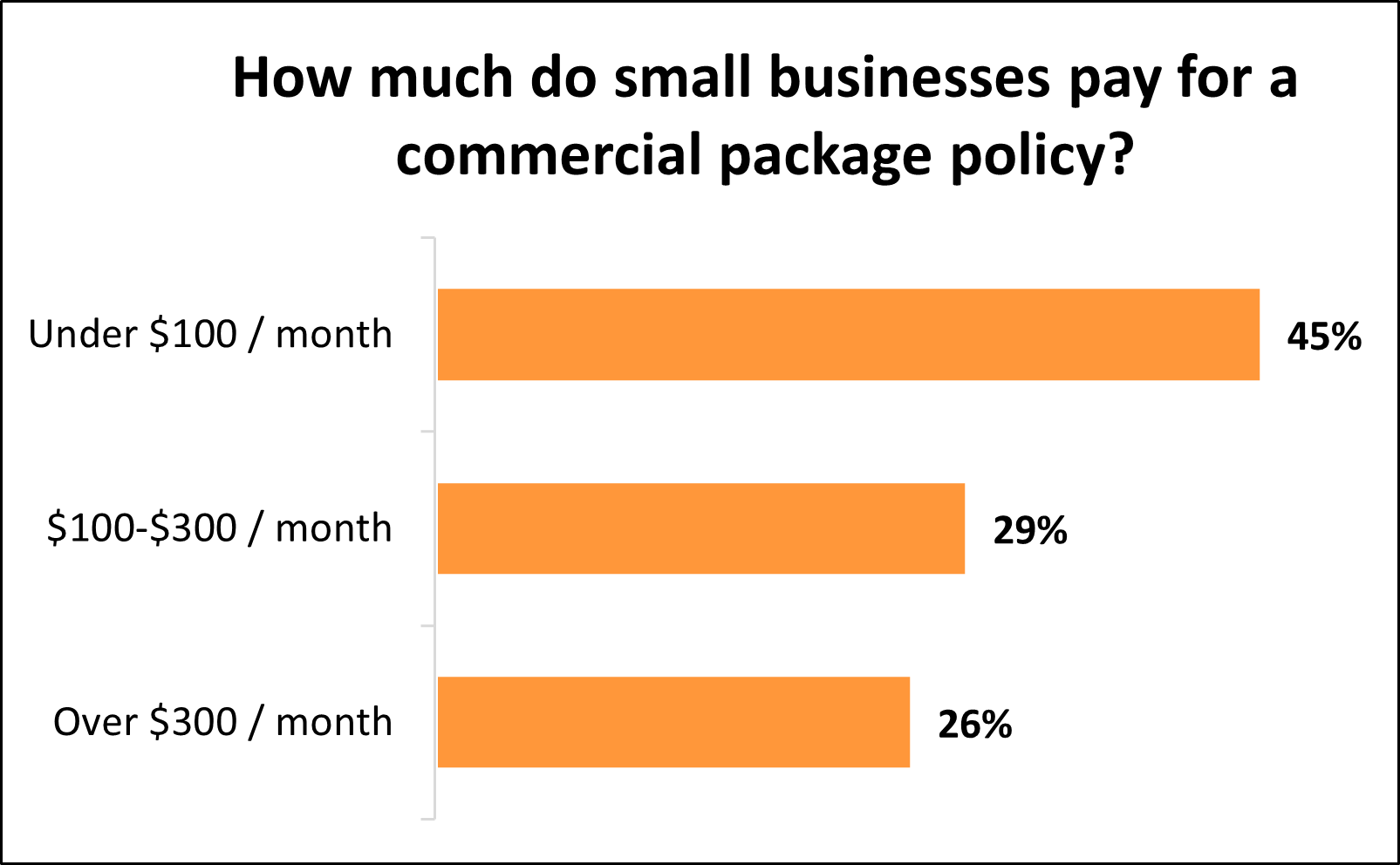
While Insureon's small business customers pay an average of $117 monthly for a commercial package policy, nearly half (45%) pay less than $100 per month for their policies, and almost a third (29%) pay between $100 and $300.
While some businesses pay as little as $500 per year for coverage, others may pay $15,000 or more based on their level of risk, policy limits, and insurance needs.
The cost varies for small businesses depending on their risks, the value of their business property, and the insurance coverage they choose.

Factors that impact commercial package policy insurance costs
Insurance companies consider several factors when determining how much to charge for a commercial package policy premium, including:
Industry risks
For the general liability insurance portion of a CPP, your industry has a significant impact on policy costs. Generally, high-risk industries pay higher premiums, while low-risk industries enjoy lower rates.
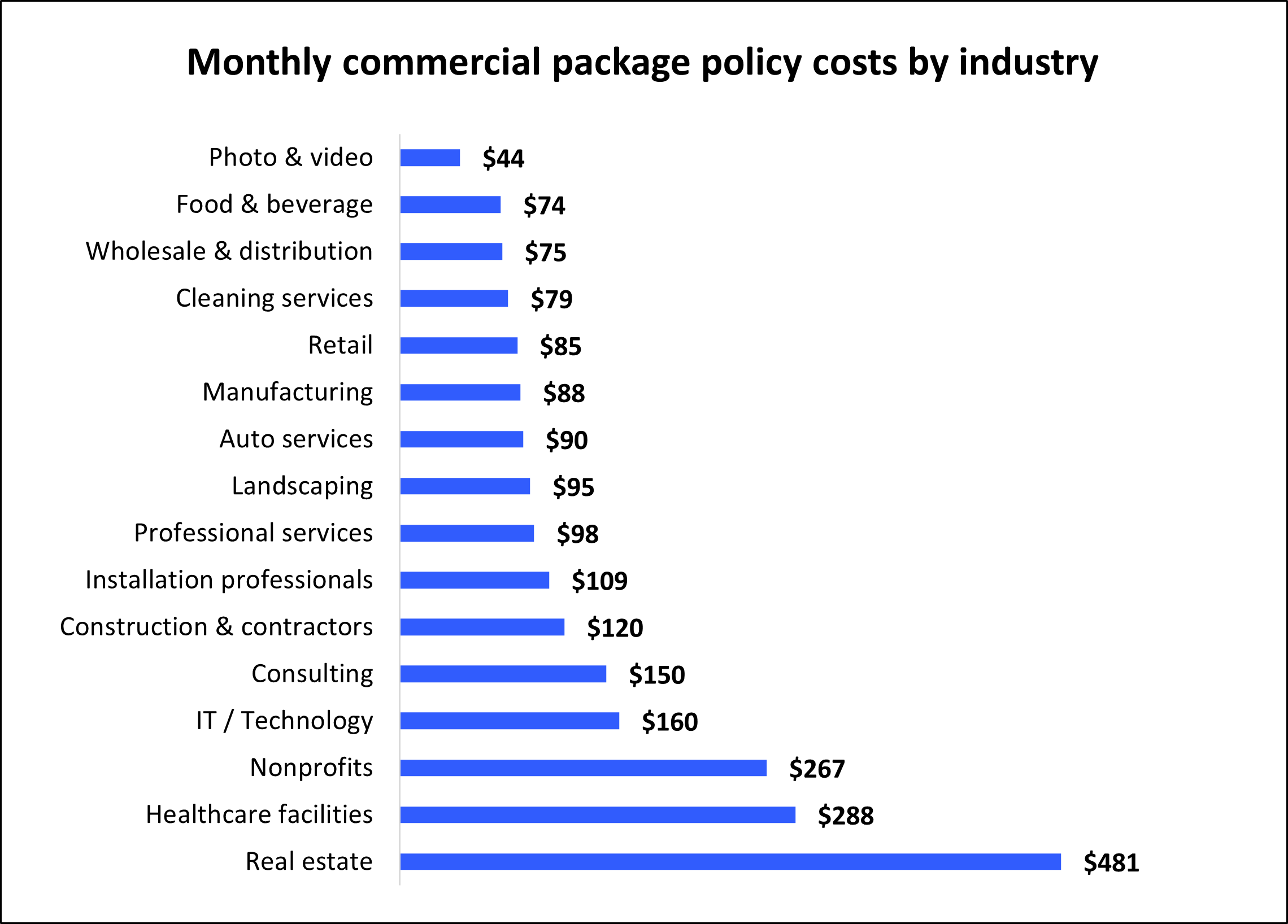
For example, a real estate agent who takes house hunters on tours every day is exposed to a higher risk of customer injury than a house cleaning company with only a few clients.
Nonprofit businesses and technology professionals also have high liability coverage costs because these industries often have valuable equipment or inventory, as well as increased third-party liability.
The graph below illustrates how the type of business affects what you'll pay for a commercial package policy, with average monthly costs for each industry.
Top industries we insure




















Property value
For the commercial property insurance portion of a CPP, the cost of insurance depends on the value of your business property, its location, and how you choose to protect it.
The way your property is valued can also affect your premium and the amount you receive after a covered loss. Common methods of property valuation include:
Business personal property (BPP) value
To protect your property, the first step is knowing what it’s worth. You'll need an estimate of your business personal property. The amount will help you determine appropriate limits to make sure your insurance can cover the cost of replacing or repairing stolen, lost, or damaged items.
Location and age of your building
The value of your building and subsequent insurance costs vary dramatically depending on where your business is located. For example, a small retail shop in rural Pennsylvania would cost much less to insure than a similar retail shop in urban California. Older buildings may also incur higher insurance rates as they're more susceptible to damage.
Replacement value versus actual cash value
The cost of a CPP varies depending on how you choose to insure your business personal property. You can insure it for its replacement value (cost when new), or save money by insuring it for its actual cash value (depreciated value).
Coverage limits and deductible
If you want car insurance that pays for a wide range of damage, you have to pay more for it. The same rule applies to business insurance. If you want higher policy limits, expect to pay more than you would for basic coverage.
The most popular commercial package policy among Insureon customers is the $1 million / $2 million policy. This includes:
- $1 million per-occurrence limit. While the policy is active, the insurer will pay up to $1 million to cover any single claim.
- $2 million aggregate limit. During the lifetime of a policy (usually one year), the insurer will pay up to $2 million to cover claims.
The average deductible for a commercial package policy is $1,000.
Number of employees
The number of workers your business employs can have a directly affect your cost of insurance. This is because more employees mean greater risk exposure and a higher potential for incidents.
Proper training and risk management policies for your specific business operations can help reduce incidents such as work-related injuries (covered by a workers' compensation insurance policy), property damage, or customer injuries, which can reduce claims.
Business location
Where your business is located can impact your insurance costs. This is often because certain locations have unique risks that can lead to potential claims.
For example, businesses in Florida will often pay higher rates for commercial property insurance than businesses in Idaho, due to inclement weather. Florida businesses may also require additional coverage to address their specific needs, such as hurricane insurance.
Your type of business location can also impact costs. Businesses with a storefront that allows customers inside will likely pay more than closed office locations, for example. The more foot traffic you have, the more likely you are to have a customer incident or injury.
Annual revenue
Your business income often has an impact on your insurance rates. Businesses with higher revenue generally pay higher rates for commercial insurance, regardless of the type of coverage, whether it's a CPP, business owner's policy (BOP), professional liability, or other insurance option.
This is often because businesses with higher revenue tend to take on more business, which means more risk.
Coverage options
The types of policies you add to your commercial package policy will impact your insurance rates. Different policies cover different risks and can be more or less expensive depending on your specific coverage.
For example, you can add professional liability, commercial auto, cyber insurance, and other monoline insurance options to your coverage. What you decide to add will determine the costs you'll pay for your policy overall.
Claims history
The number of previous claims you submit on behalf of your business can impact your insurance rates. More previous claims often mean higher premiums and overall insurance costs.
This is because insurance underwriters see past claims as an indicator of future risk. You can save money on insurance by doing your best to avoid insurance claims through safety measures, workplace safety trainings, careful implementation of security devices, and other risk exposure reduction methods.
Do I need a commercial package policy?
Small businesses with elevated risks and medium-sized businesses should consider a commercial package policy.
As a bundle that combines multiple insurance coverages into a single policy, including general liability and commercial property insurance, it's often a good fit for businesses with a more complex risk profile, higher coverage needs, or operations that don't qualify for a BOP.
Understanding how each aspect of this coverage impacts your day-to-day can help you decide if a CPP is right for your business.
General liability insurance protects against common lawsuits
Any business can face a liability claim. A customer could slip and fall at your location, a visitor could suffer property damage, or a competitor could allege your advertising caused financial harm.
Even if a lawsuit is unfounded, defending your business can be expensive. General liability insurance helps cover attorney fees, court costs, settlements, and judgments, related to third-party bodily injury, property damage, and advertising injury claims.
For example, businesses that run advertising campaigns or post on social media could face a lawsuit if they post content that doesn't belong to them, or make a false claim about a competitor.
Without this coverage, a single lawsuit could create significant financial strain for a small business.
Commercial property insurance protects your business assets
Commercial property insurance covers the physical assets your business relies on every day. This can include your building, inventory, equipment, computers, furniture, and other business property.
If your property is damaged by a covered event such as a theft, storm damage, or a fire, commercial property insurance can help pay for repairs or replacement costs.
For many businesses, replacing damaged property out of pocket could be a major financial burden.
A CPP bundles essential protection and can save you money
A commercial package policy combines general liability and commercial property insurance with other coverages that can be tailored to your business's needs. Because premiums are based on factors such as your industry, level of risk, and property values, many businesses find a CPP offers a cost-effective way to secure broad protection.
Keep in mind that a CPP typically costs more than a BOP because it offers greater flexibility, broader coverage options, and often higher coverage limits. Businesses with more complex operations or specialized risks may find the added protection well worth the investment.
How can you get an affordable commercial package policy?
It's possible to reduce your commercial package policy premium through a couple of simple steps:
Your commercial package policy premium can typically be paid in monthly or annual installments. Policyholders who pay the full premium can sometimes save money because insurers may offer discounts for annual premiums.
Shop around and compare quotes
Proactively manage your risks
If your small business has no insurance claims history, expect to pay lower rates. An effective way to do this is to create a comprehensive risk management plan. For example, you might:
- Develop a thorough training program for employees
- Invest in a security system to help prevent vandalism
- Compile rules for posting to social media
- Create procedure checklists and reviews
- Minimize hazards on your premises to minimize bodily injuries
Why do small business owners choose Insureon?
Insureon is the #1 independent agency for online delivery of small business insurance. We help business owners compare quotes from top-rated providers, buy policies based on their insurance needs, and manage their coverage online.
By completing Insureon’s easy online application today, you can get free quotes for a commercial package policy and other business insurance policies from top-rated U.S. insurance companies. You can also speak with a licensed agent to help you find the best coverage for your business needs.
Once you find the right type of policies for your small business, you can begin coverage in less than 24 hours and get a certificate of insurance for your small business.
Verified business insurance reviews
Hear from customers like you who purchased small business insurance.