











































Find commercial crime insurance quotes
Save money by comparing insurance quotes from multiple carriers.

The cost of commercial crime insurance varies based on several factors about your business, including the number of employees, amount of coverage purchased, types of crime risks covered, industry, claims history, and the strength of your internal fraud prevention controls.
Small businesses typically pay an average of $75 per month for commercial crime insurance, though premiums can range from $150 to more than $6,000 per year depending on the size of your business and exposure to financial crimes.
Commercial crime insurance coverage helps protect businesses from losses caused by employee theft, forgery, embezzlement, funds transfer fraud, social engineering fraud, and other dishonest or fraudulent acts. Because this policy is designed to cover financial losses rather than third-party claims, premiums are based heavily on a company's risk profile and financial controls.
Our figures are calculated using the median cost of policies sold by leading insurance companies to Insureon's small business customers. The median offers a better estimate of what your business is likely to pay because it excludes outlier high and low premiums.
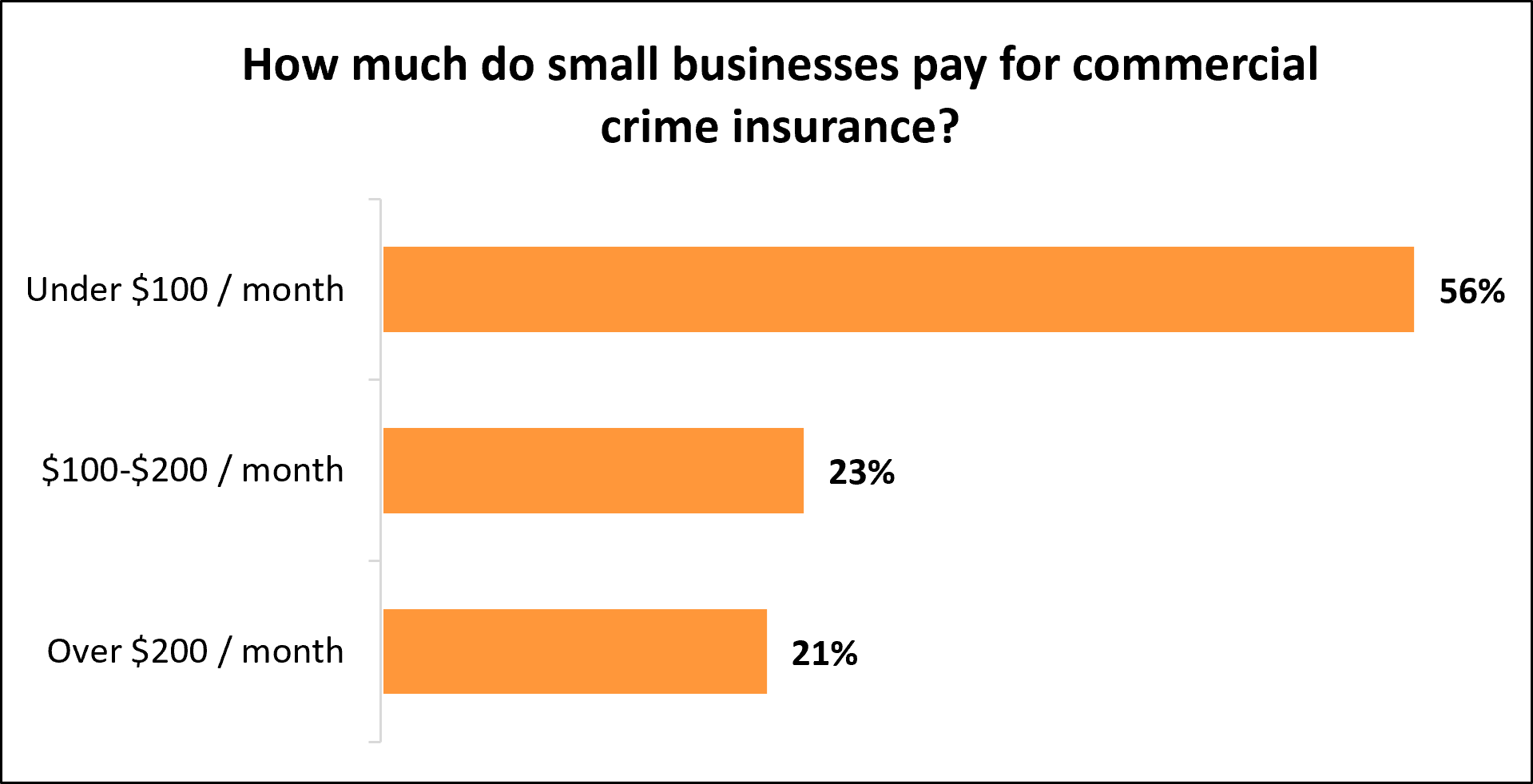
While Insureon's small business customers pay an average of $75 monthly for commercial crime insurance, 56% pay less than $100 each month. Another 23% pay between $100 and $200 per month for coverage. The average annual premium for small business customers is $900.
The cost varies for small businesses depending on some factors outside your control, such as your business size, along with the amount of coverage you choose to buy.

Several factors will determine your commercial crime insurance costs during underwriting, including:
The amount of coverage you choose is one of the biggest factors affecting the cost of commercial crime insurance. In general, higher coverage limits result in higher premiums because the insurer may have to pay more if your business experiences a covered loss. Coverage needs often depend on the amount of cash, financial assets, inventory, or sensitive information your business handles.
Businesses that need higher policy limits for employee theft, computer fraud, forgery or alteration of financial documents, or other crime exposures will typically pay more than those with lower coverage amounts. The same is true for third-party crime coverage, which is often provided through a fidelity bond and protects clients from losses caused by employee dishonesty. Larger bond amounts generally increase the cost of coverage.
Finding the right limit involves balancing affordability with the potential financial impact of a crime-related loss. Businesses with greater financial exposure may benefit from higher limits, while smaller businesses may be able to purchase lower limits at a more affordable premium.
Your deductible can also affect the cost of commercial crime coverage. In general, choosing a higher deductible can lower your premium because your business agrees to pay more out of pocket before coverage applies. Alternately, a lower deductible typically results in a higher premium because the insurer assumes more of the financial risk.
Crime insurance deductibles vary by policy type—some have none at all. For instance, fidelity bonds may work differently than employee theft or occupational fraud coverage.
When choosing a deductible, you should consider how much you could comfortably pay after a loss. A higher deductible may reduce insurance costs, but it could also increase the financial burden if a covered crime occurs.
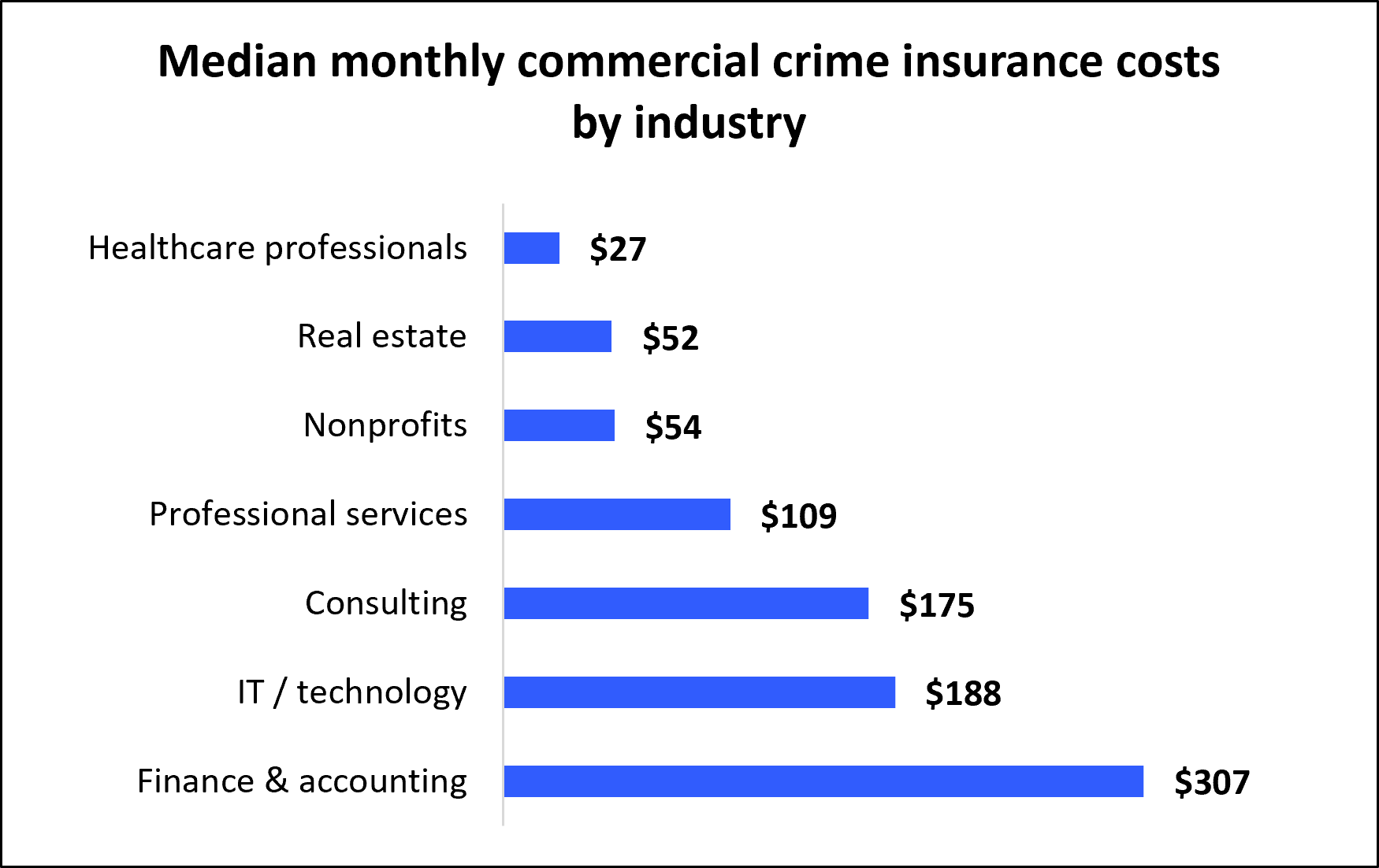
Your industry plays a major role in the cost of crime insurance. Businesses that handle large volumes of cash, process financial transactions, manage client funds, or have access to valuable assets typically face a greater risk of robbery, fraud, and embezzlement, which can lead to higher premiums.
For example, healthcare professionals pay an average of $27 per month for commercial crime insurance, while professional services firms pay about $109 per month. Businesses in higher-risk industries, such as finance and accounting, pay an average of $307 per month.
Insurers evaluate the types of financial crimes your business is most likely to face when determining premiums. Companies that regularly handle cash, promissory notes, sensitive financial information, or client assets often pay more for coverage than service-based businesses with fewer opportunities for theft of money and securities.
The security measures and risk management practices your business has in place can influence the cost of commercial crime coverage. Strong internal controls and fraud prevention strategies can reduce the likelihood of a loss, which may help lower your premiums.
Insurers may consider safeguards such as employee background checks, financial oversight procedures, access controls, regular audits, fraud detection tools, and cybersecurity measures when evaluating your risk.
Businesses with effective security protocols and a proactive approach to preventing theft and business email compromise may be viewed as lower-risk and could qualify for more affordable coverage.
Your premium can ultimately depend on whether your business needs first-party crime coverage, a fidelity bond, or both, as these coverages are typically purchased separately.
First-party coverage protects your own business from financial losses caused by crimes such as employee theft, forgery, and funds transfer fraud. It may also include coverage for risks such as social engineering scams and fraud inducement, which can increase your exposure and the cost of coverage.
Third-party coverage, often called a fidelity bond or fidelity insurance, protects your clients from losses caused by dishonest acts committed by your employees. Businesses that need this type of protection, such as those managing client funds or assets, may pay more depending on the size of the bond and the level of risk involved.
In some cases, first-party employee dishonesty coverage can be added to an existing property policy as an endorsement to protect against employee theft.
Business size and annual revenue can affect the cost of a commercial crime policy. Larger businesses often have more employees, higher transaction volumes, and greater financial inventory, which can increase their exposure to theft, fraud, and other crime-related losses.
Because businesses with more money have a greater potential for costly claims, companies with higher revenues typically pay more for coverage. Additionally, the number of employees, amount of financial activity, and value of assets a business manages can all factor into how insurers evaluate risk.
The number of employees your business has can affect the cost of crime coverage, especially if multiple employees have access to financial information, company funds, or valuable assets. Businesses with more employees may face a higher risk of internal theft, fraud, or misuse of company resources.
Insurers may consider how many employees handle funds, process checks, manage accounting systems, or have access to sensitive client property when evaluating risk.
The number of clients, vendors, and financial transactions your business manages can also impact exposure, as more opportunities for access and interaction may increase the likelihood of a crime-related loss.
Your personal and business’s credit ratings, as well as financial stability and security practices can influence the cost of crime insurance.
Companies with strong financial standing and effective controls for protecting their assets may be viewed as lower risk and could qualify for more affordable coverage.
Insurance carriers may also consider internal financial safeguards such as separation of duties, employee background checks, regular account reviews, and dual-authorization processes for financial transactions.
These practices can help reduce the risk of fraud, theft, and unauthorized access, which may lower your overall insurance costs.
Your business’s claims history can affect how much you pay for commercial crime insurance. Businesses with a history of filing claims may be viewed as a higher risk because previous losses can indicate a greater likelihood of future financial crimes.
Providers typically consider the frequency and severity of past claims when determining your premium amount. A business with few or no prior claims may be able to secure lower rates, while businesses with repeated or costly claims may pay higher premiums or need to demonstrate stronger risk management practices to qualify for coverage.
There are several ways small business owners can reduce the cost of commercial crime insurance, including comparing quotes, improving security practices, choosing the right coverage options, and reducing the likelihood of a crime-related loss.
Insurance companies evaluate crime risks differently, so costs can vary between providers. Reviewing quotes from multiple insurers can help you find coverage that fits your business’s needs and budget.
Working with an insurance marketplace like Insureon can make it easier to compare options with a single application and get guidance from a licensed insurance agent who understands your industry and potential coverage needs.
Choosing a higher deductible can help lower your premium because your business takes on more of the initial cost after a covered loss. However, it’s important to select a deductible you can comfortably afford out-of-pocket if a crime-related incident occurs.
Some businesses may be able to save money by bundling commercial crime insurance with other policies.
Depending on your needs, crime coverage may be added to a business owner’s policy (BOP), commercial package policy (CPP), commercial property insurance policy, or management liability policy through an endorsement.
Bundling multiple coverages with one insurer can simplify policy management and may provide cost savings compared to purchasing each policy separately.
Strong internal controls and security procedures can help reduce your risk of theft and fraud, which may help lower your insurance costs. Insurance providers may view businesses with effective risk management practices as lower-risk.
Some ways to protect your business include:
Insuring your small business doesn't have to cost a fortune. At Insureon, we help you find affordable coverage that meets the unique needs of your small business, through a single online application. That way you can get peace of mind without breaking the bank.
Small business owners choose Insureon as an easy, affordable way to find the right insurance protection for their unique needs. By completing our easy online application today, you can get free quotes for commercial crime insurance, cyber liability insurance, and other policies from top-rated U.S. insurance companies.
Our licensed insurance agents can answer your questions about liability protection, and help you purchase cost-saving packages like a BOP. Most small business owners can begin coverage and receive a certificate of insurance (COI) within 24 hours for peace of mind and proof of coverage.
Hear from customers like you who purchased small business insurance.
The average costs on this page were derived from our data on small business owners who purchased commercial crime insurance policies through Insureon. Most of our customers have less than five employees, annual revenue ranging from less than $50,000 to more than $200,000, and five years or less in business.