


Why do exterminators and pest control services need business insurance?
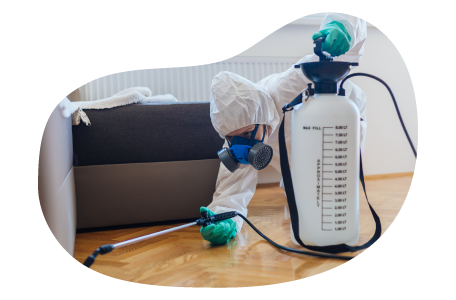
From crouching in tight spaces to facing bites and stings, pest control comes with real risks. Business insurance provides financial protection if an employee is injured by pesticides, or if a client says your services were ineffective. Some policies may be required to comply with laws and contracts.

Get same-day insurance
With Insureon, exterminators and pest control operators can get insurance coverage the same day they apply for quotes.
Fill out our easy online application to compare quotes from top-rated providers.
What types of business insurance do exterminators and pest control need?

General liability insurance
A general liability policy covers basic third-party risks, such as accidental damage to a wall while removing an infestation. It may be required for commercial leases, loans, and contracts.
- Slip-and-fall accidents
- Damaged customer property
- Libel and other advertising injuries

Business owner's policy
A business owner's policy, or BOP, bundles general liability and commercial property coverage at a discount. It protects against common lawsuits and property damage.
- Accidents that injure clients
- Damage to a client's property
- Stolen or damaged business property

Workers’ compensation insurance
Most states require workers’ comp for pest control companies that have employees. It also protects self-employed exterminators from work-related medical bills that health insurance might deny.
- Medical expenses from job-related injuries
- Disability benefits to offset lost wages
- Lawsuits from injured employees

Professional liability insurance
Professional liability insurance covers legal costs when an exterminator is sued for a mistake or oversight that caused financial harm. It's also called errors and omissions insurance (E&O).
- Ineffective pest control services
- Late or undelivered services
- Incorrect diagnosis of a pest problem

Commercial auto insurance
Commercial auto insurance provides coverage if a vehicle owned by your extermination business is involved in an accident. Most states require this policy for company-owned vehicles.
- Property damage caused by your vehicle
- Medical payments from an accident
- Vehicle theft and vandalism

Cyber insurance
This type of coverage helps exterminators and pest control professionals recover from data breaches and cyberattacks. It's strongly recommended for any business that handles personal information.
- Customer notification costs
- Data breach investigations
- Fraud monitoring services
How much does pest control insurance cost?

An exterminator who works independently will pay less for insurance than a larger business.
Average pest control insurance costs include:
- General liability: $117 per month
- Workers' comp: $89 per month
- Professional liability: $43 per month
Pest control companies can often bundle general liability and property insurance in a business owner's policy, which costs an average of $115 per month for contractors.
What factors affect pest control insurance costs?
Several factors affect insurance premiums for pest control contractors during the underwriting process, such as:
- Type of services and products: Insurers will look at the services you offer, such as termite control, wildlife control, or pest management, along with whether you use natural or chemical products.
- Business property: Expect to pay more to insure a large office or large-capacity pesticide systems than less expensive supplies.
- Annual revenue: Higher revenue often increases exposure to liability claims and potential losses, which can raise your insurance rates.
- Business location: Insurance costs can vary based on property values, litigation trends, crime rates, and the cost of doing business in your region.
- Coverage limits and deductibles: Higher policy limits generally increase premiums, while choosing a higher deductible can help reduce your rates.
- Claims history: Pest control contractors with previous insurance claims may pay higher rates than those with a clean history of claims.
- Number of employees: A larger workforce increases the cost of workers' comp and other policies, as each employee brings the risk of an injury or accident.
How do I get pest control insurance?
It’s easy to get insurance coverage for exterminators and other pest control contractors with Insureon. Our application asks for basic information about your company, such as revenue and the number of employees.
Small business owners can buy a policy online and get a certificate of insurance (COI) in three easy steps:
- Complete Insureon's free online application.
- Compare insurance quotes and choose a policy.
- Pay for your policy and download a certificate.
Our insurance agents work with top-rated U.S. providers to find the right coverage for your pest control business, whether you work independently or hire employees.
Verified business insurance reviews
Hear from customers like you who purchased small business insurance.
FAQs about insurance for pest control companies
Review answers to frequently asked questions about licenses, requirements, and recommended coverages for pest control contractors and companies.
Is pest control business insurance legally required?
Yes, pest control contractors typically need insurance to operate legally, but the specifics depend on your location and the services you provide.
Here are the policies you likely need to run your business:
- General liability insurance covers third-party bodily injuries and property damage, such as a contractor who accidentally damages a client's attic while treating it for pests. You might need proof of liability insurance to sign a commercial lease, get a business loan, or obtain a license in certain regions, such as California or Florida.
- Professional liability insurance covers accusations of professional negligence, such as failing to recognize an infestation that damages a building. You might need this coverage to get licensed or certified in some regions, or to sign contracts if you do high-stakes work like termite inspections.
- Workers' compensation insurance is required in most states, including New York and California, as soon as you hire your first employee. It covers medical treatment if a worker is injured on the job and provides disability benefits while they recover.
- Commercial auto insurance covers accidents involving business vehicles. Almost every state requires this coverage for vehicles owned by a business.
Standard insurance policies might exclude coverage for applying pesticides and other high-risk activities. Our insurance agents can help you find the coverage you need, which might include endorsements for unusual risks.
In addition, consider having your customers sign liability waivers. A waiver can't prevent lawsuits related to gross negligence, but it can help you avoid minor liability claims.
What license do I need to start my own pest control business?
Depending on your location, you may need to obtain a contractor's license from a state licensing board or local governing body before you accept your first job in pest control. To get licensed, you may need to be a certain age, have a specific amount of education or experience, pass an exam, or submit proof of insurance or a bond.
Your region might require a license or permit for:
- Commercial pesticide applicator
- Structural pest control
- Certified pest control operator
In addition, you will likely need a standard business license from your city, county, or state, along with any relevant permits.
Clients may ask to see proof of insurance or a license before they'll hire you. Being insured, bonded, and licensed shows your business is reputable and gives your customers peace of mind, which is especially helpful when you're working to attract clients to a new business.
Can pest control liability insurance cover pollution risks?
Standard liability insurance won't cover risks related to pollution. However, you can buy coverage that helps pay for cleanup costs and legal fees if your business contaminates the water, soil, or air or is sued by a neighboring property owner.
Contractor's pollution liability (CPL) insurance, a type of environmental insurance, helps pay for liability claims and remediation costs if a pest control contractor accidentally disperses pesticides into the environment. That includes chemical drift, overspray, spills, runoff, and similar incidents.
A CPL policy can also provide coverage if you introduce lead or other contaminants into the environment by tearing down an old wall or doing similar work. In either case, this policy will help pay for costly lawsuits and remediation fees.
What other types of insurance do pest control businesses need?
Small business owners often rely on these types of insurance as part of a comprehensive pest control insurance program:
- Commercial property insurance covers your building, computers, furnishings, and other items at your business location in the event of a fire, storm, or burglary. If you don't have an office, then you can add business personal property (BPP) coverage to your general liability policy to insure business property stored at your home.
- Product liability insurance covers lawsuits and damages if a product sold by your company harms a customer, pet, or property. This coverage is typically included in general liability, though claims related to pesticides may need an endorsement or pollution coverage.
- Equipment breakdown insurance pays for financial losses if fumigation equipment or other machinery your business depends on breaks down unexpectedly.
- Business interruption insurance, also called business income insurance, provides reimbursement for lost income and day-to-day expenses if your business is forced to close temporarily due to a fire or other covered property claim.
- Inland marine insurance, also called tools and equipment insurance, covers moisture meters, sprayers, drills, and other business property in transit, at jobsites, and stored off-site.
- Commercial umbrella insurance, similar to excess liability insurance, provides coverage if a claim exceeds the limit on your general liability, commercial auto, or employer's liability policy.
How can I find affordable pest control business insurance?
Pest control contractors can save money on insurance by comparing quotes from different providers. With Insureon, you can get free quotes from top-rated insurance companies by filling out our easy online application.
Other ways to save money include:
- Bundle policies. Contractors can often buy general liability coverage and commercial property insurance together in a business owner's policy, which costs less than buying these policies separately.
- Choose a payment plan that works for you. If your business is just getting started, you may find it easier to make low monthly payments on your policies. On the other hand, insurance companies sometimes offer a discount if you pay the annual premium in full.
- Customize your coverage. Select lower limits or a higher deductible to reduce your premium. However, make sure your policy can still cover a potential claim and that you can afford to pay the deductible in a crisis.
- Avoid accidents and claims. You can prevent employee injuries and client accidents that lead to claims by implementing a strong risk management strategy that includes safety programs. To avoid breach of contract claims, focus on realistic deliverables and clear communication.
Insureon's licensed agents can help you find the right insurance solutions for your business needs, whether your focus is ants, termites, rodents, bed bugs, or other pests. We also help landscapers and lawn care companies get insurance for their pest control risks.
The average costs on this page were derived from our data on small business owners in the extermination and pest control field who purchased policies through Insureon. Most of our customers have less than five employees, annual revenue ranging from around $50,000 to more than $200,000, and five years or less in business.