

How much does tree service and arborist insurance cost?
Arborist insurance costs are determined by several factors, including your company size and its risks. Save money on small business insurance by comparing quotes from different providers with Insureon.
Top tree company insurance policies and their costs
Here are the top insurance policies purchased by tree service businesses and their average monthly costs:
- General liability insurance: $156 per month
- Workers' compensation insurance: $215 per month
- Tools and equipment insurance: $53 per month
- Commercial auto insurance: $299 per month
Our figures are sourced from the median cost of policies for tree service professionals who apply for quotes with Insureon. The median offers a better estimate of what your business is likely to pay because it excludes outlier high and low premiums.

General liability insurance
Tree service contractors and businesses pay an average of $156 per month, or $1,875 annually, for general liability insurance (sometimes called public liability insurance).
General liability insurance covers common landscaping risks, including third-party property damage and bodily injury. For example, if a tree trimmer damages a homeowner's window while cutting down a tree branch, a general liability policy would cover any resulting legal expenses.
It also helps pay for legal fees if someone sues your business over copyright infringement or advertising injuries, including defamation.
Some tree service small business owners may need proof of general liability insurance to sign a commercial lease or secure a client contract.
Below is the average policy for tree care businesses that buy from Insureon:
Insurance premium: $156 per month
Policy limits: $1 million per occurrence; $2 million aggregate
Deductible: $500
Insureon’s licensed agents typically recommend a business owner’s policy (BOP) for small, low-risk landscaping companies that own or rent commercial property. This policy combines general liability coverage with commercial property insurance at a discount to protect your building and your tree service business property, such as pruners and chainsaws.
For landscaping professionals, the average cost for a business owner's policy is $92 per month or $1,101 annually. To protect against financial losses due to a forced closure, such as from a fire or flooding, you can also add business interruption insurance to a BOP.
General liability insurance costs depend on factors such as the coverage limits you choose, your business size, your foot traffic, and any additional insured endorsements you select.
Learn more about how your insurance premium is calculated and how to save money on your general liability coverage.

Workers’ compensation insurance
The average cost for workers’ compensation insurance for tree service professionals is $215 per month, or $2,580 annually.
A workers’ compensation policy covers medical bills and lost wages if you or an employee gets injured or ill on the job, such as a tree trimmer who is briefly exposed to a power line and at high risk of electrical shock. Businesses that have employees typically must purchase workers' comp to comply with state requirements and avoid penalties.
Workers' comp state laws vary, so your specific requirements will depend on the state you work in. For example, every licensed contractor in California will need this coverage when Senate Bill 206 goes into effect in 2028. Meanwhile, coverage is optional in Texas.
Since health insurance plans can deny claims for injuries related to your job, workers' compensation coverage is also recommended for sole proprietors as a financial safety net and for extra peace of mind.
The cost of workers' comp depends on several factors, primarily your number of employees and their occupational risks. You can save money on your workers' comp coverage by classifying your employees correctly and implementing a risk management plan to minimize work-related injuries.

Tools and equipment insurance
Tree care companies and other landscaping businesses pay an average of $53 per month, or $637 annually, for tools and equipment insurance.
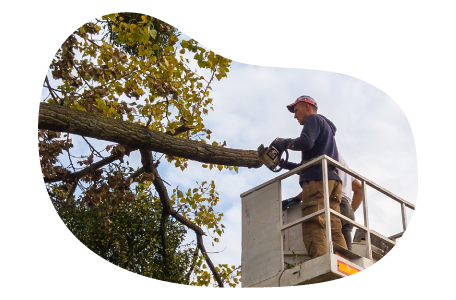
Also called inland marine insurance, this policy covers your business property whether it’s in transit, at a jobsite, or stored off-site. Tools insurance can pay for lost, stolen, or damaged tools and equipment, such as pesticide sprayers, climbing gear, handsaws, bucket lifts, and more.
The cost of tools and equipment coverage depends on the value of your tree service equipment and the types of projects you work on. Items valued at over $2,500 may need to be scheduled separately on the policy.

Commercial auto insurance
Landscaping companies, including tree service businesses, pay an average of $299 per month, or $3,590 annually, for commercial auto insurance.
An auto policy pays for property damage and medical expenses from accidents involving your company vehicles, such as your business-owned truck. It can also cover vehicle theft, vandalism, and weather damage.
Most states require this type of insurance for vehicles owned by your tree service business. For personal, rented, and leased vehicles used for work purposes, look to hired and non-owned auto insurance (HNOA) instead.
The cost of commercial car insurance depends on several factors, including the policy limits you choose, claims history, the number and value of your vehicles, and the driving records of anyone permitted to drive.
Learn how insurers calculate your premium and how to save money on your commercial auto coverage.
How are tree service insurance costs calculated?
Tree service and arborist business insurance coverage costs are determined by several factors. While underwriting your policy, insurance companies will consider the following when calculating insurance rates:
- The types of tree services offered: Tree service companies may see elevated premiums if they offer higher-risk services, like those that involve crane removals or power line clearances, compared to landscaping businesses that only provide simple branch or tree trimming services.
- Business property and landscaping equipment: Tree company owners that operate with higher-value vehicles or high-end equipment are likely to see higher premiums. Also, any items that are frequently used could cost more to insure than items that are used less often.
- Location: If your tree service business operates in an area that is more prone to natural disasters, increased foot traffic, or high crime rates, you may have to pay higher insurance costs than a landscaping company located in an area where these factors are less present.
- Number of employees: If your arborist company has several employees on staff, you could see increased insurance costs as there are more opportunities for accidents to happen or for potential damage to occur.
- Business size and revenue: Insurance companies might assume that a tree trimming business that is making more money will also see increased customer and property damage exposure, which can generate higher premiums.
- Coverage limits and deductibles: Tree service companies with higher coverage limits and lower deductibles on their insurance policies will typically increase their premium costs, while lower limits and a higher deductible can help keep their rates lower.
- Type of business operation: A small tree company operated by one person may not have to pay as much for insurance as a business with multiple landscapers on staff.
- Types of coverage: Some tree service projects require obtaining certain policies. These required policies, such as professional liability insurance, are often needed to cover more expensive accidents and lawsuits, which tend to cost more than basic coverages. In addition, client contracts can often require license or permit bonds. These are relatively affordable, with an average cost of $9 per month, or $112 annually, for landscaping companies.
- Claims history: An arborist business with a lengthy list of previous insurance claims will likely pay more for insurance than one with no claims history.
- Risk management: Landscaping businesses may qualify for lower insurance rates if they have a documented training program for employees, perform regular equipment maintenance, and follow strong safety practices, or employ ISA-certified arborists.
How do I get affordable tree service insurance?
Insureon can help tree removal businesses, landscape designers, lawn care companies, and irrigation professionals find affordable insurance coverage, whether you work independently or hire employees.
To get started, all you need is your business information on hand. Our insurance application will ask for basic facts about your business, such as revenue and number of employees. Then, you can buy a policy online with Insureon in three easy steps:
- Fill out a free online application with details about your business.
- Compare custom quotes from top-rated U.S. insurance companies.
- Select a policy and pay the premium to begin coverage.
Our licensed insurance agents are available to answer questions about the terms of different policies, state insurance requirements, and the best types of coverage for the tree care industry.
Once you've bought the tree service insurance policies you need, you can download a certificate of insurance (COI) for proof of coverage. Most small business owners can get insured within 24 hours of applying for quotes.
What our customers are saying
The average costs on this page were derived from our data on small business owners in the tree service and arborist field who purchased policies through Insureon. Most of our customers have less than five employees, annual revenue ranging from around $50,000 to more than $200,000, and five years or less in business.
Get tree trimming insurance quotes



Want free expert advice right in your inbox?
By entering your email address and subscribing, you agree to our Terms of Use and Privacy Policy