


Why do sign installers need insurance?
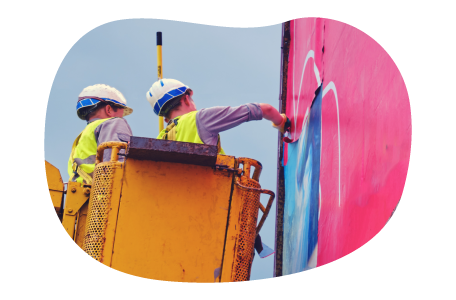
Sign installers often work on lifts and ladders, which puts them at risk. Business insurance helps pay for medical bills in the event of a fall or other injury. It also covers accidents that cause property damage or other harm. State laws, leases, and contracts often require coverage.

Get same-day insurance
With Insureon, contractors and companies that install signs can get insurance coverage the same day they apply for quotes.
Fill out our easy online application to compare quotes from top-rated providers.
What types of sign installation insurance do I need?
These insurance policies cover the most common risks of sign installation.

General liability insurance
A general liability policy covers common third-party risks, such as a customer who trips over your toolbox and suffers a bodily injury. It may be required for a commercial lease, loan, or contract.
- Accidents that harm customers
- Libel and other advertising injuries
- Products-completed operations coverage

Business owner's policy
A business owner's policy, or BOP, is a cost-effective way for sign installers to buy general liability coverage and commercial property insurance together.
- Accidents that injure bystanders
- Business property damage
- Business interruption coverage

Workers’ compensation insurance
Most states require workers' comp for sign companies that have employees. It also protects sole proprietors from work-related medical bills that health insurance might deny.
- Employee medical expenses
- Disability benefits
- Legal fees from employee injuries

Commercial auto insurance
This policy covers financial losses in an accident involving a sign contractor's pickup truck or other vehicle. Most states require it for business-owned vehicles.
- Injuries caused by your vehicle
- Property damage caused by your vehicle
- Vehicle vandalism and theft

Tools and equipment insurance
This policy covers a sign installer's lifts, ladders, post drivers, and other tools and equipment. It's a type of inland marine insurance that protects mobile property.
- Equipment less than five years old
- Items that travel to jobsites
- Portable tools

Cyber insurance
Cyber insurance helps cover the cost of a data breach or cyberattack at your sign installation business. It's sometimes called cyber liability insurance or cybersecurity insurance.
- Data breach notification costs
- Fraud monitoring services
- Cyber incident investigations
How much does sign installation insurance cost?

A sign installer who works independently will pay less for insurance coverage than a larger business.
Factors that affect installation contractor insurance costs include:
- Services you provide, such as printing, graphic design, advertising, or painting
- Value of your boom lifts, printers, and other business property
- Annual business revenue
- Types of insurance purchased
- Policy limits and deductibles
- Claims history
How do I get sign installation insurance?
It's easy to get sign installation insurance and sign manufacturer insurance if you have your company's information on hand. Our application will ask for basic facts about your business, such as revenue and number of employees. You can buy a policy online and get a certificate of insurance with Insureon in three easy steps:
- Fill out our free online application.
- Compare insurance quotes and choose a policy.
- Pay for the policy and download your certificate.
Our licensed insurance agents work with top-rated U.S. insurance companies to find affordable coverage that fits your business needs, whether you're a sign installation contractor or subcontractor, or you own a sign shop.
Verified business insurance reviews
Hear from customers like you who purchased small business insurance.
FAQs about business insurance for sign installation contractors
Review answers to common questions about sign contractors’ insurance.
Do sign installers need a license or certification?
While there is no specific license for installing signage, you still need to comply with your state's laws and other regulations. For example, you might need:
- A license or permit for outdoor advertising. Each state, county, and city has its own laws for outdoor advertising. You will need to obtain relevant licenses and permits and comply with zoning laws and other regulations.
- An electrician's license. In many states, you'll need an electrician's license for any electrical project, such as powered signs and lighting installation.
- A business license. Even if your state doesn't require a business license, you likely need one to comply with the laws in your county or city.
- A sales tax permit. Any business that sells tangible goods needs to obtain a sales tax permit from the state tax department.
- A commercial driver's license (CDL). Businesses that transport cranes and other heavy equipment will need a CDL for their drivers.
- A crane operator's license. Crane operators might need a license from their city or state, or from the Occupational Safety and Health Administration (OSHA).
There are a number of laws that can impact your business, such as the Highway Beautification Act (HBA) which regulates highway signage. Make sure to research the regulations in your area, in addition to federal laws.
What other types of coverage are recommended for sign installers?
The following types of coverage are often included in a risk management strategy for installation contractors:
- Professional liability insurance: This policy provides financial protection against accusations of professional negligence, such as a sign that fails to match a client's specifications. It's also called errors and omissions insurance (E&O).
- Equipment breakdown insurance: If a boom lift or other piece of equipment breaks unexpectedly, this policy will cover the cost of repairing or replacing it.
- Commercial umbrella insurance: Umbrella insurance boosts the coverage of other liability policies once they reach their limit on a claim, such as general liability insurance, commercial auto insurance, and employer's liability insurance.
- Installation floater insurance: If your company's signs or other products are stolen or damaged at a jobsite, this property coverage will help pay for your losses. It covers materials in transit and stored off-site, which is important since commercial property insurance only covers items at a fixed business address.
- Products-completed operations insurance: This coverage pays for harm caused by defective products, such as a sign that falls and injures a pedestrian. Also called product liability insurance, it's typically included in your general liability policy.