

Get free insurance quotes for food vendors
Save money by comparing free quotes from top-rated carriers.

Your setup may be small, but food vendors face many of the same liabilities as a full-scale restaurant. Business insurance helps pay costly bills from lawsuits and accidents. You might also need insurance coverage to comply with state laws, or to participate at a farmers’ market or other events.
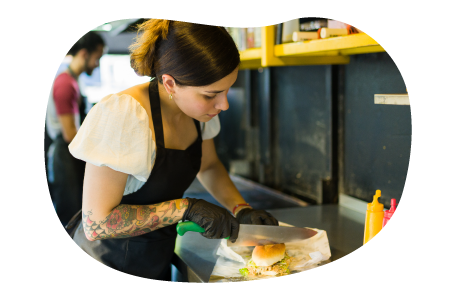

Insureon helps food vendors find insurance quotes that match their unique risks.
Get free expert advice and peace of mind knowing you have the right property and liability coverage for your small business.
These insurance policies cover the most common risks of food vending.

A business owner's policy, or BOP, is a cost-effective way for food vendors to buy commercial property insurance and general liability coverage under one plan.

Most states require workers' comp for food vendor businesses that have employees. It also protects sole proprietors from work injury medical bills health insurance might deny.

A general liability policy covers basic risks, including claims of food poisoning and customer property damage. Event organizers might require food vendors to carry this coverage.

This insurance covers costs if a mobile food vendor's vehicle is involved in an accident. Each state has its own auto liability insurance requirements.

This policy covers the cost of property damage and bodily injury caused by an intoxicated patron, as well as a food vendor's legal fees.

Cyber liability helps food vendors recover from cyberattacks and data breaches. It's recommended for any business that stores customer information.

Food vendor insurance policies are affordable for farmers' market stands, home bakeries, and other small businesses.
Factors that affect mobile food vendor insurance costs during underwriting include:
It's easy to get food vendor insurance or food truck insurance if you have your company information on hand. Our application will ask for basic facts about your business, such as revenue and number of employees. You can buy a policy online and get a certificate of insurance with Insureon in three easy steps:
Insureon's licensed insurance agents work with top-rated U.S. providers to find the right insurance coverage for your food vending business, whether you work independently or hire employees.
Hear from customers like you who purchased small business insurance.
Read answers to frequently asked questions (FAQs) about food vendor liability insurance and more.
Yes. Food vendors are typically required to hold one or more licenses or certifications, and the exact requirements depend on where and how they sell food. For example, permits and certifications can vary if vendors plan to sell at events, from food trailers, at farmers' markets, from ice cream trucks, or as caterers.
The most common requirements often include:
In many cases, proof of insurance—such as general liability coverage—is also required before a license or permit is approved. Vendors should always check with their local health department and city or county licensing office to confirm what applies to their specific operation.
It depends on where and how you sell your homemade food. Many home-based food businesses—such as those operating under cottage food laws—aren’t always legally required to carry insurance, but it’s still strongly recommended. Some venues, platforms, or local authorities may require proof of coverage before allowing you to sell.
Common situations where insurance is needed include selling at farmers' markets, pop-up events, online through third-party platforms, or to retail stores. Even when it’s optional, having coverage like general liability insurance can help protect you if a customer claims your product caused illness, injury, or property damage.
The cost of food vendor insurance varies based on several details about your business, such as:
Insurance companies use these details to estimate your risk and set a price that matches your specific operation.
Yes—provided you have the right coverage in place. Many food vendor insurance policies can cover you across multiple locations and venues, such as farmers' markets, festivals, pop-ups, and private events. Your general liability policy typically follows your business wherever you operate.
However, if you transport equipment, supplies, or inventory between sites, you may also need coverage for property in transit. This helps protect your tools, food, and equipment while they’re being moved from one location to another. It’s important to let your insurer know all the places you operate so your policy is properly set up for your full range of activities.
In addition to general liability and product liability insurance, which is often included in your general liability coverage, many food vendors benefit from carrying extra types of coverage to protect their business from a wider range of risks, including:
These coverages help ensure your food or beverage business is protected whether you’re on-site, on the road, or temporarily unable to operate.