

Get small business insurance quotes
Save money by comparing insurance quotes from multiple carriers.

Many general liability insurance policies also include product liability, which can protect your business if a customer sues, claiming they were harmed or incurred medical expenses resulting from your company's product.
Generally speaking, your small business insurance policies will have sufficient liability limits to protect your business from the most common risks.
However, some businesses face greater risks or are required by their business contracts to carry higher limits, which is where a commercial umbrella policy comes in.
An umbrella insurance policy provides additional liability coverage beyond the traditional policy limits for the following:
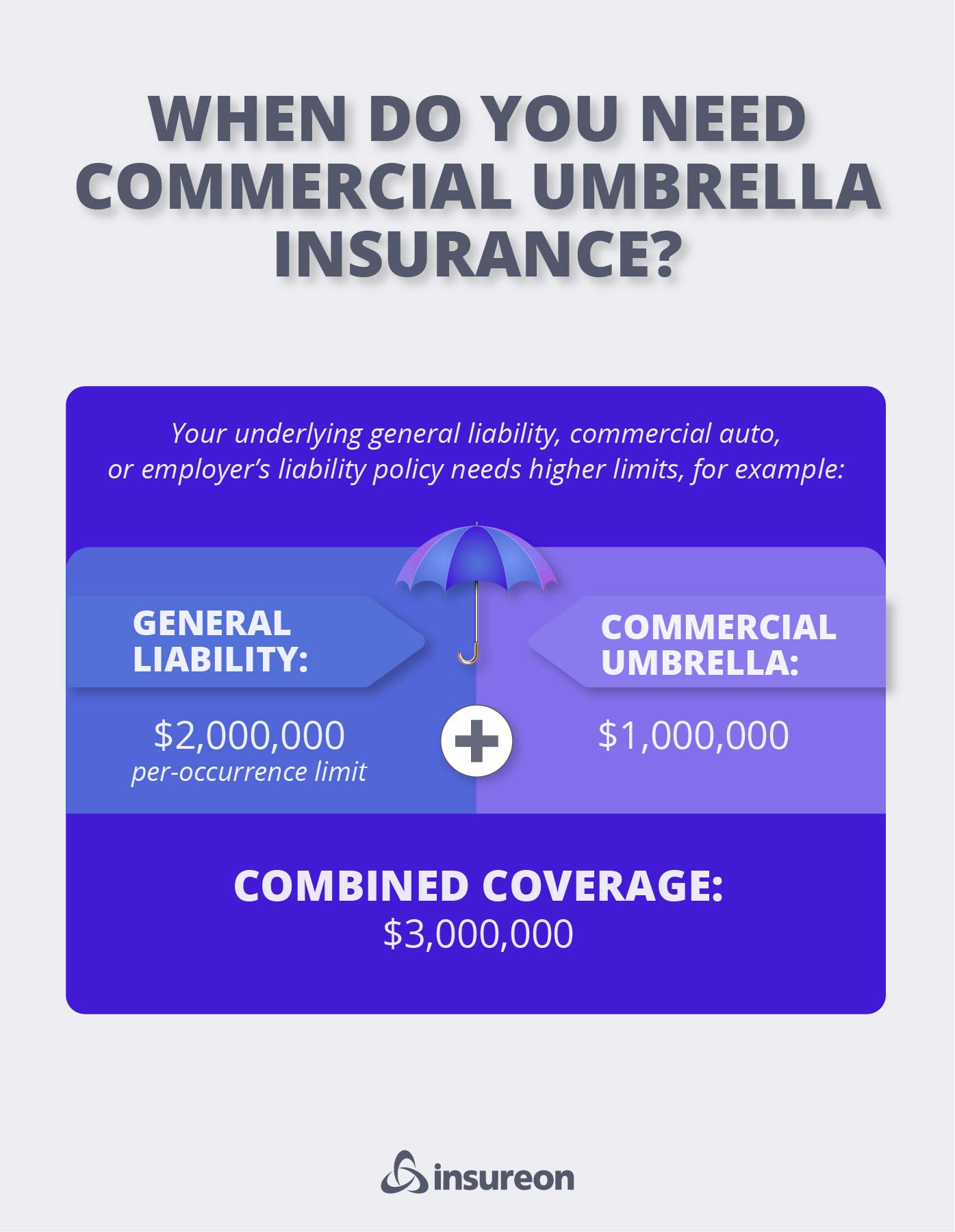
An umbrella liability policy can offer an extra layer of protection, typically in $1 million increments.
This coverage kicks in after the underlying policy limits have been reached. It requires that the policyholder already carry at least one of the primary policies covered by umbrella coverage.
Excess liability insurance is another policy option that can extend your coverage limits, but it only applies to one policy at a time. Umbrella insurance can be applied to multiple policies.
The main difference between these policies is that umbrella insurance is an additional policy that extends coverage limits; it is not a standalone policy.
A general liability policy acts as standard insurance coverage against many third party risks. Umbrella liability protection provides peace of mind over the standard coverage limits on several common types of policies.
You can purchase both policies together to protect against common lawsuits beyond the standard general liability policy limits. You can also purchase just general liability insurance. However, you cannot purchase umbrella insurance (or excess liability insurance) by itself.
General liability insurance protects against common third-party risks. Umbrella insurance extends the coverage limits of several important policies.
Whether you need both policies will depend on your business needs. General liability insurance is one of the most common small business insurance policies because it protects against so many common liabilities.
Businesses in more high-risk industries may need extended coverage limits. Some companies may also need an umbrella policy to bid on certain projects or to sign a contract.
While you can purchase general liability insurance as a standalone policy, umbrella insurance is not a standalone policy and requires an active primary policy to be purchased. So you can have both general liability and umbrella insurance, or just general liability, but you can't just have umbrella insurance.
Speak to a licensed insurance agent if you have further questions about whether you need both policies to protect your business.
[video: an animated header displays the Insureon logo. Underneath it, a subheading displays the text: "What’s the difference: general liability vs. umbrella liability?"]
MALE VOICEOVER: If you own a small business, one lawsuit could cost more than you expected. That’s why many business owners carry general liability insurance—and sometimes umbrella insurance.
But what’s the difference?
[video: an illustrated header displays the text: "What’s the difference between general liability and umbrella liability?"]
General liability insurance is one of the most common policies for small businesses. It protects you from third-party claims, such as customer injuries or property damage, and advertising-related lawsuits.
It helps pay medical bills, legal defense costs, and settlements when someone outside your business claims you harmed them.
[video: an illustrated header displays the text: "General liability covers:"]
[video: Under above header, three bullet points display the text: "Customer injuries"; "Accidental property damage"; "Personal and advertising injury claims"]
For many small businesses, this is the first policy they buy because it covers some of the most common risks.
Umbrella insurance works differently. Instead of covering new risks, it extends the coverage limits on other liability policies, like general liability, commercial auto, and employer’s liability, which is typically included in workers’ compensation.
If a lawsuit costs more than your standard policy limit, the umbrella policy can step in and cover the remaining costs.
[video: an illustrated header displays the text: "Commercial umbrella extends limits for:"]
[video: Under above header, three bullet points display the text: "General liability"; "Commercial auto"; "Employer's liability (from workers' comp)"]
For example, if your general liability policy covers $2 million dollars, but a lawsuit totals $2 and a half million dollars, an umbrella policy could cover the remaining $500,000 dollars.
Most businesses start with general liability insurance, but you might add umbrella coverage if your industry has higher risks, your business has lots of customer traffic, or your contracts require higher liability limits.
[video: an illustrated header displays the text: "You may add coverage if you have:"]
[video: Under above header, three bullet points display the text: "More industry risks"; "Lots of customer traffic"; "Higher liability limits on contracts"]
It’s good to remember that umbrella insurance cannot be purchased on its own. You need to have an underlying policy first.
The right coverage depends on your business and your level of risk. With Insureon you can get quotes in minutes and find the right policies for your business.
[video: an illustrated header displays the text: "Insureon is the #1 digital agency for small business insurance."]
Tap the link to get small business insurance you can count on.
[video: an animated header displays the Insureon logo]
With Insureon's easy online application, you can get free quotes from the leading U.S. insurance companies.
Our licensed insurance agents can answer any questions you may have about the different types of insurance available.
Insureon can help you get started with a general liability policy and umbrella coverage, as well as other additional coverage options, such as commercial property and professional liability insurance.
Once you pick the right policies for your business, you can start coverage and obtain a certificate of insurance, often within 24 hours.



By entering your email address and subscribing, you agree to our Terms of Use and Privacy Policy