

Find quotes for snow and ice removal businesses
Save money by comparing free quotes from trusted carriers.

Snow plow insurance costs depend on the type of insurance, policy limits, deductibles, and factors such as your business's location and number of employees. Save money on commercial insurance by comparing quotes from different providers with Insureon.
Here are the top snow removal business insurance policies and their average monthly cost:
Our figures are sourced from the median cost of policies for snow removal contractors who apply for quotes with Insureon. The median offers a better estimate of what your business is likely to pay because it excludes outlier high and low premiums.

Snow removal contractors and companies pay an average of $132 per month, or $1,580 per year, for general liability insurance, sometimes called public liability insurance. Some snow removal businesses need proof of insurance for this policy to sign a commercial lease or a client contract.
A general liability policy can pay for medical expenses from third-party injuries, such as your snowplow clipping a client on their driveway. It also covers costs if someone sues your business over a bodily injury, property damage, copyright infringement, or advertising injury.
This is the average policy for snow plow contractors who buy from Insureon:
Premium: $132 per month
Policy limits: $1 million per occurrence; $2 million aggregate
Insureon’s licensed agents typically recommend a business owner’s policy (BOP) for small, low-risk snow plowing companies that own or rent commercial property. A BOP combines general liability coverage with commercial property insurance at a discount to protect your building and business property. To protect against financial losses due to a forced closure, such as from a fire or natural disaster, you can also add business interruption insurance to a BOP.
The cost of a general liability insurance policy depends on factors such as the coverage limits you choose, the size of your business, the amount of foot traffic you have, and any subcontractors or additional insured endorsements.
Learn more about how your premium is calculated and how to save money on your general liability policy.

Snow removal contractors pay an average of $256 per month for workers’ compensation insurance, or $3,074 annually.
Workers' comp helps pay for medical costs from work-related employee injuries and illnesses. Even when it's not required by law, self-employed contractors often buy this coverage for financial protection against job injuries, which personal health insurance could deny.
Most policies include employer's liability insurance, which covers the cost of lawsuits related to workplace injuries. There's usually no limit to how much a workers' comp policy can pay for employee benefits, though it depends on state laws.
The cost of a workers' compensation policy depends on factors such as the number of employees you have and the type of work they do. Learn more about how workers' comp costs are calculated and how to save money on your policy.
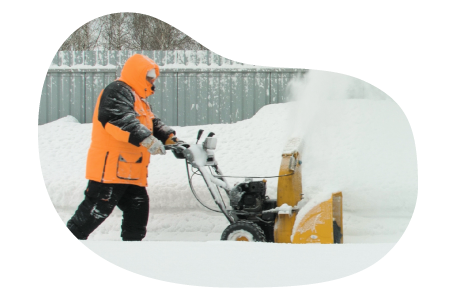

Landscaping and snow removal businesses pay an average of $51 per month for tools and equipment insurance, or $612 annually.
Also called inland marine insurance, this policy covers your property whether it’s at a storage unit, in transit, or at a jobsite. Tools insurance can pay for lost, stolen, or damaged tools and equipment, such as salting machines, ice scrapers, and snow blowers.
The cost of tools and equipment coverage depends on the value of your tools and equipment and the type of work you do. Items valued at over $2,500 may need to be scheduled separately on the policy.

Snow removal contractors pay an average of $264 per month, or $3,162 per year, for commercial auto insurance.
Most states require this coverage for vehicles owned by a snow removal company. For leased, rented, and personal vehicles used by your business, look to hired and non-owned auto insurance (HNOA) instead.
A commercial auto insurance policy covers financial losses in the event of an accident involving your business vehicle, such as your truck with a plow attachment.
It can help pay for property damage, medical bills, and legal expenses. When buying a policy, you'll need to make sure your coverage limits match the requirements in your state.
The cost of a commercial auto policy depends on your coverage needs, the value of the vehicle, and your insurance claims history. Learn how insurers calculate your premium and how to save money on your commercial auto policy.
Insureon can help you find affordable snow removal business insurance coverage in three easy steps:
A licensed agentwill help make sure your insurance matches your business risks, budget, and state requirements. Once you've bought a policy, you can download a certificate of insurance (COI) for proof of coverage. Most small businesses can get covered within 24 hours of applying for quotes.



By entering your email address and subscribing, you agree to our Terms of Use and Privacy Policy