

Find fast food restaurant insurance quotes
Save money by comparing insurance quotes from multiple carriers.

Fast food restaurant owners face risks every day, from kitchen fires to accusations of food poisoning. Whether you’re an independent business owner or a franchisee, small business insurance gives you financial protection from kitchen fires, lawsuits, food poisoning claims, data breaches, and other risks.
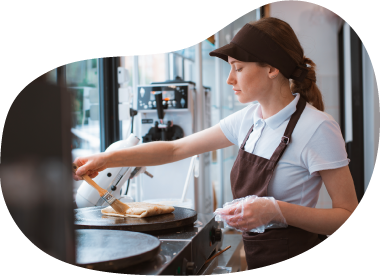

With Insureon, fast food restaurants can get insurance coverage the same day they apply for quotes.
Fill out our easy online application to compare quotes from top-rated providers.

This policy bundles commercial property insurance and general liability coverage under one plan. A BOP is often one of the most economical options for fast food restaurant owners.

Most states require workers' comp for fast food restaurants that have employees. It also protects sole proprietors from work injury costs that health insurance might deny.

This insurance helps pay for common third-party accidents, such as a customer who slips on a wet floor at your restaurant and breaks their wrist. It’s required for most commercial leases.

This policy covers medical bills and property damage in an accident involving your restaurant’s vehicle. It also covers damage to a vehicle caused by weather or vandalism.

This policy covers legal fees, property damage, and medical costs if alcohol is served or sold at your fast food restaurant to a visibly intoxicated person who then proceeds to harm others.

Cyber liability insurance helps fast food restaurants recover from cyberattacks and data breaches. It's recommended for any business that stores customer information.

A small fast food restaurant will pay less for commercial insurance than a larger establishment.
Average fast food restaurants insurance costs include:
A more affordable option for fast food restaurants is a BOP, which bundles general liability and property coverage for less than purchasing the policies separately. On average, Insureon fast food customers pay $277 per month.
The cost of fast food restaurant insurance varies based on your business's unique risk profile. Insurers evaluate several factors during underwriting when determining premiums, including:
It's easy to get fast food restaurant insurance policies if you have your company information on hand. Our application will ask for basic facts about your business, such as revenue and number of employees. You can buy a policy online and get a certificate of insurance (COI) with Insureon in three easy steps:
Insureon's licensed insurance agents work with top-rated U.S. providers to find the right coverage for your fast-food restaurant or fine-dining establishment, whether you work independently or hire employees.
Hear from customers like you who purchased small business insurance.
"For many fast food restaurants, some of the biggest risks come from employee injuries and high-cost liability claims—which is why workers' comp and umbrella coverage should be in their risk management plan."
Review answers to common questions about insurance for fast food restaurants and more.
Yes, most fast food restaurants need licenses and permits before they can open and serve customers. Requirements vary by state and local government, but restaurant owners typically need a business license, health department approval, and food handler or food manager certifications.
Depending on your operations, you may also need additional permits, such as:
You may also need proof of liability insurance to obtain certain licenses, sign a commercial lease, or operate from a dedicated location. Landlords and local authorities often require coverage such as general liability insurance before approving a business to open.
If you own a franchise location, your franchise agreement may include insurance requirements as well. Many fast food franchisors require franchisees to carry specific types of insurance and minimum coverage limits. These requirements often become more extensive for owners who operate multiple locations.
Before opening your fast food restaurant, check your local licensing requirements, lease agreement, and franchise contract to make sure you have the permits and insurance coverage needed to operate legally.
If your food business is forced to close temporarily due to a covered claim, business interruption insurance, also called business income insurance, can help safeguard your finances. This coverage is often included in your commercial property insurance or BOP.
Business interruption coverage protects you against financial losses if a fire or storm forces your business to close for repairs. This policy can pay for employee wages, rent, lost profits, and other day-to-day operating expenses.
What's more, an extra expense insurance policy can help pay for even more costs from a closure, should you need to rent a new location or lease kitchen equipment until renovations are complete.
Business income coverage is essential for a quick service restaurant (QSR), especially in the event of a kitchen fire, which is costly enough without factoring in lost income and other expenses.
In many states, fast food restaurants are required to carry workers' compensation insurance for employees, including part-time, temporary, and seasonal workers. Requirements vary by state, but if a worker is classified as an employee, they'll likely need to be covered by your policy.
Workers' compensation helps pay for medical bills, lost wages, and other expenses if an employee is injured on the job. Common restaurant injuries include slips and falls, burns, and cuts.
Even when coverage isn't legally required, providing workers' compensation is often a smart business decision. It can help protect both your employees and your restaurant from the financial impact of workplace injuries.
Some insurers offer seasonal insurance options for businesses that only operate during part of the year. However, if you plan to hire seasonal employees regularly or bring back the same workers each year, maintaining year-round coverage may be a better option. It can help prevent gaps in coverage and make it easier to stay compliant as your staffing needs change.
Because workers' compensation requirements vary by state, be sure to check your local laws and insurance requirements.
While typically not required by law, product liability insurance is a key component of franchise restaurant insurance. That's because every business in the supply chain can face a product liability lawsuit, including fast food restaurants, cafes, and food trucks. This coverage is typically included in your general liability insurance policy.
Product liability insurance covers several types of claims, including:
If your restaurant serves food that ends up harming a customer, they could sue you for medical expenses or time lost from work. Your product liability policy would pay for the attorney's fees, court costs, settlements, and other legal expenses.
Maintaining the right types of insurance coverage can help protect your fast food business against both food poisoning claims and food spoilage losses—but they’re covered by different types of coverage.
Should a customer become sick after eating contaminated food at your franchise location and decide to sue, food contamination coverage in your general liability policy would step in to help cover legal fees, settlements, and medical costs. This type of policy is essential for fast food restaurants since even a single incident of foodborne illness can lead to significant reputational and financial damage.
Food spoilage, on the other hand, isn't covered under general liability. Instead, it typically requires an endorsement to your business owner's policy (BOP) or commercial property policy. Spoilage coverage can help reimburse you for the cost of food that goes bad due to a covered event, such as a power outage, equipment failure, or refrigeration breakdown.
Without this protection, you'd be on the hook for replacing thousands of dollars in inventory.
Fast food restaurants that offer delivery services need specialized insurance coverage to protect their business, vehicles, and employees. Two key types of coverage to consider are:
You should also consider risks associated with third-party delivery services such as DoorDash and Grubhub. While these companies maintain their own insurance policies, a fast food restaurant could still face claims related to food preparation, packaging, order accuracy, or other incidents connected to a delivery order.
Having the right protection in place not only keeps your business compliant and financially secure—it also gives you peace of mind. If you're looking for cheap fast food delivery car insurance, Insureon can help you compare affordable policies tailored to your needs.
To fully protect your fast food restaurant from several types of risks, you should consider the following QSR insurance solutions as part of your risk management plan:
There are many steps you can take to get cheap insurance for pizzerias, fast food restaurants, and other businesses in the restaurant industry.
Start by comparing free business insurance quotes from leading insurance companies through Insureon’s online application. If you're unsure what fast food business insurance policies you need, our licensed insurance agents can help make sure you get the right coverage options for your insurance needs and peace of mind, while helping your restaurant cut costs without compromising service.
Most small businesses can get insured and download a certificate of insurance (COI) within hours of applying for quotes.