




Commercial crime insurance

Commercial crime insurance
Commercial crime insurance provides financial protection against employee theft or fraud that impacts your business, clients, and customers.
What is commercial crime insurance?
Commercial crime insurance protects businesses from financial losses caused by theft, fraud, forgery, and other dishonest acts. Depending on the type of coverage purchased, it can protect your business from losses caused by employee dishonesty, as well as certain criminal acts committed by third parties.
For example, commercial crime coverage may help cover losses if an employee steals money, inventory, or other business property, or if a fraudster tricks an employee into transferring funds through a social engineering scam. It can also help protect your business from the financial consequences of employee theft involving a customer or client.

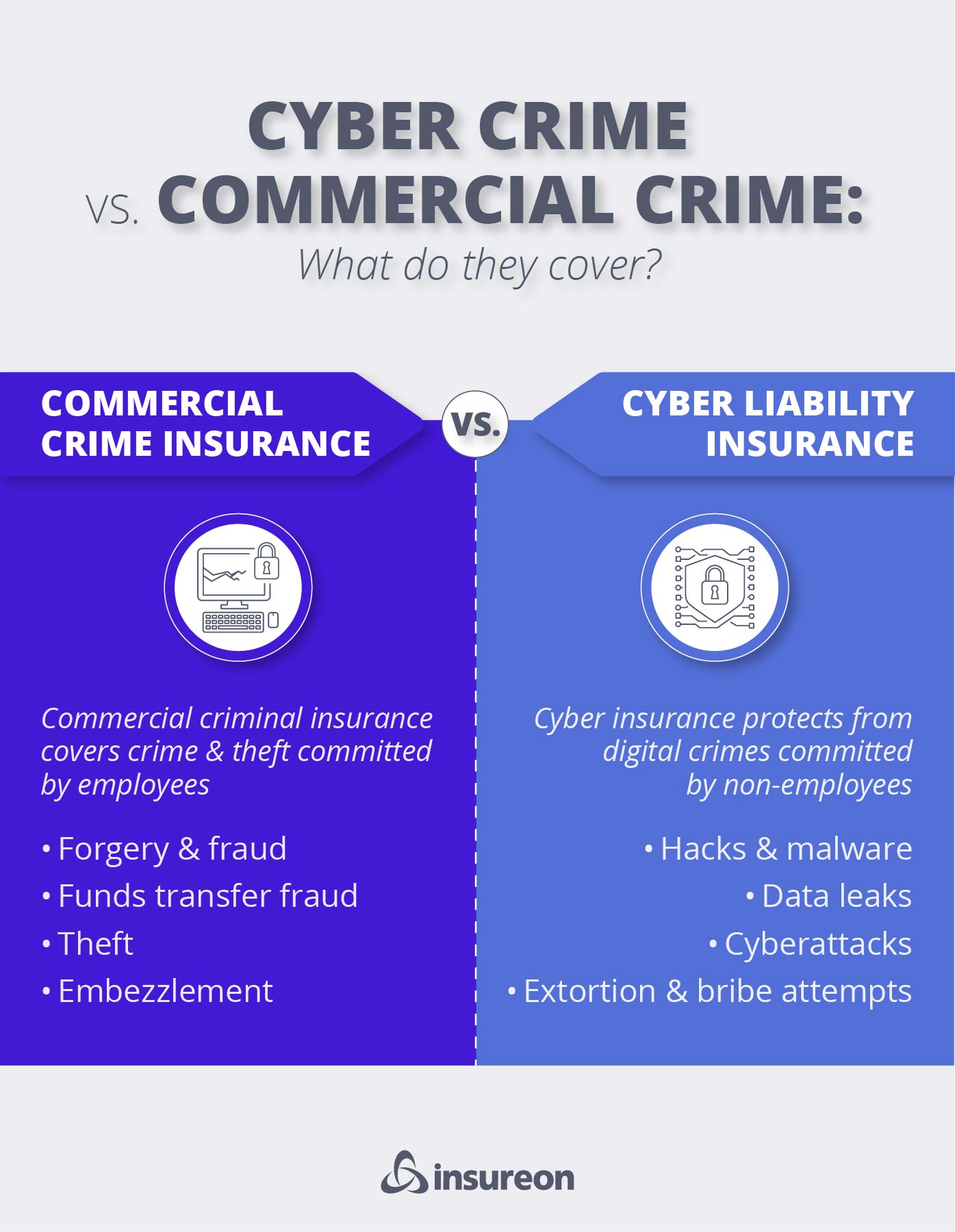
Common crimes covered by commercial crime insurance include:
- Employee theft
- Embezzlement
- Computer fraud
- Funds transfer fraud
- Social engineering fraud
- Forgery
- Client or customer theft losses

What are the two types of commercial crime coverage?
There are two types of commercial crime coverage available to small businesses: first-party crime coverage and third-party crime coverage.
First-party crime coverage protects your business from direct financial losses caused by employee dishonesty, theft, fraud, forgery, and certain crimes committed by outside parties, such as social engineering scams and funds transfer fraud.
Third-party crime coverage, often called a fidelity bond or fidelity insurance, protects your customers or clients from losses caused by employee theft or other dishonest acts committed while employees are working on your behalf.
These coverages are typically purchased separately and generally not bundled together.
In some cases, first-party employee dishonesty coverage can be added to a commercial property policy, business owner's policy (BOP), or commercial package policy (CPP) as an endorsement.
Businesses concerned about social engineering scams, funds transfer fraud, or other cyber-related crime exposures may also need cyber insurance, as commercial crime and cyber liability policies often cover different types of losses.
What does commercial crime insurance cover?
Commercial crime insurance helps protect against financial losses caused by theft, fraud, forgery, and other dishonest acts. The specific protections available depend on whether you purchase first-party commercial crime coverage, which protects your business from covered financial crimes, or third-party crime coverage (fidelity insurance), which protects customers and clients from losses caused by employee dishonesty.
What is first-party crime insurance coverage?
First-party crime insurance protects your business from financial losses caused by employee theft, fraud, forgery or alteration, and other dishonest acts.
Unlike third-party crime coverage, which protects customers and clients from employee dishonesty, first-party crime coverage helps reimburse your business for covered losses that directly impact your company.
Specifically, first-party crime insurance can help cover:

Employee theft and dishonesty
First-party crime insurance can help cover losses if an employee steals money, inventory, equipment, securities, or other business property. It may also cover losses resulting from embezzlement, payroll fraud, and other dishonest acts committed against your company.
Cybercriminals often use emails, phone calls, or other deceptive tactics to trick employees into sending money or disclosing sensitive information.
First-party crime insurance can help cover losses caused by social engineering scams, fraudulent payment instructions, and certain types of funds transfer fraud.
Forgery and document fraud
This coverage can help pay for losses resulting from forged checks, counterfeit currency and documents, altered financial records, or other fraudulent transactions involving business funds.
Theft of employee benefits and company assets
First-party crime insurance may help cover losses involving employee benefit plans, company funds, or other business assets that are stolen or misappropriated through fraudulent or dishonest acts.
What is third-party crime insurance coverage?
Third-party crime insurance coverage protects your customers and clients from financial losses caused by theft, fraud, forgery, and other acts committed by your employees.
Unlike first-party crime coverage, which protects your business from covered losses, third-party crime coverage helps reimburse customers or clients when they suffer a covered loss due to criminal acts by employees. ERISA fidelity bonds are often required by client contracts, especially for businesses whose employees handle client property, funds, or sensitive information.
Specifically, third-party commercial crime insurance can help cover:
Employee theft from clients
Third-party crime coverage can reimburse a customer or client if an employee steals money, securities, valuables, or other property while working on your behalf.
This coverage is especially important for businesses whose employees work in clients' homes, offices, or facilities.
Fraudulent activities against clients
A fidelity bond can help cover financial losses when an employee commits fraud, forgery, identity theft, or another dishonest act that harms a client. This protection can provide peace of mind to customers who entrust your employees with sensitive financial information or assets.
Client funds and sensitive information
Businesses that handle client finances, payment information, or confidential records face a greater risk of employee dishonesty claims. Third-party crime coverage can help protect clients when an employee improperly accesses, misuses, or steals covered funds or financial assets.
How much does commercial crime insurance cost?

Insureon's small business customers pay an average of $75 per month for commercial crime coverage, or $900 annually. 56% of businesses pay less than $100 each month, while another 23% pay between $100 and $200 per month for coverage.
Insurers will look at several key points about your business during underwriting to calculate your exact crime insurance cost, such as liability risks, time in business, and the size of your operations.
What factors affect commercial crime insurance rates?
The cost of commercial crime insurance depends on your business's risk of employee theft, fraud, forgery, and other covered crimes, as well as:
- Amount of coverage or bond size: Businesses that choose higher coverage limits or larger bond amounts typically pay higher premiums because the insurer assumes more financial risk. For example, a policy with a $1 million limit will generally cost less than one with a $5 million limit.
- Deductible: Choosing a higher deductible can lower your premium because your business will pay more out of pocket before coverage applies. Alternately, a lower deductible often results in higher premiums but can reduce out-of-pocket expenses after a claim.
- Industry risks: Businesses that regularly handle customer payment information, bank account details, financial records, or other sensitive data, such as financial institutions and healthcare practices, often face higher rates. Access to valuable information can increase the risk of fraud, social engineering schemes, and employee dishonesty claims.
- Number of employees with access to sensitive information: Insurers typically consider how many employees have access to company funds, financial accounts, customer data, inventory, or other valuable assets. Businesses with more employees in positions of trust may face higher premiums because there are more opportunities for theft, fraud, or other covered crimes to occur.
- Credit rating: Insurance carriers and surety providers may review your business and personal credit history when pricing coverage. A strong credit profile can indicate financial stability and effective risk management, while poor credit may lead to higher premiums or make it more difficult to qualify for certain types of crime coverage.
Verified business insurance reviews
Hear from customers like you who purchased small business insurance.
Who needs commercial crime insurance?
Any small business that handles financial transactions with customers could benefit from a crime insurance policy. It can cover losses when employees misuse sensitive financial data, such as a client's credit card or Social Security number.
While any business can fall victim to employee crime-related losses, a couple of specific industries are especially at risk, including:
- Finance and technology businesses: Many owners of finance and tech companies purchase commercial crime coverage to protect their business because their employees can access sensitive personal data.
- Cleaning businesses: Cleaning companies often rely on janitorial bonds to protect against employee theft of client property.
If your employees handle financial records and transactions, or if they're trusted with valuable client property, you and your business partners could use this coverage as part of your risk management program and to gain client trust.
Top industries we insure



















What does commercial crime insurance not cover?
While commercial crime insurance covers many aspects related to employee theft or fraud, it does have some exclusions. This includes:

Noncriminal mistakes and oversights
Professional liability insurance, also called errors and omissions insurance or E&O, covers the costs of lawsuits over mistakes, oversights, or other accusations of professional negligence.
Employees with criminal records known to employers
If you hire an employee with a known criminal record and they commit fraud or theft, commercial crime insurance won't be applicable.
Crimes by business owners or senior management
A commercial crime insurance policy insures your business only against employee theft or fraud. This doesn't include business owners or senior management.
Indirect financial losses
Indirect financial losses, such as business interruption, loss of income, or legal expenses, aren't covered under commercial crime insurance. For protection against indirect financial losses, you should get business interruption coverage, also called business income insurance.
Data breaches
If an employee causes a data breach at your business, commercial crime insurance wouldn't provide coverage for related expenses, such as customer notifications. You should get data breach insurance, also known as cyber insurance, for this protection.


General liability insurance

Business owner’s policy

Workers’ compensation insurance

Professional liability insurance

Cyber insurance
FAQs about commercial crime insurance
Review answers to common questions about commercial crime insurance and more.
Can I add commercial crime coverage to an existing policy?
Yes. If you carry commercial property insurance coverage, whether as part of a business owner's policy (BOP) or commercial package policy (CPP), you may be able to add certain types of commercial crime coverage through an endorsement. While commercial property insurance helps cover the cost of stolen, lost, or damaged business property, it typically doesn't cover losses caused by employee theft or dishonesty.
Small business owners can add employee dishonesty coverage, which covers employee theft of business property, to their commercial property policy, BOP, or CPP. This endorsement provides coverage if an employee steals from your cash register, forges your signature, or makes off with valuable computers or other equipment owned by your business.
Depending on your business's risks and coverage needs, you may also be able to purchase a standalone commercial crime insurance policy that provides broader protection against employee theft, fraud, forgery, and other covered crimes.
Is commercial crime insurance the same as a fidelity bond?
Commercial crime insurance and fidelity bonds are similar because both can help protect against losses caused by dishonest acts, such as theft, fraud, or employee dishonesty. However, they're not always the same type of coverage.
Commercial crime coverage is a broader category of protection that can include first-party crime coverage, which protects your business from losses caused by employee theft, fraud, social engineering scams, and other covered crimes. It can also include third-party crime coverage, often provided through a fidelity bond, which protects customers or clients from losses caused by employee dishonesty.
A fidelity bond is generally used for third-party protection and may be required by a client contract or regulation. The right type of coverage depends on whether you need to protect your own business from crime-related losses or provide protection for customers, clients, or other third parties.
What is employee dishonesty insurance coverage?
Employee dishonesty coverage is one of the most common forms of first-party commercial crime coverage. It protects your business from losses caused by employees who steal money, property, or other assets, and is often included as part of a broader commercial crime policy.
Businesses can typically purchase employee dishonesty coverage as a monoline commercial crime policy or as an endorsement added to an existing commercial property policy, BOP, or CPP.
The amount and type of employee dishonesty coverage you need depends on your business operations, the value of your assets, and the level of access employees have to company funds, property, or sensitive information.
When is commercial crime insurance required?
Commercial crime insurance isn't usually required by law, but clients, contracts, and industry requirements may require certain types of crime coverage.
For example, tech-focused businesses that handle client property, funds, or sensitive information may be asked to purchase a fidelity bond or third-party crime coverage as part of a contract. This coverage gives clients confidence they'll be reimbursed if an employee commits theft or fraud.
Similarly, clients may ask cleaning companies to secure janitorial bonds before they'll allow your staff on their business premises.
A fidelity bond is also required under the Employee Retirement Income Security Act (ERISA) for businesses that manage an employee benefit plan, such as a 401(k) plan. This type of bond protects plan participants by covering losses caused by fraud, theft, or other dishonest acts involving employee benefit plan assets.
The amount and type of crime coverage you need depends on your business operations and any requirements outlined in client contracts, leases, or regulations.
How do I find affordable commercial crime insurance for my business?
Commercial crime insurance costs can vary depending on your coverage needs, business operations, and level of risk. Reviewing policies from multiple insurers and taking steps to reduce your exposure to theft and fraud, such as implementing strict internal controls, can help you find affordable coverage without sacrificing important protection.
Compare quotes from multiple insurers. Rates, coverage options, and policy terms can vary between insurance companies. At Insureon, you can complete one online application to compare commercial crime insurance quotes from trusted providers and find coverage that fits your business.
Choose appropriate coverage limits. Higher coverage limits provide more protection but typically come with higher premiums. Review your business assets, employee access to funds or sensitive information, and any client or contract requirements to determine how much coverage you need.
Limit access to sensitive information. Reducing the number of employees who can access company funds, financial accounts, customer information, or valuable property can help lower your exposure to employee theft and fraud.
Maintain a strong financial profile. Your business and personal credit history may impact your ability to qualify for certain types of crime coverage and the rates you receive. Maintaining good financial records, conducting employee background checks, and responsible credit practices can help you secure more favorable terms.
By comparing coverage options and proactively managing your risks, you can find commercial crime insurance that provides the protection your business needs at a price that fits your budget.
The average costs on this page were derived from our data on 100,000 small business owners who purchased policies through Insureon. Most of our customers have fewer than five employees, annual revenue ranging from less than $50,000 to more than $200,000, and have been in business for five years or less.
Social engineering and funds transfer fraud