

Find siding installation insurance quotes
Save money by comparing insurance quotes from trusted insurers.

Whether you install vinyl siding or do home siding repair, your work involves a lot of risk. A worker could fall off a ladder, or a homeowner could sue over water damage. Business insurance protects your siding company's bottom line from legal bills, medical payments, and costly repairs.
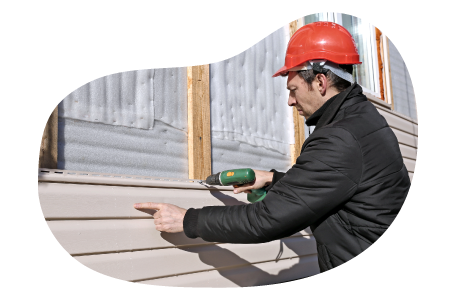

Insureon helps siding contractors and businesses find insurance quotes that match their unique risks.
Get free expert advice and peace of mind knowing you have the right property and liability coverage.

A general liability policy covers legal costs from third-party property damage and injuries, such as a customer who trips over a stack of siding. It may be required for a commercial lease, loan, or contract.

This policy helps pay for repair or replacement of a siding contractor’s power saws and other tools if they are lost, stolen, or damaged. It's also called inland marine insurance.

Most states require workers' comp for siding installation businesses that have employees. It also protects sole proprietors from work injury costs that health insurance might deny.

This insurance policy covers the cost of accidents involving a siding company’s vehicle. It’s required in most states for business-owned vehicles.

A business owner's policy, or BOP, is a cost-effective way for siding installers to buy general liability coverage and commercial property insurance together.

Cyber insurance helps cover the cost of a data breach or cyberattack at your siding installation business. It's sometimes called cyber liability insurance or cybersecurity insurance.

A small siding business with a few workers will pay less for insurance than a larger company.
Average siding installation insurance costs include:
Underwriters will calculate your premiums by evaluating several factors, such as the size of your business, your annual revenue, and your location.
Here are some of the top factors that determine insurance premiums for siding contractors:
It's easy to get siding business insurance, roofing insurance, and sheet metal business insurance if you have your company information on hand. Our application will ask for basic facts about your company, such as revenue and number of employees. You can buy a policy online and get a certificate of insurance (COI) with Insureon in three easy steps:
Insureon's licensed agents work with top-rated U.S. insurers to find coverage that fits your siding business, whether you work independently or hire employees.
Hear from customers like you who purchased small business insurance.
Review answers to frequently asked questions about siding business insurance.
Whether you need a license, bond, or insurance to install siding depends on the laws in your state, the terms of your contracts, and the size of the projects you take on.
Contractor licenses and permits are often needed in order to comply with laws and regulations. For example, your state might require a license to do projects worth more than $500, or your city might require a building permit for a full siding replacement. To get licensed, you may need to pass an exam, have a certain amount of education or experience, or be bonded and insured.
Here are a few examples of when you might need a license:
The type of work you do and the value of your projects help determine when you need a license in your area. Permits, on the other hand, are often required for specific construction projects, especially larger ones involving structural changes, demolition, or specialized work.
Even when it's not required by law, clients may ask for proof of insurance, a bond, or some other qualification before they'll hire you. Having everything lined up in advance shows your business is reputable and gives your clients peace of mind, which is especially helpful when you're working to grow your business.
In the field of construction, workers' compensation is often mandatory for independent contractors and other self-employed individuals.
Here's why you might need a workers' comp policy, even if you work alone:
An on-the-job injury could devastate your contracting business financially or even force you to close. Workers' comp policies are inexpensive for businesses that don't have a lot of employees, with minimum premium policies available for smaller businesses.
Yes, you can purchase siding installation insurance that covers subcontractors. More often, subcontractors are required to list the project owner as an additional insured on their policy.
The most important thing is that everyone involved with a project has coverage. If a subcontractor accidentally damages a homeowner's property or gets injured on the job, you could find yourself responsible for costly repairs or medical bills without insurance.
There are several options for coverage, from short-term liability insurance for a project to seasonal insurance for a siding company that only operates in the warmer months. You can contact an insurance agent to make sure your business's employees, contractors, and subcontractors are sufficiently covered.
Yes, you can buy commercial insurance that covers damaged or stolen equipment and other items.
General liability insurance covers accidental damage to property that belongs to others, while commercial property insurance covers business property at your primary location. You'll need special protection for business property that travels with you.
Contractor's tools and equipment insurance (also called inland marine insurance) covers stolen, destroyed, and damaged items wherever they go, including in transit and at jobsites. Because siding contractors work on-site at various locations, this policy is crucial if you want protection for your tools and equipment.
Installation floater insurance, another type of inland marine insurance, pays for damage or loss of siding and other materials awaiting installation at a jobsite.
Depending on the work you do, you may need additional types of construction insurance. Other policies commonly purchased by siding contractors include:
Siding contractors and companies can save money on insurance by comparing quotes from different providers. With Insureon, you can get free quotes from top-rated insurance companies by filling out our easy online application.
Other ways to save money include:
Our licensed agents can help you find the right siding insurance for your budget and your business needs, whether your company installs fiber cement siding on homes or metal siding on commercial buildings.
The average costs on this page were derived from our data on small business owners in the siding installation field who purchased policies through Insureon. Most of our customers have less than five employees, annual revenue ranging from around $50,000 to more than $200,000, and five years or less in business.