


Workers’ compensation insurance for nonprofit organizations
Workers’ comp covers medical expenses and lost wages for nonprofit employees who are injured or become ill while providing services, working at events, traveling between locations, or performing administrative duties. It's required in most states for organizations with employees.
Workers’ comp protects employees at your nonprofit
From a dog bite at an animal shelter to a slip-and-fall injury at a community center, your employees might be vulnerable to serious risks. An injury could lead to major medical bills, starting with the cost of a trip to the emergency room.
Workers’ compensation insurance can cover an injured worker’s medical expenses, as well as part of the wages they might lose while recovering.
How does workers' compensation benefit employees of a nonprofit organization?
Workers' compensation provides important financial support for nonprofit employees who are injured or become ill because of their work.
It can help pay for immediate and ongoing medical treatment, from emergency care and hospital visits to rehabilitation services such as physical therapy.
If an employee is unable to work while recovering, workers' comp can also provide disability benefits and replace a portion of their lost wages, helping them manage their finances during their recovery.
Do nonprofit business owners need workers' compensation insurance?
Whether nonprofit business owners need workers' comp coverage depends on state law and how the organization is structured. Even when coverage isn't required, it can provide valuable protection.
Personal health insurance may not cover injuries or illnesses that occur while performing work-related duties, leaving nonprofit leaders responsible for significant medical expenses out of pocket. Workers' comp can help cover those medical bills, as well as a portion of lost income if a nonprofit owner is injured while working.
In addition, most workers' comp policies include employer's liability insurance, which can help protect the organization if an employee files a lawsuit over a work-related injury or illness. This coverage can help pay for attorney fees, court costs, and settlements or judgments, reducing the financial impact of a costly legal claim.
For example, a worker at a community center could file a lawsuit if unsafe shelving collapsed and caused an injury.

State laws set workers’ comp requirements for nonprofits
Each state creates its own laws for workers’ compensation requirements. For example, every nonprofit in Pennsylvania must carry workers’ compensation insurance for its employees—even part-time workers. However, Alabama nonprofits are only required to carry workers’ comp when they have five or more employees.
Your state will also set rules on whether volunteers must be covered by workers’ compensation coverage.
While independent contractors, sole proprietors, and partners don’t have to carry workers’ compensation insurance, they can purchase policies, too. It's a good idea to carry this coverage for financial protection against work injuries, which health insurance might not cover.
Workers' compensation laws in your state

Monopolistic state funds for workers’ compensation
In certain states, nonprofits must purchase coverage through a monopolistic workers' comp state fund. Those states are:
If you purchase workers’ comp through a monopolistic state fund, it might not include employer’s liability insurance. However, you can purchase it as stop gap coverage from a private insurance company.
Top nonprofits we insure







How much does workers' comp cost for nonprofits?

A small not-for-profit with only a few members on staff will pay less for coverage than a large charity with several employees and volunteers.
The average cost of workers' compensation insurance for nonprofit businesses is $62 per month. However, you could pay more or less depending on your unique risks.
Underwriters will look at several factors when determining your premium, including the services you provide, any risks associated with your nonprofit, and the amount of coverage you need.
How is workers' comp cost calculated for nonprofits?
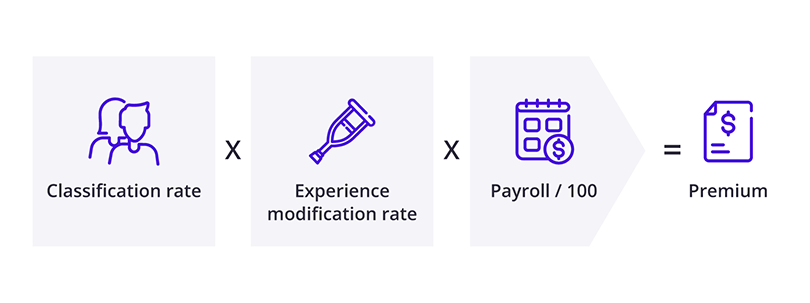
The amount you pay for workers’ compensation is a specific rate based on every $100 of your business’s payroll. Your workers' comp premium is determined by the type of work done by your employees (classification rate), your experience modification rate (claims history), and your payroll (per $100).
The formula providers use in underwriting to calculate workers' comp rates is:
Several factors can influence how much a nonprofit pays for workers' compensation insurance, including:
- Nonprofit services offered: Organizations that provide higher-risk services, such as charity events, youth programs, community outreach, or counseling services, may pay different rates than nonprofits with primarily administrative operations.
- Number of employees and volunteers: A larger workforce typically increases exposure to workplace accidents, which can affect overall insurance costs. While volunteers aren't generally included in payroll calculations, their involvement may still be considered depending on state requirements and the organization's operations.
- Location: Workers' compensation requirements, medical costs, and claim trends vary by state, which can affect premium rates.
- Claims history: Nonprofits with a history of workplace injuries and workers' compensation claims often pay higher premiums than organizations with fewer claims.
- Workplace safety and risk management practices: Insurers may offer more favorable rates to nonprofits that implement employee training programs, maintain safe workplaces, and follow established safety procedures to reduce the likelihood of injuries.
Lower workers’ comp costs with risk management
Nonprofits can take on serious workplace risks. Each time a claim is filed on your policy, your rate might go up. To create a safe work environment, you could:
- Provide gloves and other protective gear to employees
- Fix uneven steps leading into your building
- Eliminate clutter and tripping hazards
By managing your nonprofit’s risks, you can decrease injuries during tours, fundraisers, and everyday operations. That means fewer claims—and a lower insurance premium.
Other important policies for nonprofits
Workers’ compensation insurance shields your staff, and to some extent your business, but it doesn’t cover common risks such as property damage and visitor injuries. Other recommended nonprofit business insurance policies include:
General liability insurance: This policy can pay for expenses related to customer property damage, advertising and personal injuries, and third-party bodily injuries, such as a client stumbling at a counseling center and suffering an injury.
Business owner's policy (BOP): A BOP bundles general liability coverage with commercial property insurance, often at a lower rate than if the policies were purchased separately.
Professional liability insurance: Also known as errors and omissions insurance or E&O, this policy can help cover legal expenses related to errors and negligence, such as a religious organization accused of making an admin error that causes financial harm to a member or program participant.
Directors and officers (D&O) insurance: D&O insurance for nonprofits protects board members and officers against legal expenses if they're sued for misappropriation of funds or another decision that led to financial loss.
Employment practices liability insurance (EPLI): If a nonprofit is sued by an employee over harassment, discrimination, or another violation of employee rights, EPLI can pay for legal costs. This policy can often be bundled with D&O and other types of management liability insurance.
Get free quotes and buy online with Insureon
Protect your nonprofit from costly work accident-related claims with the right workers' compensation insurance policy. Insureon makes it easy to compare quotes from top-rated insurance companies, customize your coverage, and purchase a policy online in just a few minutes.
Complete Insureon’s easy online application today to review options tailored to your organization. Once you find the right policy, you can begin coverage and receive a certificate of insurance (COI), often within 24 hours.
Verified workers' compensation insurance reviews
The average costs on this page were derived from our data on small business owners in the nonprofit field who purchased policies through Insureon. Most of our customers have less than five employees, annual revenue ranging from around $50,000 to more than $200,000, and five years or less in business.
Find workers' comp insurance quotes



Want free expert advice right in your inbox?
By entering your email address and subscribing, you agree to our Terms of Use and Privacy Policy