


Workers' compensation insurance for healthcare workers and providers
Workers' compensation insurance covers medical costs and lost wages for work-related injuries and illnesses, such as needlestick injuries, patient-handling strains, and exposure to infectious diseases. This policy is required in almost every state for businesses with employees.
Workers’ comp insurance protects workers at your healthcare clinic
Even if you take steps to ensure a safe work environment, you can’t prevent every accident. Healthcare workers face a variety of on-the-job risks, from patient handling injuries and needlestick accidents to workplace violence, latex allergies, and exposure to hazardous chemicals or infectious diseases. These incidents can lead to costly medical treatment, lost work time, and long recovery periods.
Workers’ comp insurance can pay for medical bills and partial missed wages while an employee is recuperating. Most states require this coverage for businesses with employees.
Workers’ compensation can help pay for an injured employee’s:
- Immediate medical costs, such as an ambulance ride or emergency treatment
- Ongoing medical costs, such as medication, physical therapy, or follow-up care
- Partial lost wages while the employee is recovering
- Disability benefits for lasting injuries
- Rehabilitation services that help employees return to work
Workers’ compensation protects healthcare business owners
Usually included in a workers’ comp policy, employer’s liability insurance provides protection when a staff member decides to sue your healthcare business over an injury.
Employer’s liability insurance can help pay for:
- Court costs
- Attorney’s fees
- Settlements
Healthcare providers may want higher coverage limits due to the frequency and severity of workplace injury risks in the industry. Without adequate coverage, you could find yourself paying for a costly legal defense, even if a lawsuit is frivolous.
If you don't provide workers' compensation coverage, you could face penalties such as fines, stop-work orders, and be held liable for an injured employee's medical bills and lost wages. Plus, without the exclusive remedy protection a workers' comp policy provides, your healthcare business could also be exposed to costly civil lawsuits.

State laws set workers’ comp requirements for healthcare professionals
Every state creates its own laws for workers’ compensation requirements. For example, every healthcare business in Minnesota must carry workers’ compensation insurance for its employees—even part-time workers. However, Alabama healthcare companies are only required to carry workers’ compensation when they have five or more employees.
While independent contractors, sole proprietors, and partners don’t have to carry workers’ compensation insurance, they can sometimes purchase a policy for their own protection, too. It's a good idea to carry this coverage for financial protection against workplace injuries, which health insurance might not cover.
Workers' compensation laws in your state

Monopolistic state funds for workers’ compensation
In certain states, healthcare professionals must purchase coverage through a monopolistic workers' comp state fund. Those states are:
If you purchase workers’ comp through a monopolistic state fund, it might not include employer’s liability insurance. However, you can purchase it as stop gap coverage from a private insurance company.
Lower workers’ comp costs with risk management
Healthcare professionals face a variety of workplace hazards, including patient lifting injuries, infections from contaminated needles, patient-related violence, and repetitive motion injuries. Owners of medical practices can help reduce risks with:
- Employee safety training
- Safe patient handling and lifting procedures
- Personal protective equipment (PPE), such as gloves, masks, and eye protection
- Medical equipment maintenance
- Prompt disposal of contaminated items, such as used needles
- Workplace violence prevention and de-escalation training
- Return-to-work programs that help injured employees safely resume work duties
By implementing a risk management plan and maintaining a safe work environment, you can reduce workplace accidents and claims. Healthcare employers that establish effective return-to-work programs may also improve their experience modification rate (experience mod) over time, which can help lower workers' compensation insurance premiums.
Top healthcare professionals we insure

























How much does workers' comp for healthcare professionals cost?

A small practice with only a few employees will pay less for coverage than a large office with several medical professionals on staff.
The average cost of workers' compensation insurance for healthcare professionals is $60 per month. However, you could pay more or less depending on your unique risks.
Underwriters will look at several factors when determining your premium, including the services you provide, any risks associated with your practice, and the amount of coverage you need.
How are workers' compensation costs calculated?
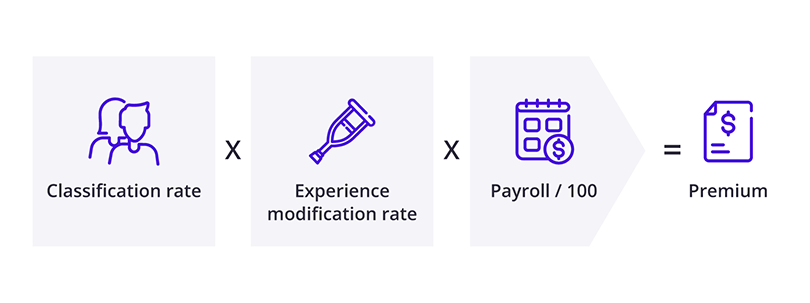
The amount you pay for workers’ compensation insurance is a specific rate based on every $100 of your business’s payroll. Your premium is determined by the type of work done by your employees (classification rate), your experience modification rate (claims history), and your payroll (per $100).
The formula providers use in underwriting to calculate workers' comp rates is:
What factors impact the cost of workers' compensation insurance for healthcare providers?
Several factors affect the cost of workers' compensation insurance for healthcare providers, including:
- Healthcare services offered: Higher-risk services, such as hospice care, home healthcare, behavioral health services, and dentistry, may lead to higher premiums due to increased exposure to workplace injuries and illnesses.
- Number of employees: Businesses with more employees typically pay more for workers' compensation coverage because there are more opportunities for workplace accidents.
- Claims history: A history of workplace injuries or workers' compensation claims can elevate your EMR, which increases premiums, while a strong safety record may help lower costs.
- Business location: Workers' compensation costs vary by state based on local laws, medical costs, and benefit requirements.
- Coverage limits and deductible: Higher coverage limits generally increase premiums, while a higher deductible may lower them.
- Employee job duties: Staff who lift and transfer patients, administer treatments, conduct procedures, or provide care in patients' homes often face higher injury risks than office personnel.
- Annual revenue: Revenue can influence an insurer's overall assessment of your business, particularly when bundled policies are purchased from the same carrier.
- Medical equipment and other business property: The amount and type of equipment used in your practice may affect your overall insurance profile and risk assessment.
- Risk management practices: Employee training, safe patient handling procedures, infection control protocols, workplace violence prevention measures, and return-to-work programs can help reduce claims and improve your risk profile.
Other key policies for healthcare professionals
Workers’ compensation insurance protects your employees and to some extent your business, but it doesn’t cover common risks such as property damage and customer injuries. Other recommended insurance policies for healthcare professionals include:
General liability insurance: This policy can pay legal expenses related to patient property damage and injuries, such as a patient who trips in your office and breaks a wrist.
Business owner’s policy (BOP): A BOP bundles general liability coverage with commercial property insurance, often at a lower rate than if the policies were purchased separately.
Professional liability / medical malpractice insurance: Sometimes called errors and omissions (E&O), this policy helps pay for legal expenses when a healthcare professional is accused of negligence or an error that harms a patient.
Commercial auto insurance: State laws require this coverage for vehicles owned by a business. It helps cover the cost of an accident involving a business vehicle.
Cyber insurance: A cyber liability policy helps healthcare professionals survive data breaches and cyberattacks by paying for recovery expenses and other associated costs.
Should healthcare workers consider any additional coverage?
Depending on the services you provide, you may need coverage beyond standard workers' compensation and malpractice insurance. The following endorsements and specialty policies can help address risks unique to healthcare professionals:
- Telehealth coverage: If you provide virtual care, telemedicine coverage can extend your malpractice protection to claims involving remote consultations, treatment recommendations, documentation errors, and other telemedicine services. It's often available as an endorsement to a professional liability policy.
- License defense coverage: A patient complaint or regulatory investigation could put your professional license at risk, even if no malpractice lawsuit is filed. License defense coverage can help pay legal expenses associated with disciplinary proceedings and licensing board investigations.
- Needlestick or occupational accident insurance (OAI): Healthcare workers face unique occupational hazards, including needlestick injuries and exposure to bloodborne pathogens. Needlestick coverage can help cover testing, treatment, and other expenses related to certain exposure incidents. OAI helps independent healthcare contractors pay for medical expenses, disability benefits, and other costs resulting from a work-related injury.
- HIPAA defense coverage: Healthcare providers that handle protected health information (PHI) may face investigations, fines, and legal costs following an alleged privacy or security violation. HIPAA breach insurance can help pay for defense costs and other covered expenses associated with HIPAA-related proceedings.
Healthcare providers should review their specific exposures with an insurance professional to determine whether these coverages are appropriate for their practice, specialty, and patient population.
Get free workers' comp quotes and buy online with Insureon
Finding the right workers' compensation coverage can be challenging, especially for healthcare providers with unique workplace risks. Insureon makes it easy to compare quotes from top-rated insurance carriers and find coverage tailored to your practice's needs.
If you have questions, our licensed insurance agents can help you evaluate your risks, understand your coverage options, and choose the right policy for your business. Whether you're purchasing workers' compensation insurance for the first time or reviewing your current coverage, we're here to help.
Complete Insureon's easy online application to compare quotes and purchase coverage. Once you find the right policy, you can often begin coverage in less than 24 hours.
Verified workers' compensation insurance reviews
The average costs on this page were derived from our data on small business owners in the healthcare field who purchased policies through Insureon. Most of our customers have less than five employees, annual revenue ranging from around $50,000 to more than $200,000, and five years or less in business.
Find workers' comp insurance quotes



Want free expert advice right in your inbox?
By entering your email address and subscribing, you agree to our Terms of Use and Privacy Policy